Petrozavodsk and its surroundings. Days 1 to 3 of the trip
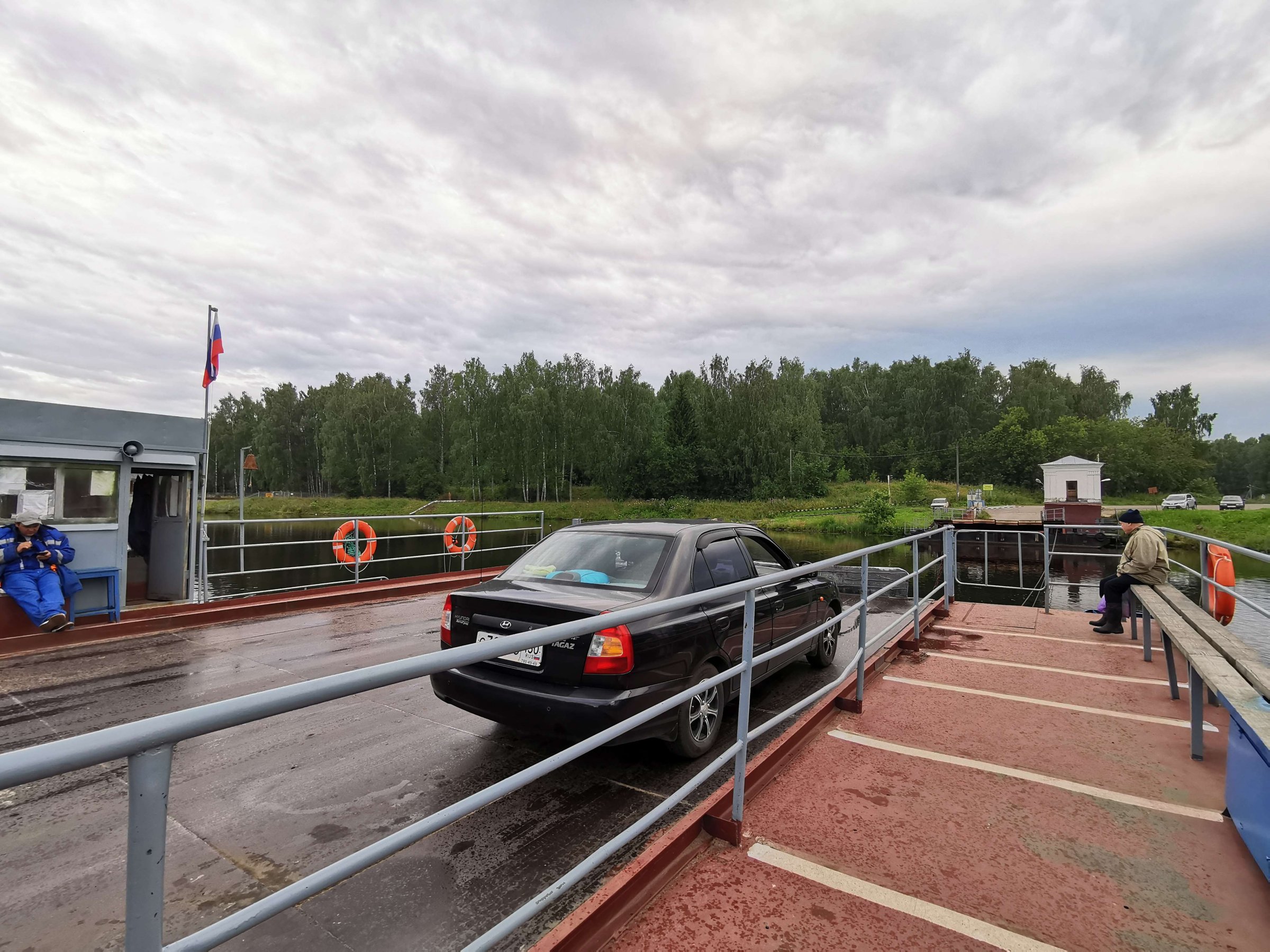
July 26, Sunday. As usual, the night before departure was sleepless, though I still managed to get some sleep. The trip was not supposed to be too difficult, and there was no need to rush: we were going by our own car, not flying on a plane. During the night I woke up and thought I had lost my sense of taste. I thought that was it, we were done, coronavirus. But no, my mouth had just gone completely dry from worrying. We woke up to the alarm. I immediately jumped up and started taking care of things, and Sveta kept up as well. We filled our thermoses with drinks, packed food into the cooler bag, and around 5 a.m. I had already started carrying our things to the car, carefully arranging everything. At 6:05 we set off. We decided to try the road that goes through Konakovo. I thought the road there was bad, but I was wrong. In fact it was perfect, and I noted to myself that we had driven to Ostashkov the wrong way before, along the wrecked road through Kimry, and the car would have been in better shape if we had not. The only downside here was the paid ferry, but 250 rubles one way is cheaper than a broken suspension. We rushed to the ferry, and when we arrived, we saw it was about to depart. We drove onto it, it cast off, and it turned out that ours was the only car on the entire ferry, and among the passengers there were only me, Sveta and some old man.
We docked at the other bank, drove off and continued on our way. The drive was not short, and it started drizzling. We passed Tver the right way, via the free bypass road. For some reason the navigator kept trying to route us through Tver, but I remembered how we once drove through Tver on our way from Ostashkov and hit two huge potholes right in the city center. So Tver is better avoided if you want to spare the car. After that we somehow ended up driving along a road that ran parallel to the toll road. We drove for a very long time, although in terms of speed that road was no worse than the toll road. Then, by some miracle, we filled up at the last Rosneft station before the next one, which was somewhere 500 kilometers away. Fine, we entered the toll road and drove on. We had about 280 kilometers to cover on it. Before reaching St. Petersburg, we had to turn right toward Petrozavodsk. The high-speed section went well, 130-150 km/h. Sveta slept, I listened to music. We probably stopped a couple of times for a snack on that stretch. After leaving the toll road, we had paid only 610 rubles in total. I do not know why it turned out so cheap. After that the road was not as good, but not critical either: no holes, just occasional raised patches. But that lasted only until we got onto the direct road to Petrozavodsk. That patchwork road felt like something built specifically to shake the car apart. Once on the direct road to Petrozavodsk, however, the pavement became genuinely good, flawless even, and it was hard to believe that such a good road could exist in Russia, and especially in its northern part. On the way to Petrozavodsk we found some track leading down to a river. We drove there and found a place where we could stop for a snack. There we got out our camping chairs, table and gas burner and started heating our food. Eating in cafes felt a bit scary with coronavirus all around.
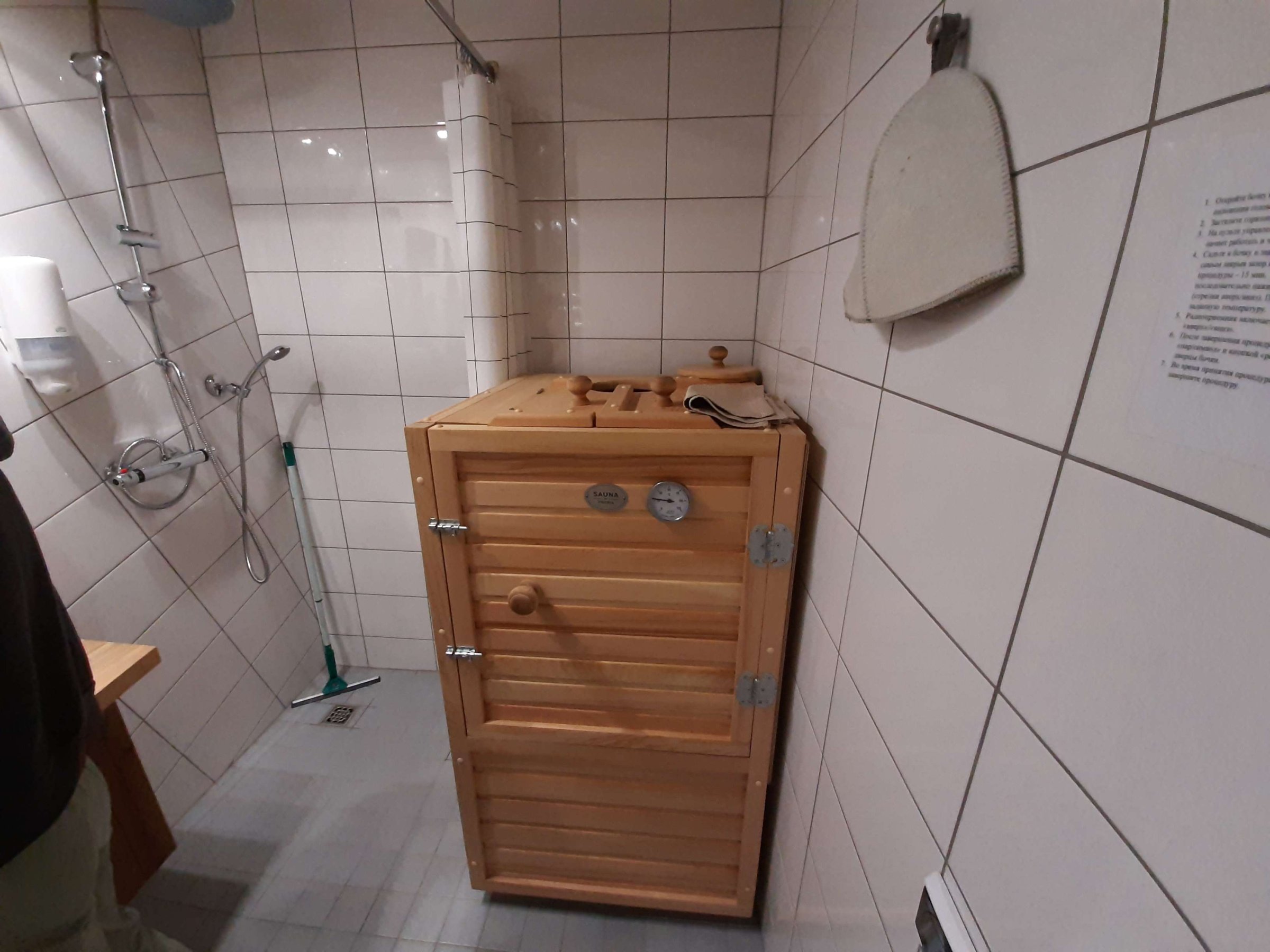
By 7 p.m. we arrived in Petrozavodsk. We found the building where we were going to stay for 3 nights. We messaged the hostess on WhatsApp, and she sent us the instructions for contactless key pickup. We had to enter a certain code on the intercom, and in an unlocked mailbox near the elevator we had to find the key to the apartment and everything else. Fine, we found it, went upstairs, and there was some kind of electronic lock that we did not figure out on the first attempt. It seemed that we had to set a PIN code. In any case, after a while we finally got into the apartment. It was excellent. A small and unusual studio. There was a bed on a second level and a mini-kitchen. Nothing unnecessary. In the bathroom there was a cedar barrel sauna. I had honestly not known what that was before. It is something like a sauna that steams the body separately from the head and can be installed in an apartment. I did not use it though, since I do not like that sort of thing.
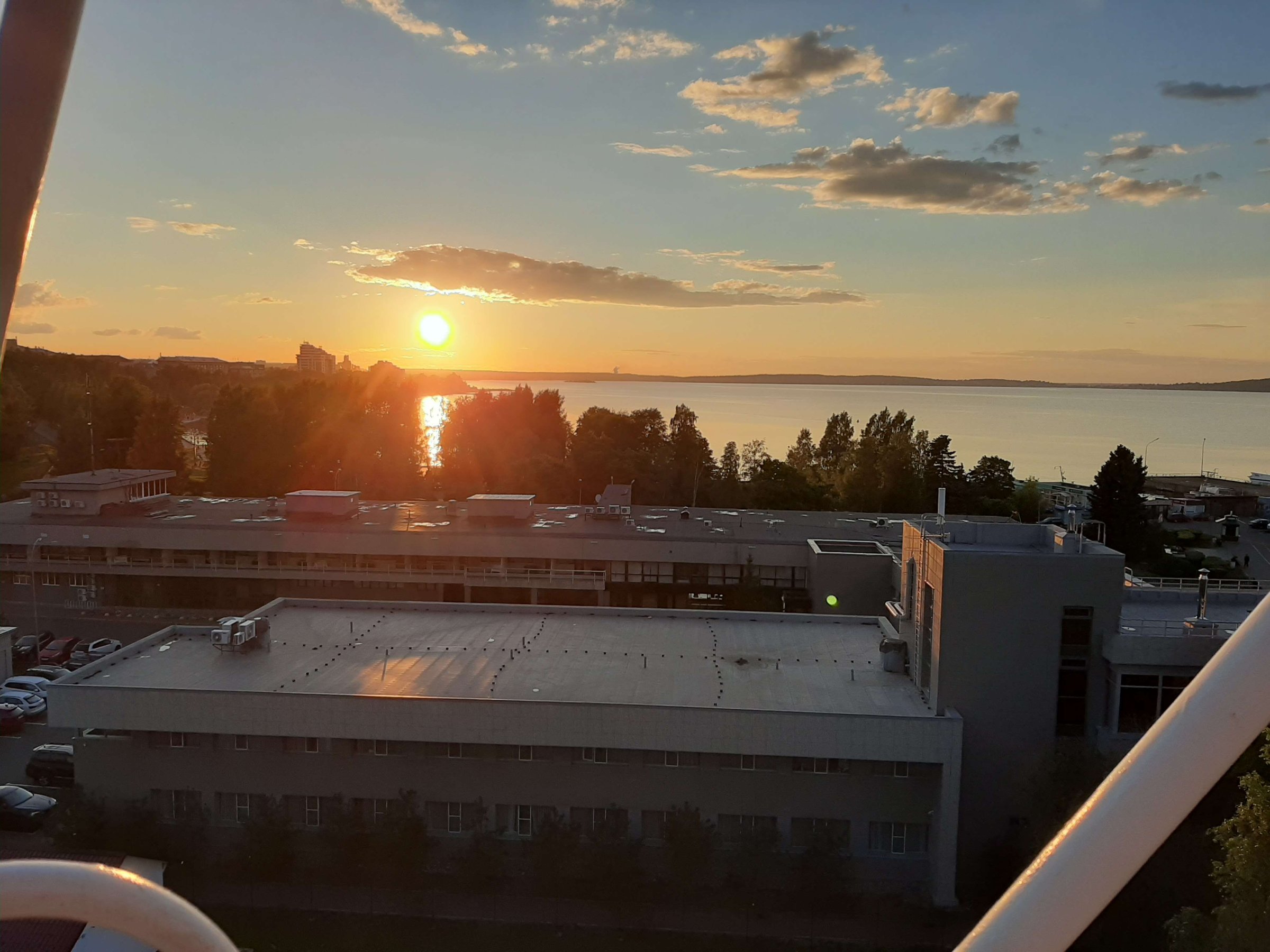
After we had settled in, we drove to the pier to buy tickets to Kizhi for the next day. After that we took a short walk along the embankment and rode the Ferris wheel:
We drove back to the apartment, stopping by Pyaterochka on the way. Then, as we approached the building, we tried to figure out where our parking space in the underground garage was supposed to be. I had missed that information and parked in the first spot I saw, then realized I had messed up and had to go back and re-park the car.
That day we managed to drive as much as 972 kilometers: from Dubna to Petrozavodsk plus no more than 10 kilometers inside Petrozavodsk itself.
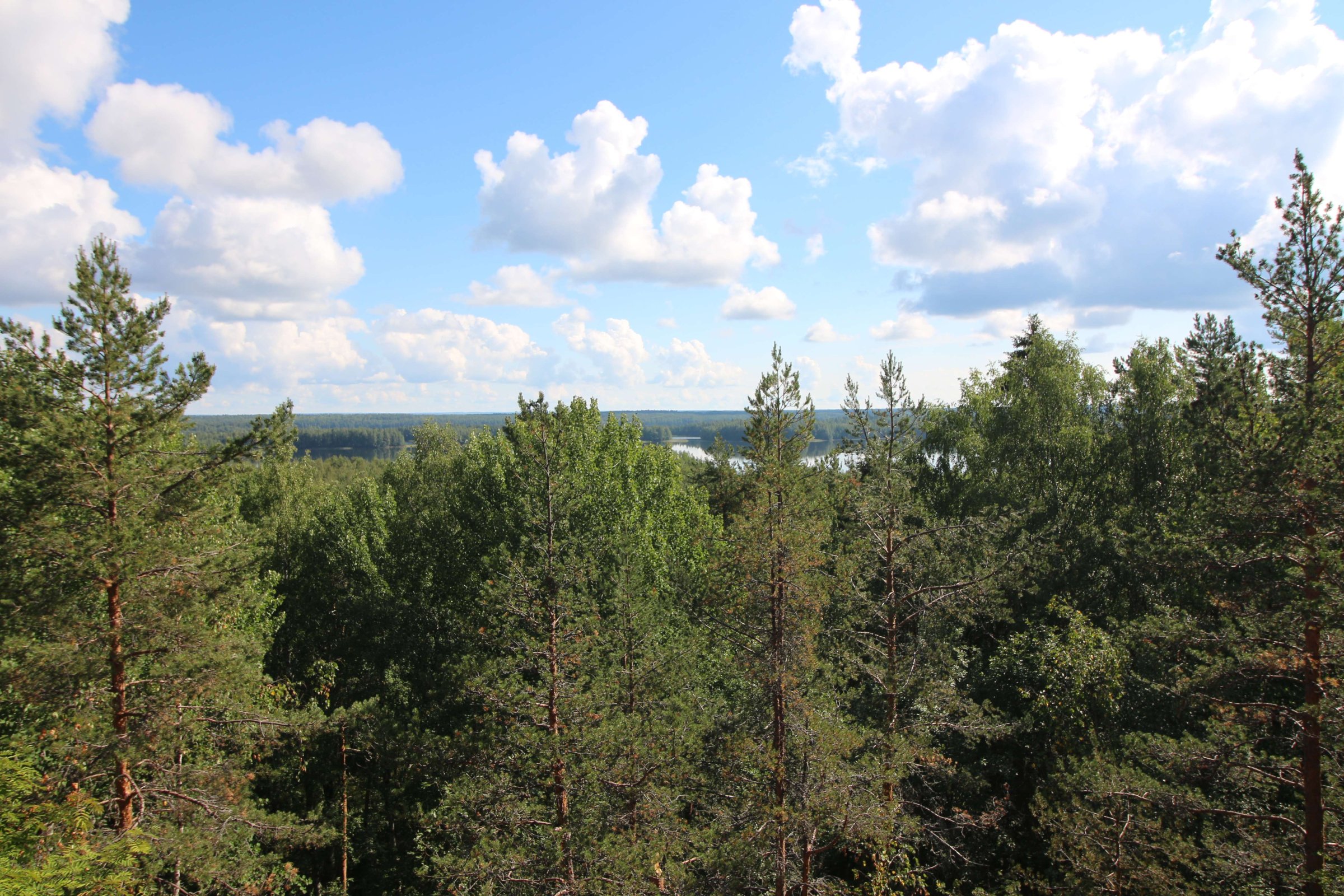
July 27, Monday. We slept soundly through the whole night from exhaustion, but in the morning we got up fairly well. We had to hurry because at noon we were supposed to take a hydrofoil to Kizhi, and before that we still wanted to go somewhere. We decided to drive to Mount Sampo. There was no point going any farther because we would not have made it back by noon, and this point was the closest one to us. In the end, the mountain was not worth driving that far for. You could barely see anything. The trees and lakes around were visible very poorly. It only makes sense to stop there if you are passing by. Here was the view:
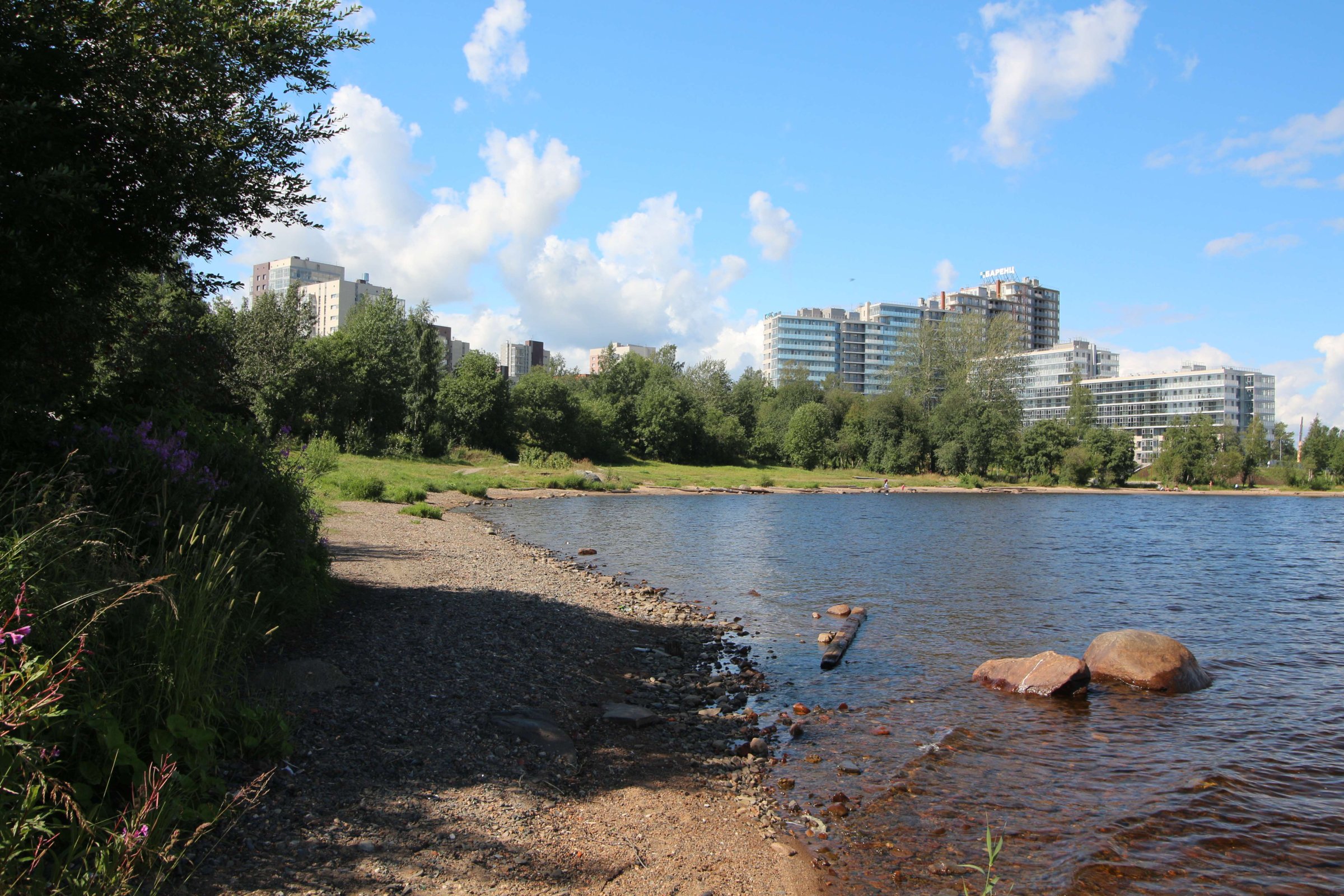
When we got back to Petrozavodsk, we still had a bit of time before departure to Kizhi, so we decided to put the car in the garage and walk along the embankment near the complex where we were staying:
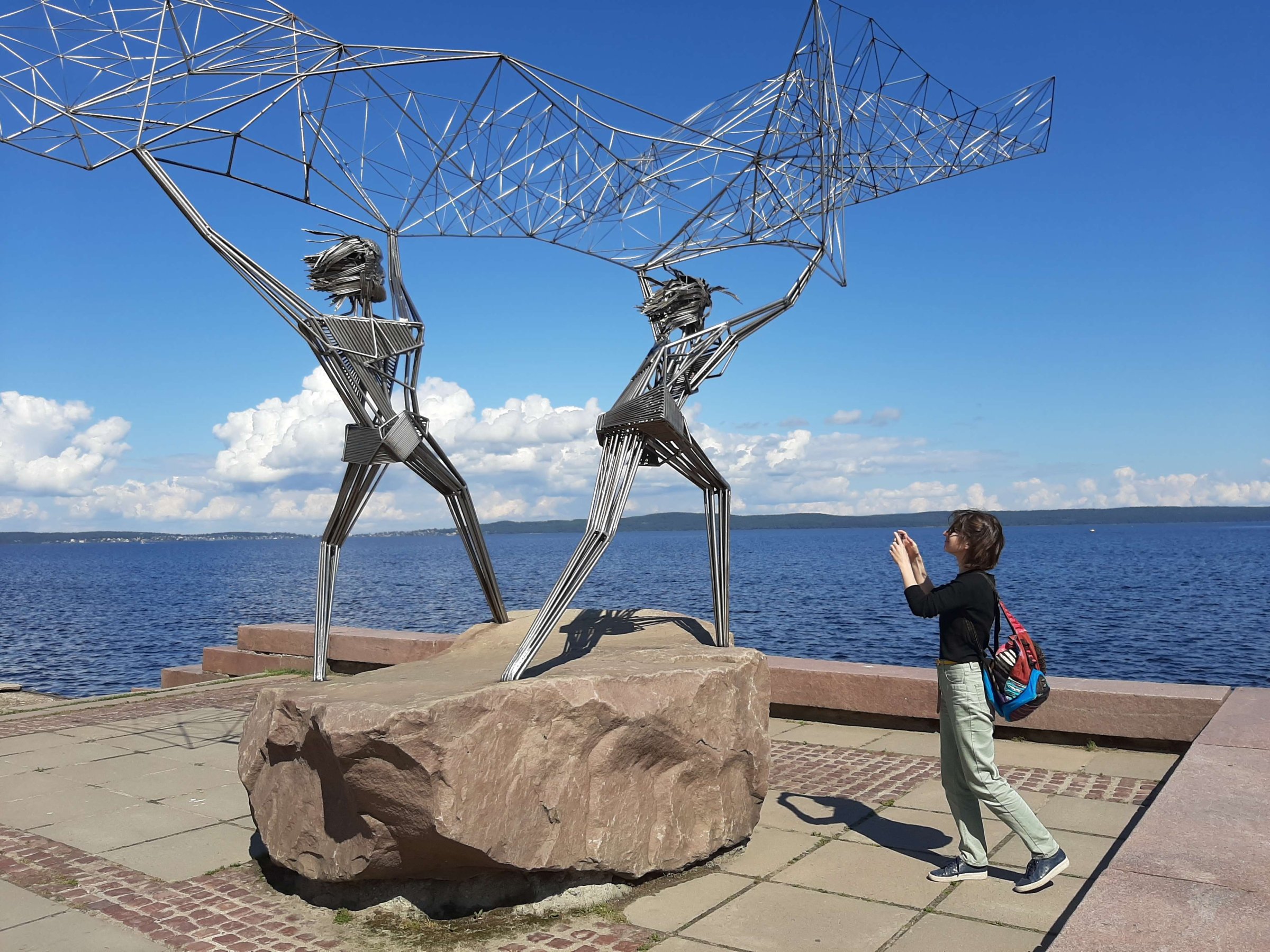
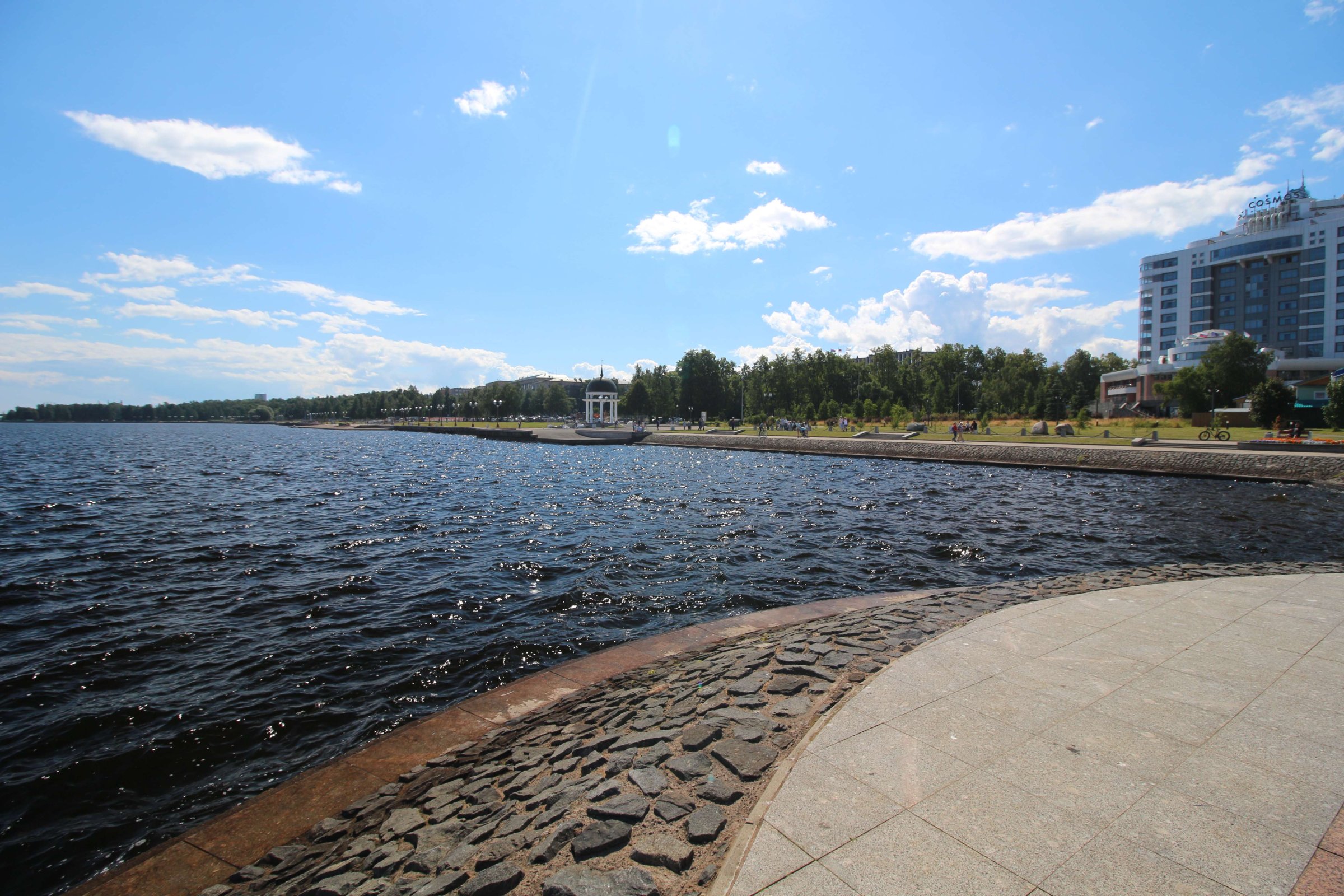
There was nothing special there, so we got back in the car and drove to the pier. We parked there and went for a walk along the embankment:
We barely made it that far because some icy wind was blowing there, so we decided to head back to the pier. On the way we realized we should find a cafe and have a bite before the trip, otherwise we might have starved on it. I had read that it was better not to eat on Kizhi itself because it was expensive there and the restaurant was inconveniently located.
I opened Tripadvisor and started looking. Almost everything was closed, or had poor reviews. In the end we decided to go to the restaurant right next to the pier. We went in. We thought it would be outrageously expensive, but no. We only took borscht and bread, and the total was perfectly reasonable, like in a cafeteria.
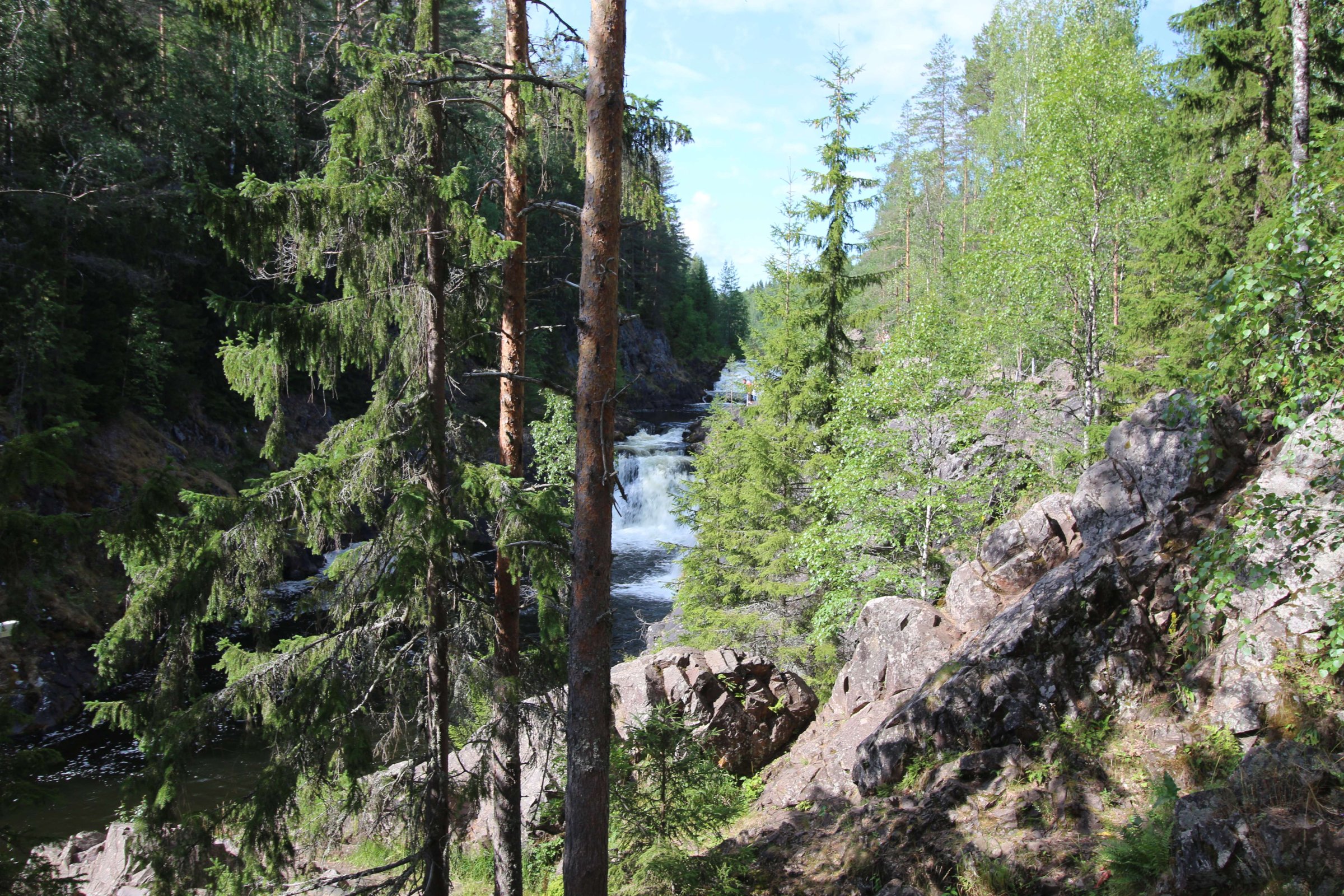
After lunch we decided to go to the kiosk where we had bought the tickets. We wanted to ask what kind of shoes one should wear on the island. But then we received some "good news". They said the hydrofoil had broken down and the excursion was cancelled, and we could either get our money back or go the next morning. We thought about it and decided it would be better to go the next morning. We rebooked the ticket and planned the rest of the day differently. We immediately headed back in the same direction where we had been in the morning, but farther this time, towards Kivach waterfall and the Girvas volcano. I had read that Kivach was an overhyped place and not worth going to. But we had no other option, so off we went. First we drove along a road called Kola. It was perfect. A European-level road, with no holes, potholes or patched bumps at all, and it was wide, with a wide shoulder too. From Kola to Kivach the road was narrow, but the quality of the surface for several kilometers was equally perfect. I honestly thought that all the roads there must be like that and that we would not see any bad roads during the whole trip. We arrived, paid 400 rubles for the two of us for entry, and went in. Yes, it turned out there was not much to look at. Trees were everywhere, so the waterfall itself was hard to see. And the waterfall was not particularly large either. It could not compare to the waterfalls we had seen on our previous trips:
After the waterfall, tired, we sat down on a bench and listened to the water hitting the rocks. Then a group arrived, and the old lady tour guide started coughing hard. We held our breath and retreated towards the park exit. True, in the end we also wandered into some sort of arboretum, but there was nothing to look at there either.
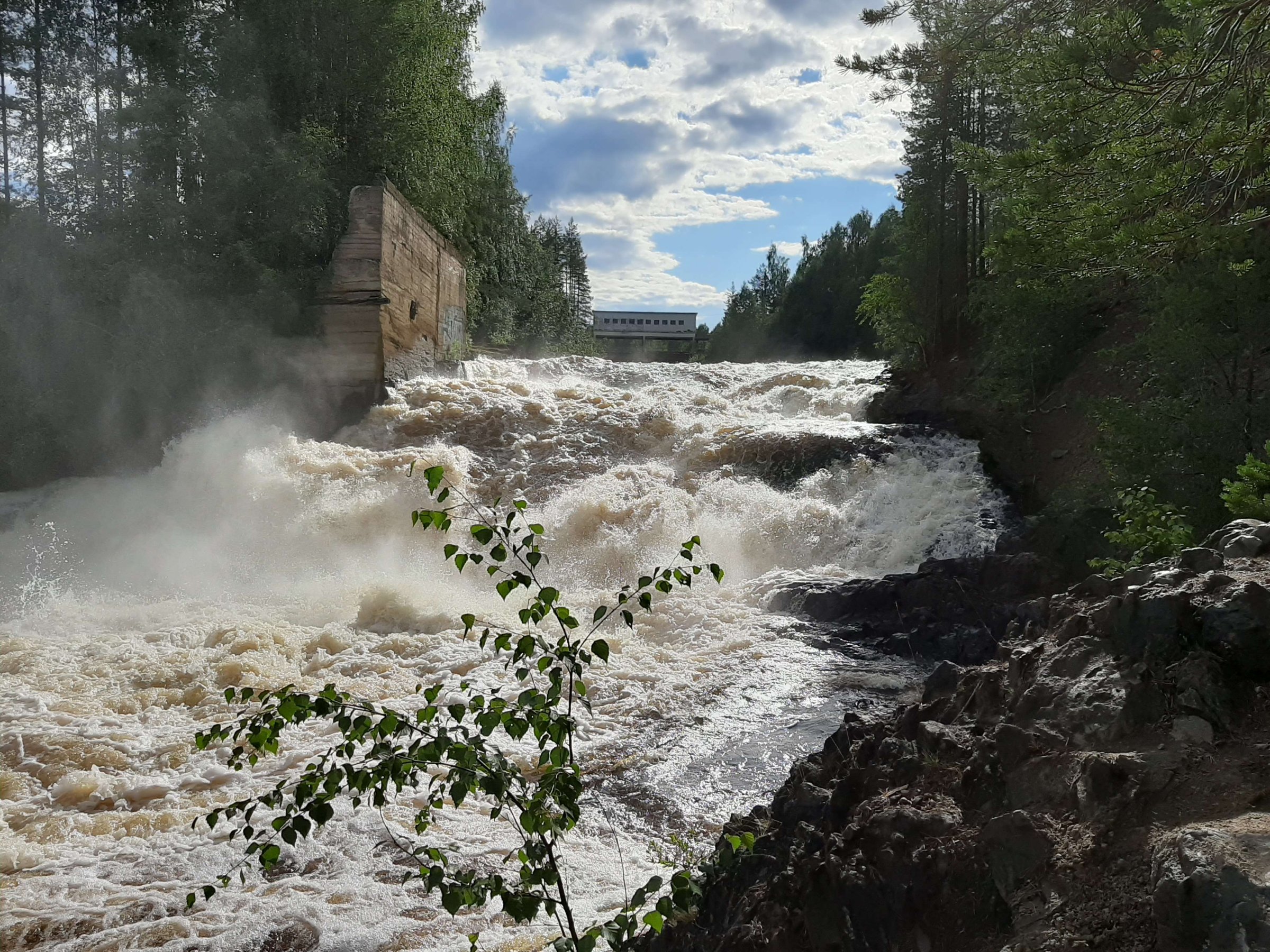
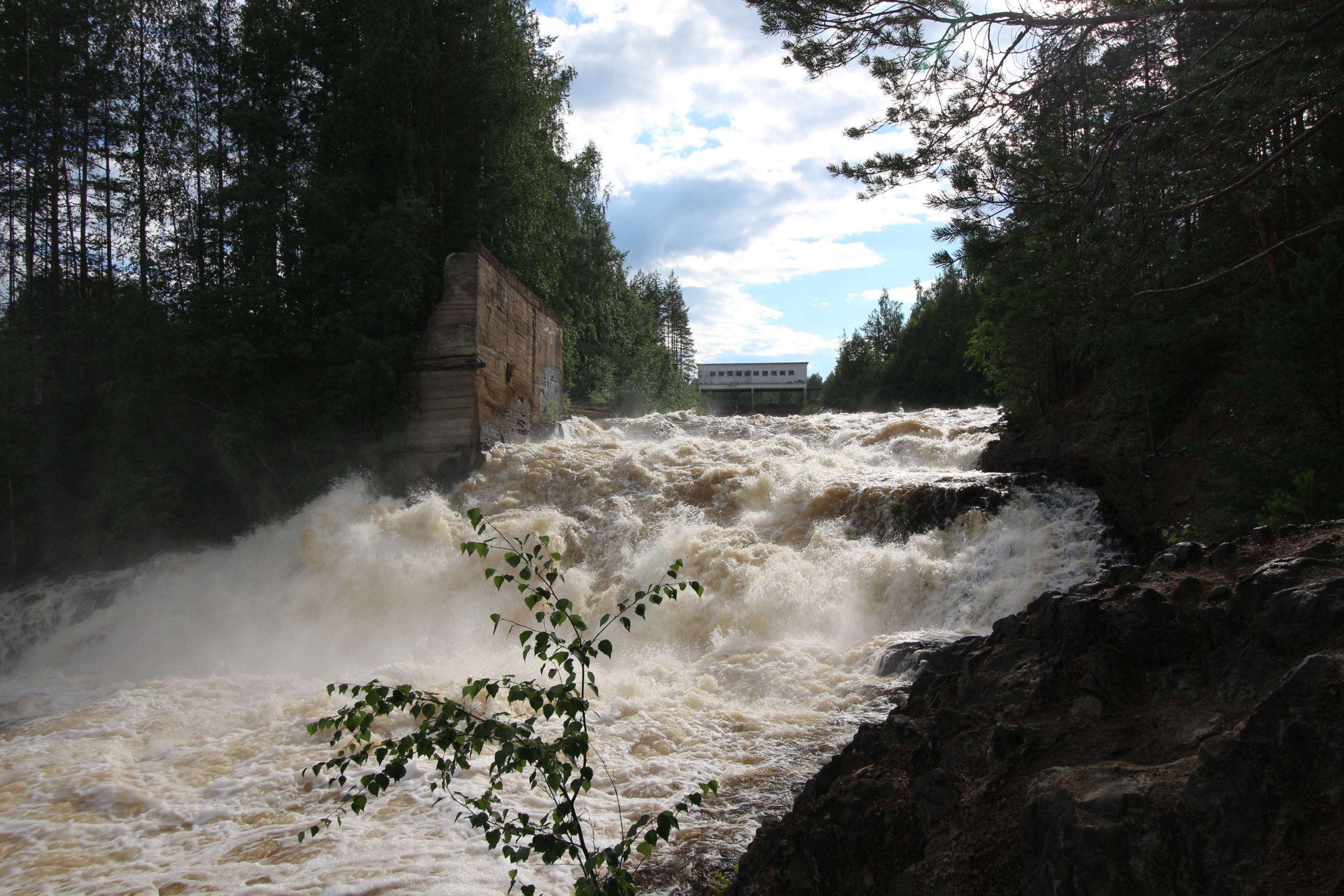
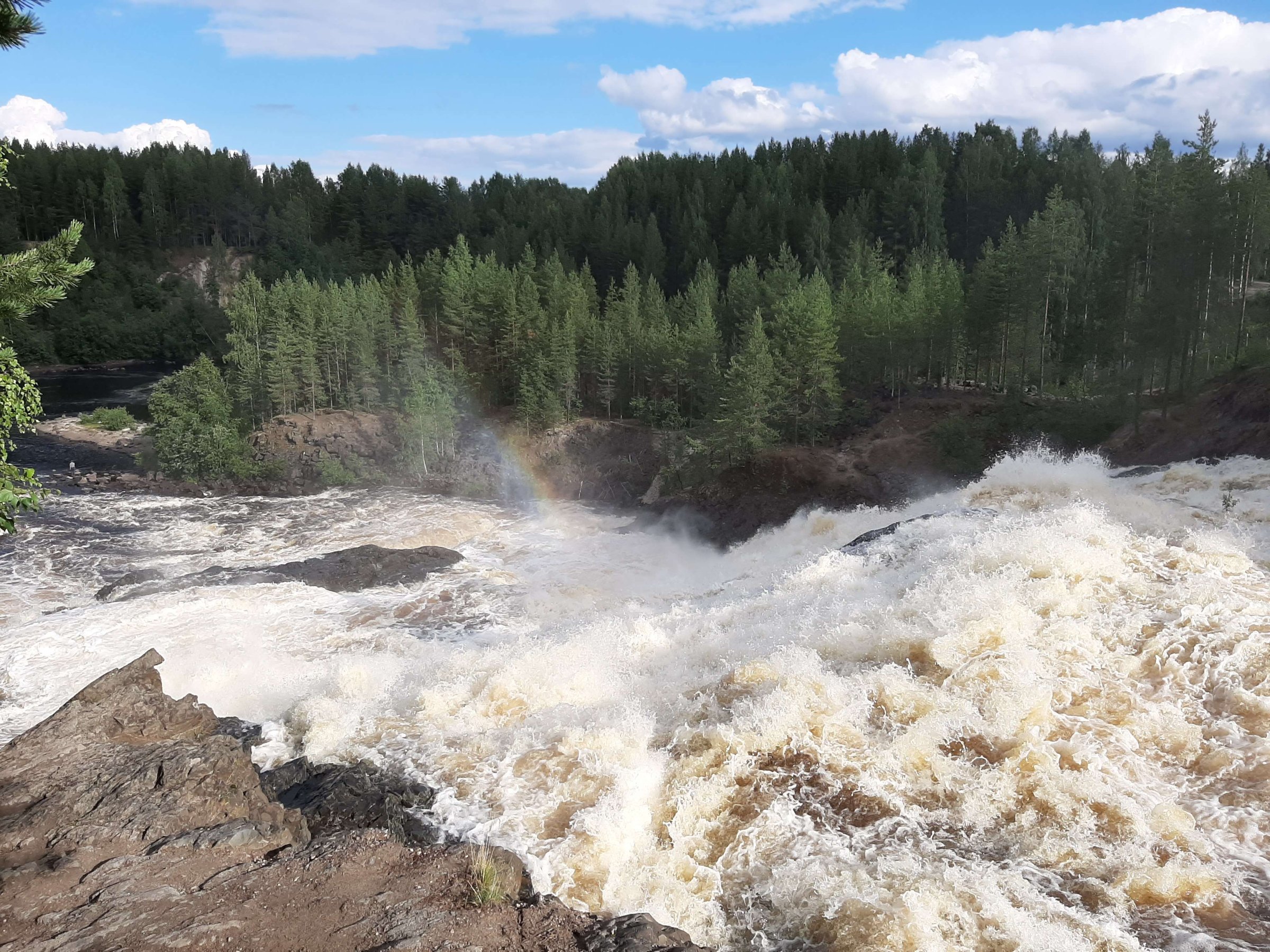
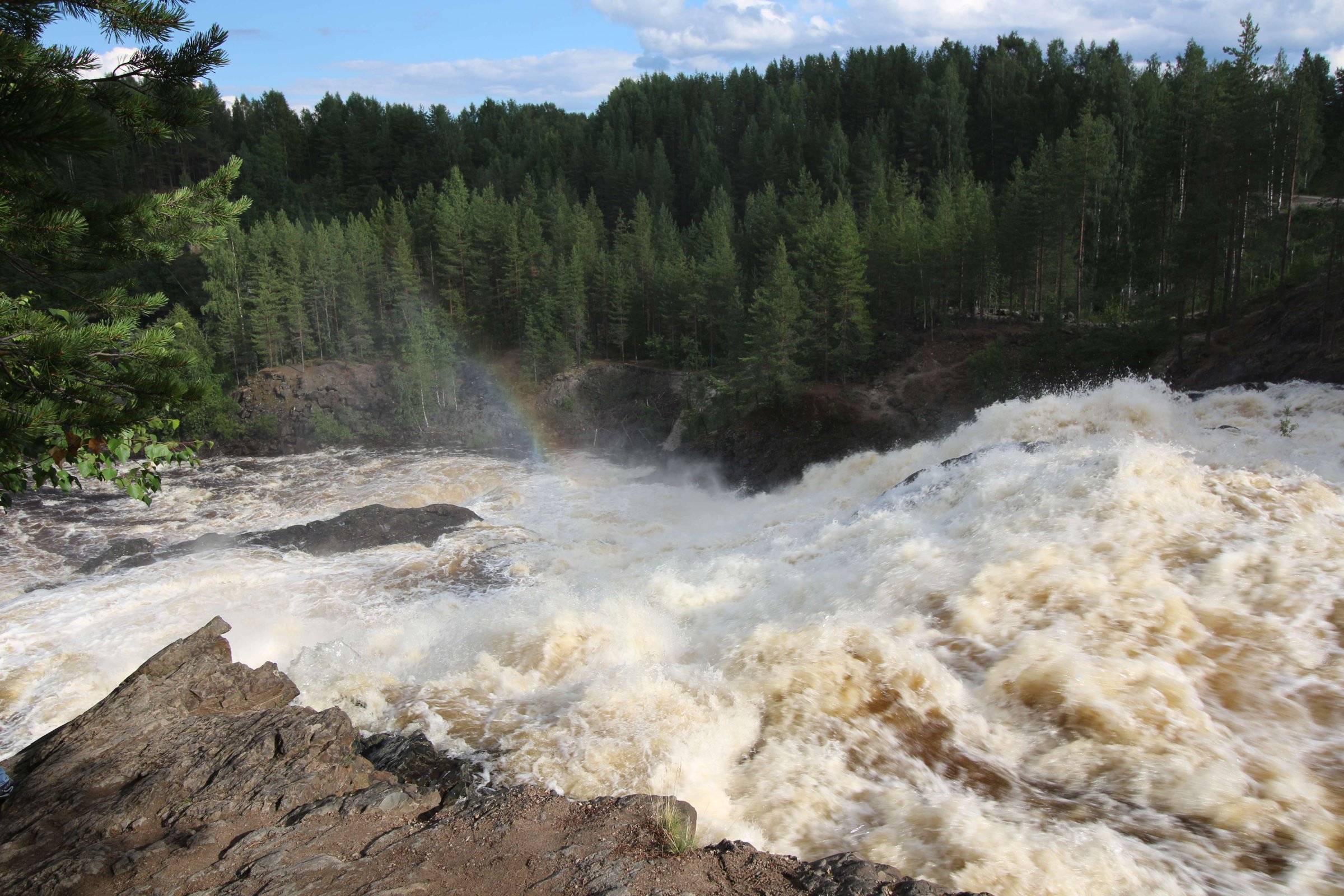
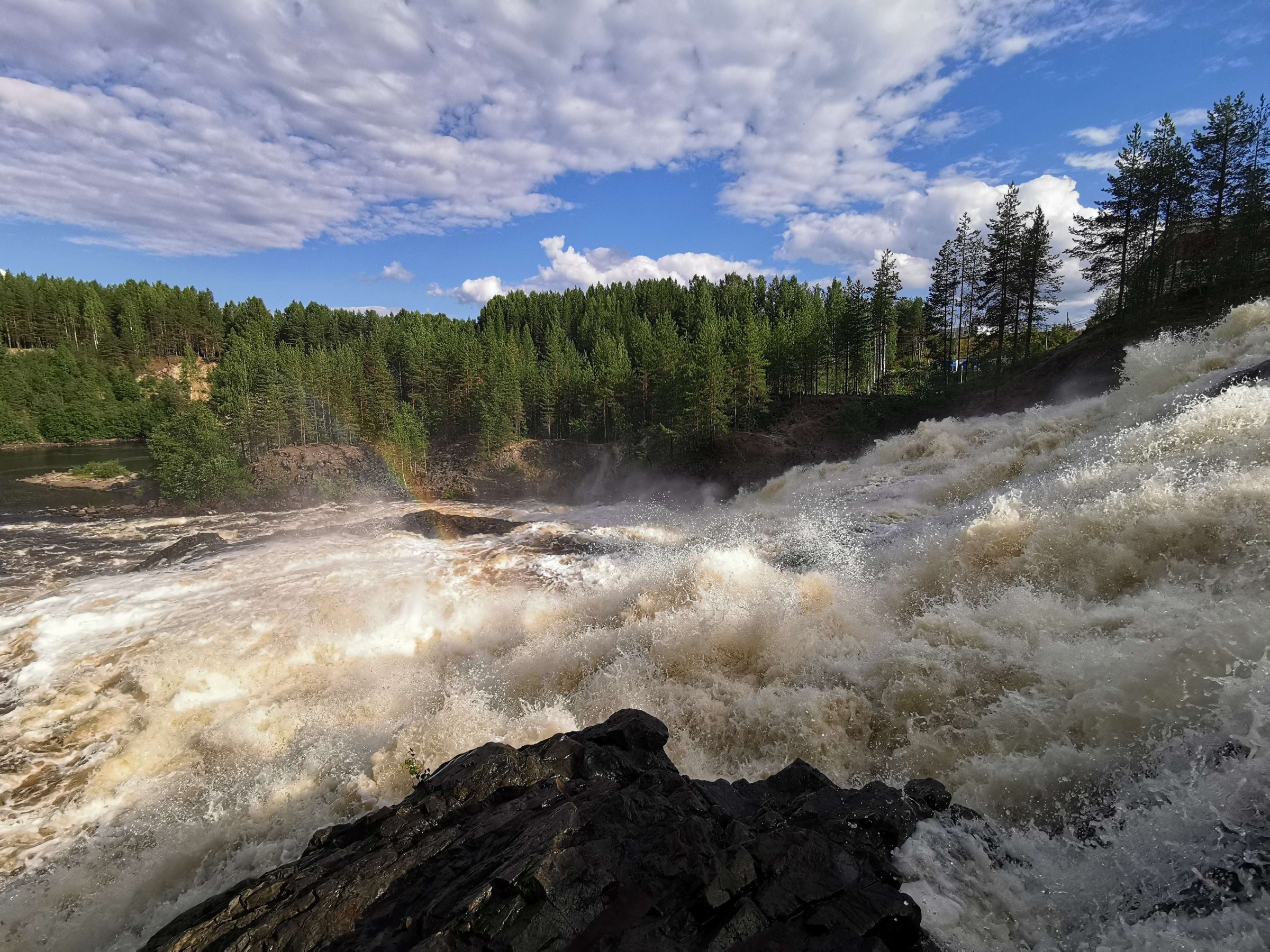
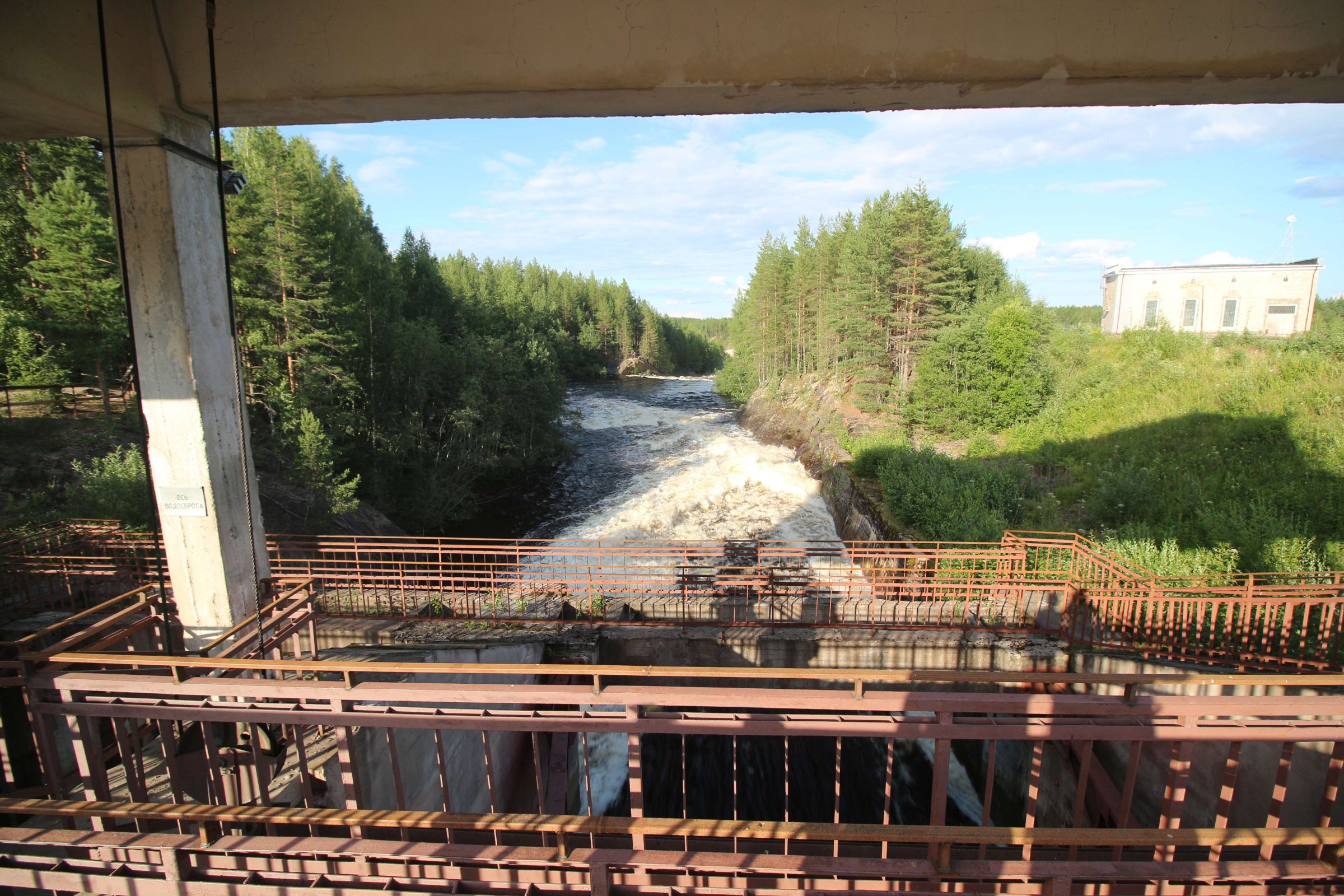
We drove on. Our next point was the Girvas volcano. We arrived, parked, paid something like 100 rubles for the two of us, and started walking around the site. First we saw a dam releasing water at about half its capacity. And that was good, although maybe also bad. I will explain why in a moment.
After the dam came the rapids, and it turned out that these rapids were actually the ancient Girvas volcano. If the water release had been shut off, we would have seen the exposed rock and been able to walk on it.
But even what we did see was enough for us. It was much cooler than Kivach waterfall. One could spend a long time there. We took many photos and walked back to the car. And while we were standing there having a snack, we got one more attraction thrown in for free: a fish farm. We saw 3 or 4 enclosures, but we could not see what was inside them. Right then a man carrying a sack walked onto the bridge, and as he moved toward the farthest enclosure, some kind of madness started in all the enclosures he passed. Fish appeared and began going wild. The occasional fish even tried to leap out of the water. When the man reached the last enclosure, he cut open the sack, took out a scoop and started throwing something like grain into the water. That was when the fish really started thrashing the water. Food had arrived, so everything had to be devoured immediately. They were all jumping and trying to eat it all.
Fine, we drove back home. On the way we stopped at two gas stations. Neither had 92 octane petrol. So we decided to leave fueling for tomorrow.
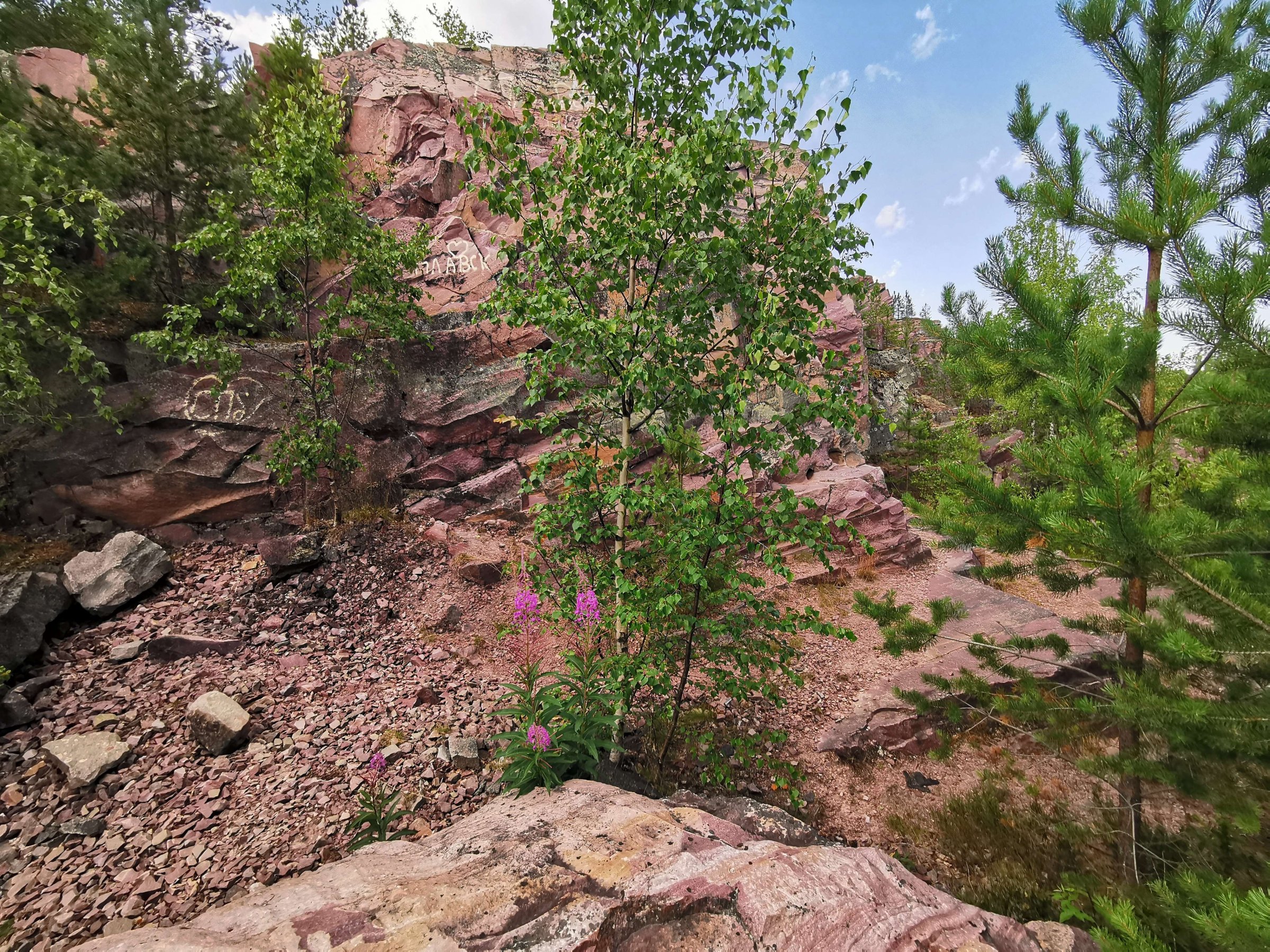
July 28, Tuesday. We somehow woke up, ate, got ready and drove to the pier to try our luck one more time. But there they told us that the Meteor still had not been repaired. There was a high probability it would be fixed by lunchtime. Fine, we decided not to wait too long and immediately drove to our next point, stopping on the way at a gas station where we stood in line for probably 30 minutes. Time was tight. Our destination was a quartzite quarry. I do not know why we went there at all. The road was awful. Apparently no tourist or transport routes go there, so nobody cares much about it. But we were used to that. It was roughly the same kind of road we had taken when we drove to Ostashkov. Patches and holes everywhere, the car shaking constantly. It was unclear what speed to drive at: go fast and blast through it all at once, or crawl slowly along the shoulder. In any case, we drove for a long time and finally got there. I think in the end it was not worth it. The view of the lake there was the same as everywhere else. The quarry itself was nothing remarkable.
While we were driving there, people kept looking at us strangely. Apparently tourists are rare there. So my advice would be: do not go there, there is nothing interesting.
So we stood there for a while, looked around, and drove back. Our timing had been planned so that we could still have lunch at the same restaurant as yesterday. Lunch is sacred, so we had to make it before Kizhi. While we were still at the quarry, I got a phone call. I thought they were calling to say everything had been cancelled again, but no. They called to say that the excursion would take place and asked whether we had changed our minds. On the way back the road no longer seemed so bad. I was flying along at 80 km/h, skillfully darting from one side of the road to the other, depending on what my super-mega-brain considered optimal in terms of saving the suspension. As a child I had a Formula 1 game from the same series as Nu, Pogodi. In that game you had to drive an F1 car and avoid obstacles in the form of sticks. The more you played, the more points you scored, and the faster you had to do it. I think that gave me lifelong road reflexes.
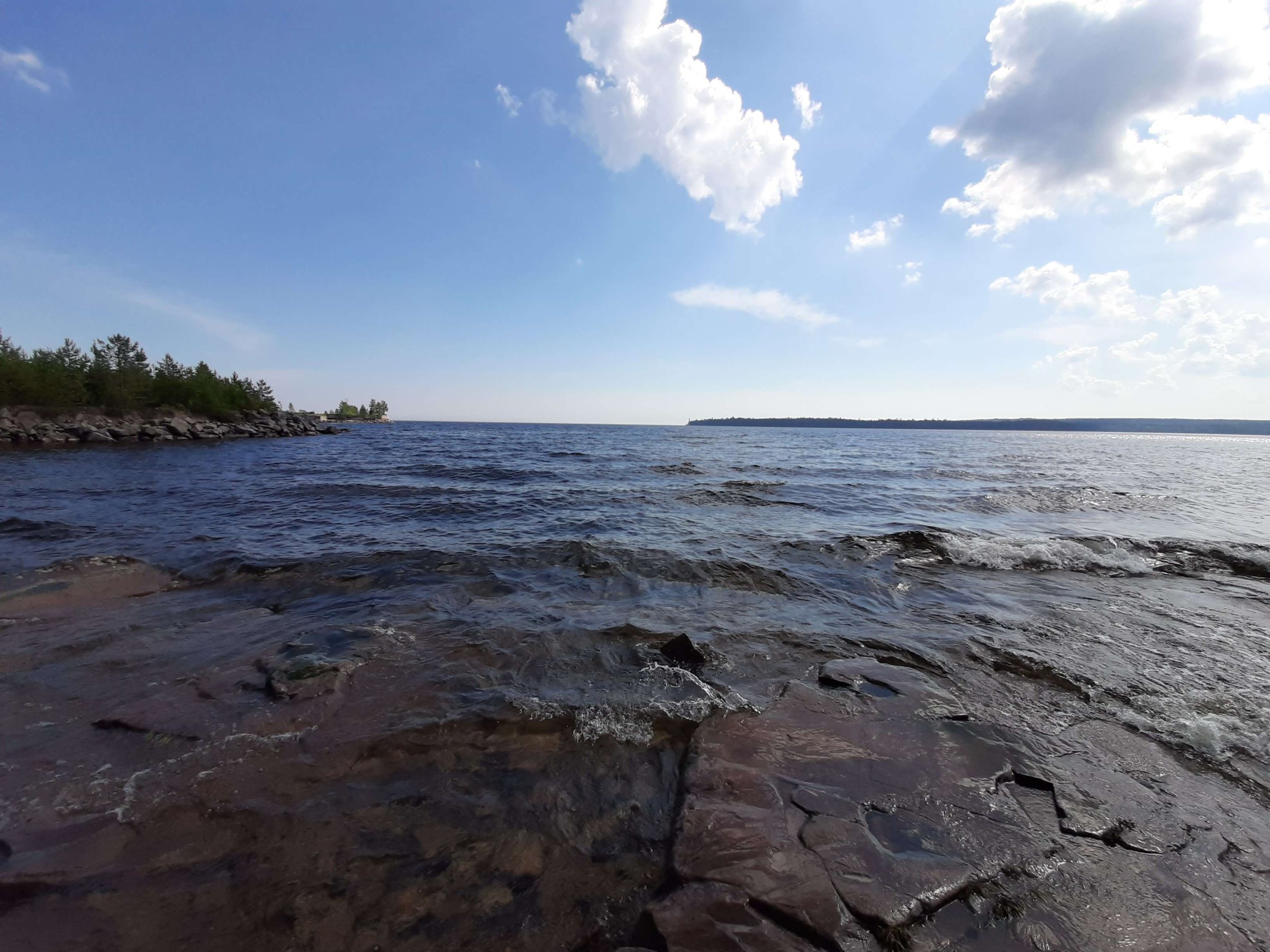
On the way back, so that the trip would not feel completely pointless, I set two points that were closest to the lake. That is where we drove. We looked around and found nothing interesting, just a lake being a lake.
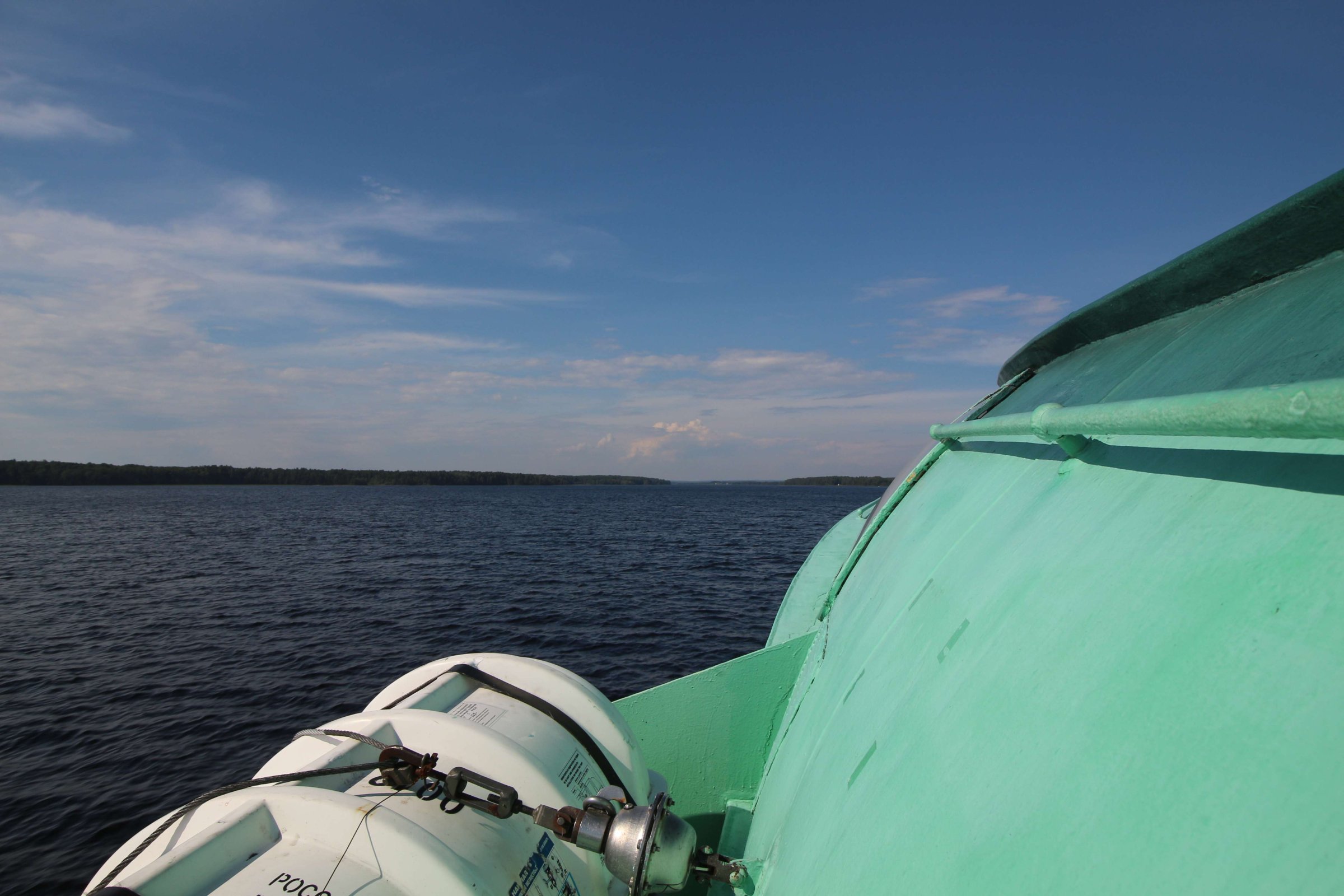
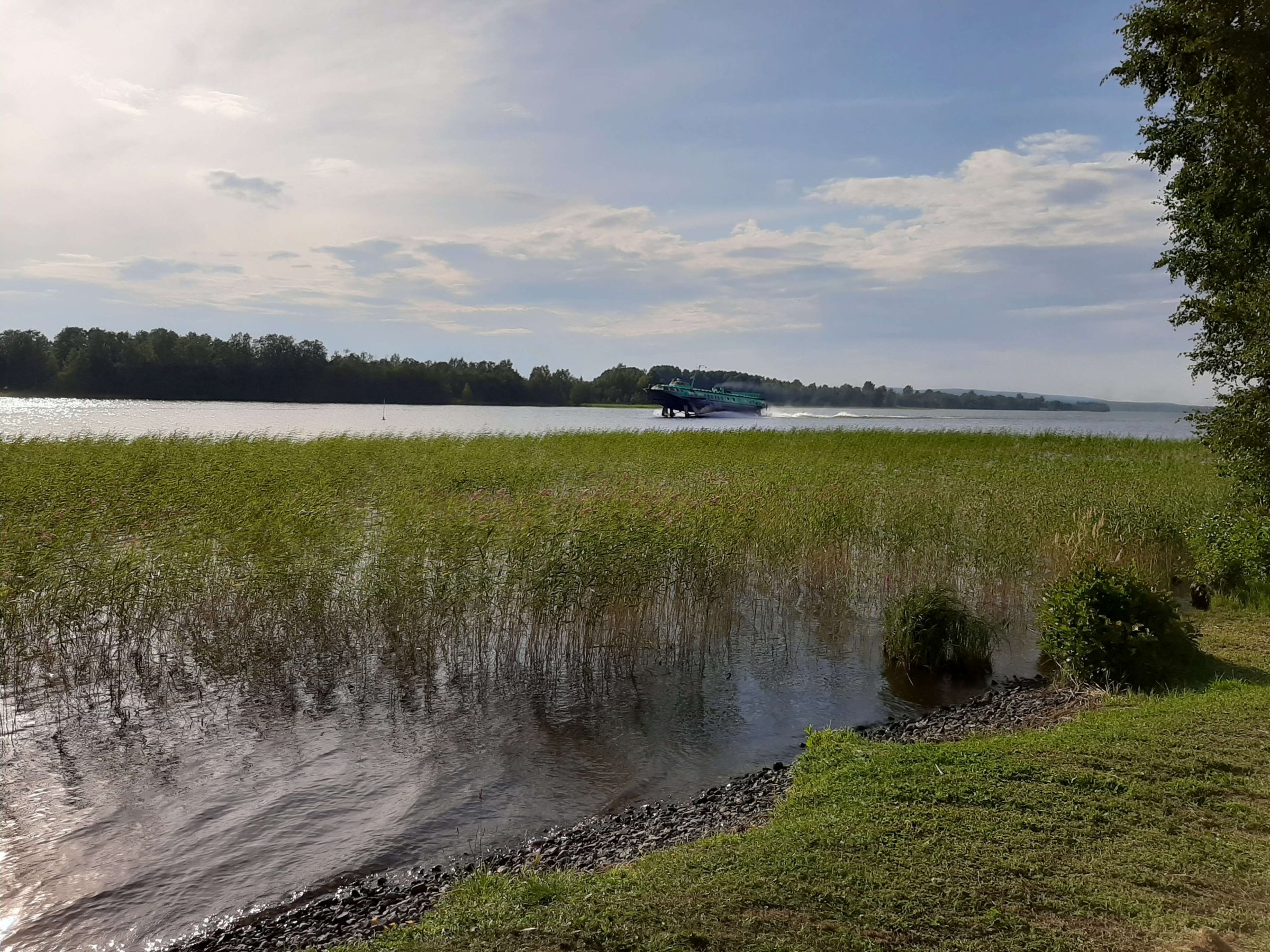
We arrived at the pier. There was not much time left, but we still managed to have lunch, although we had to call the waitress over so she would bring the bill faster. At the pier we were sent to the line for the Meteor. At the entrance they checked our temperature, and we took our seats. We even managed to get seats in the front, though not by the window. Inside it felt scary. There was no air, and it felt scary in terms of coronavirus too, because in such a closed and poorly ventilated space you could get sick easily. Once we started sailing it got a little better, but not much. Sveta and I took turns going out for fresh air. I took a photo of us underway:
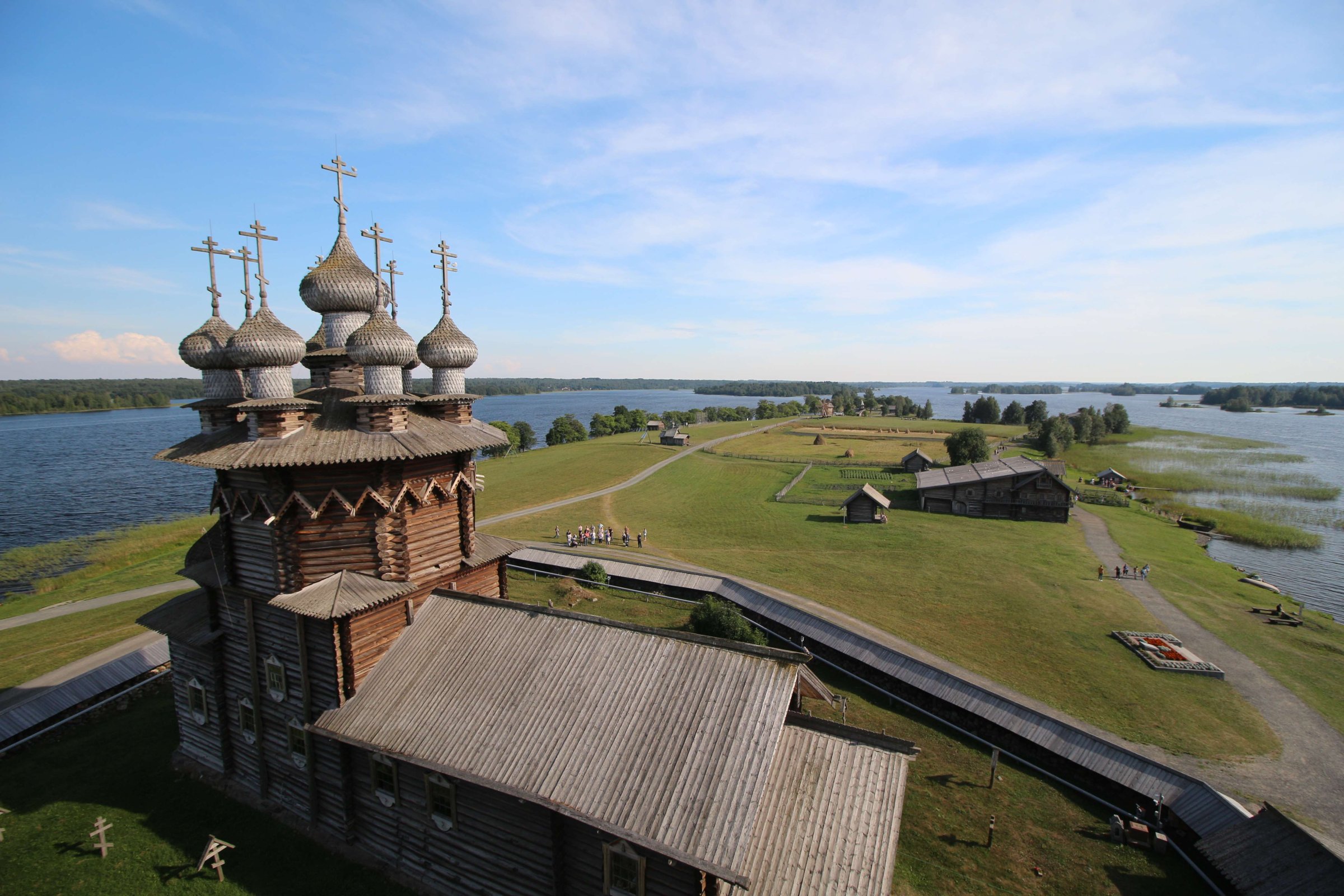
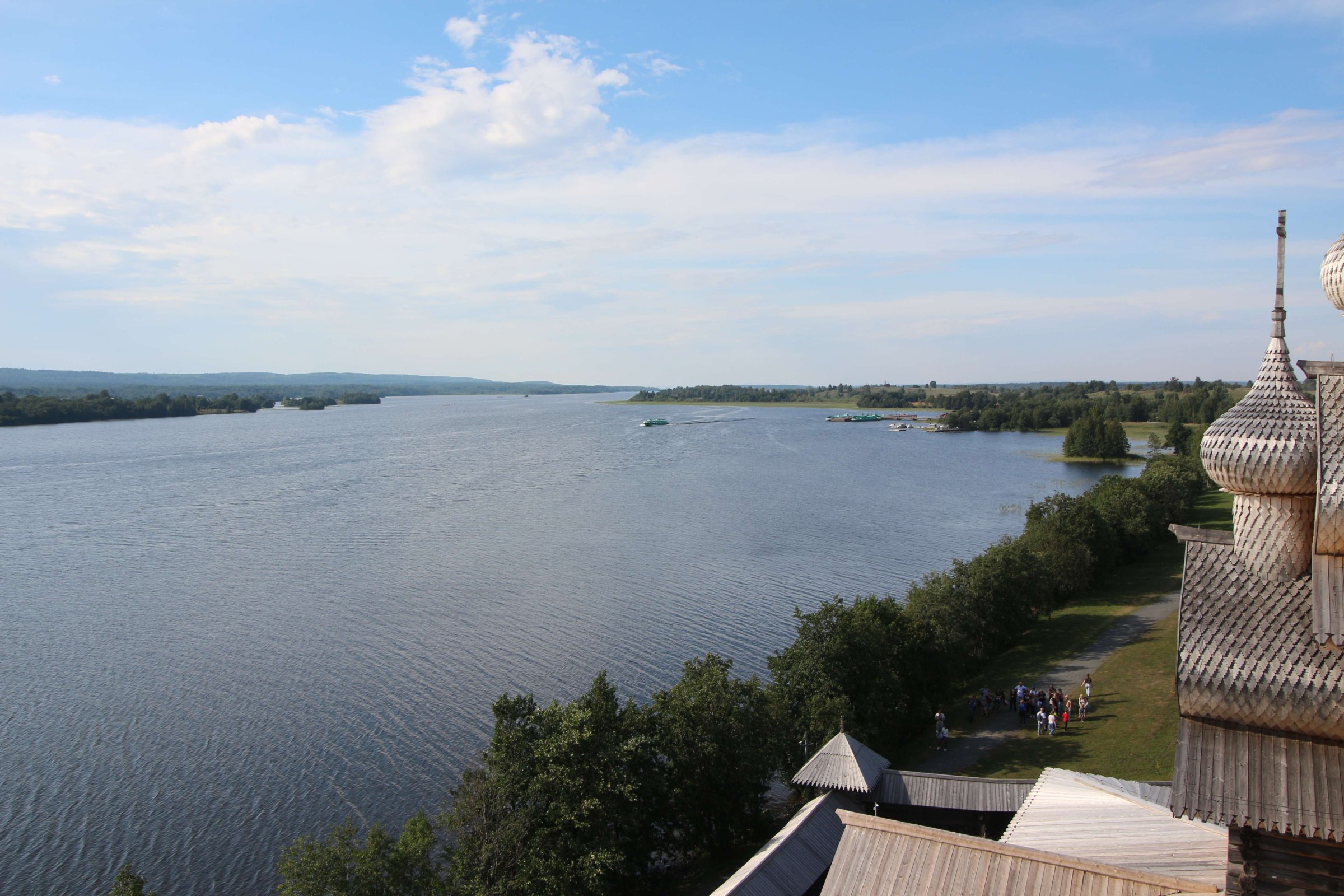
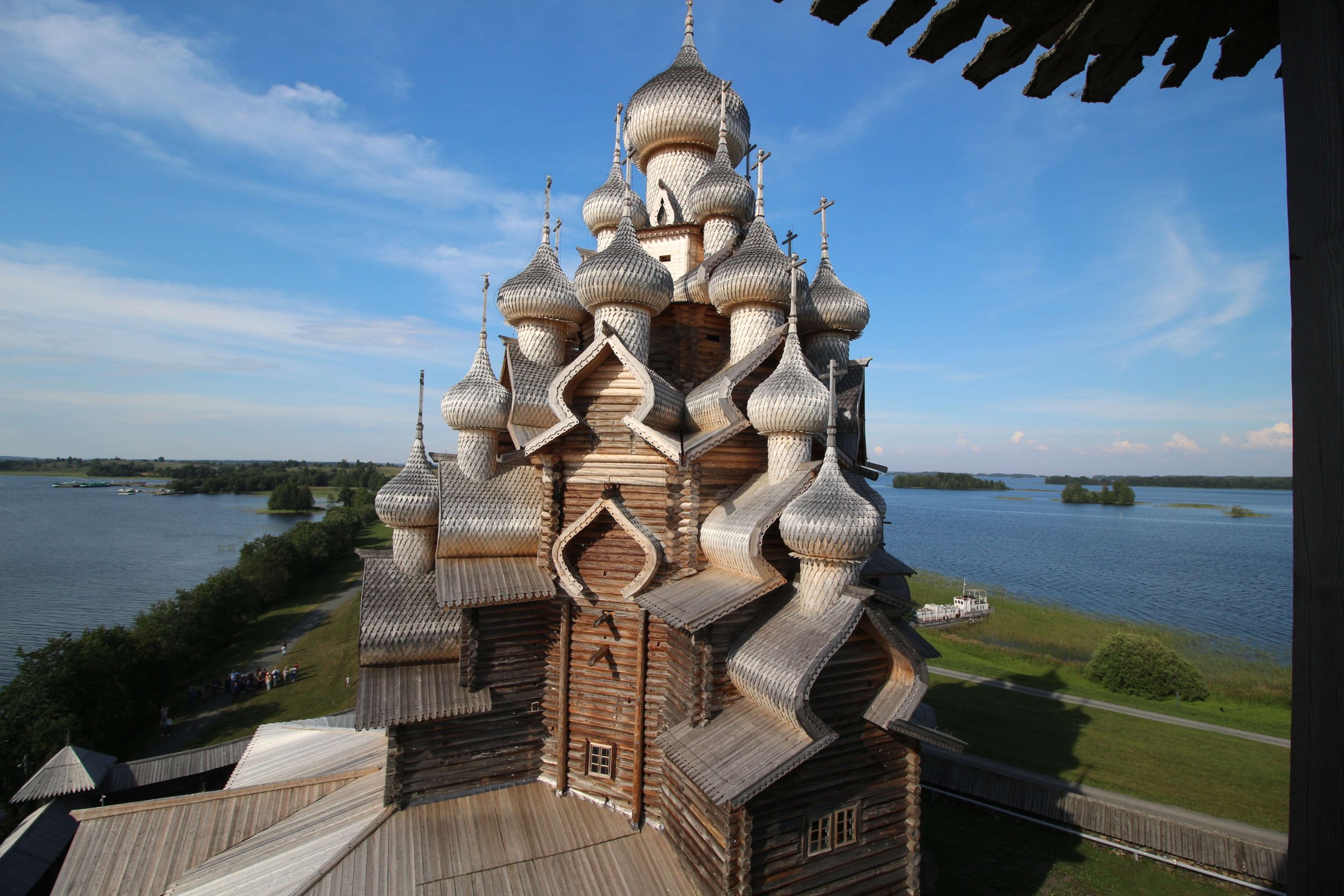
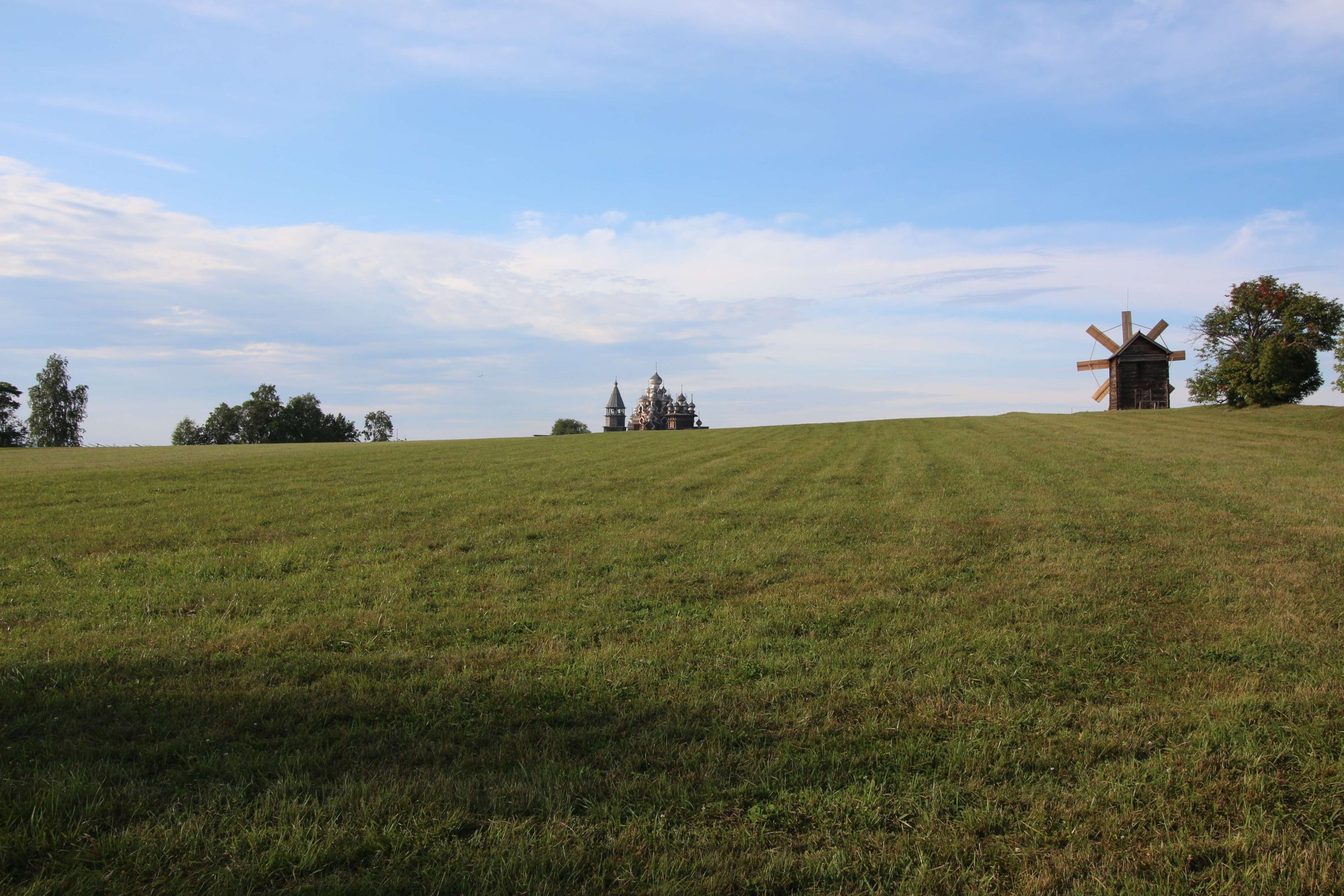
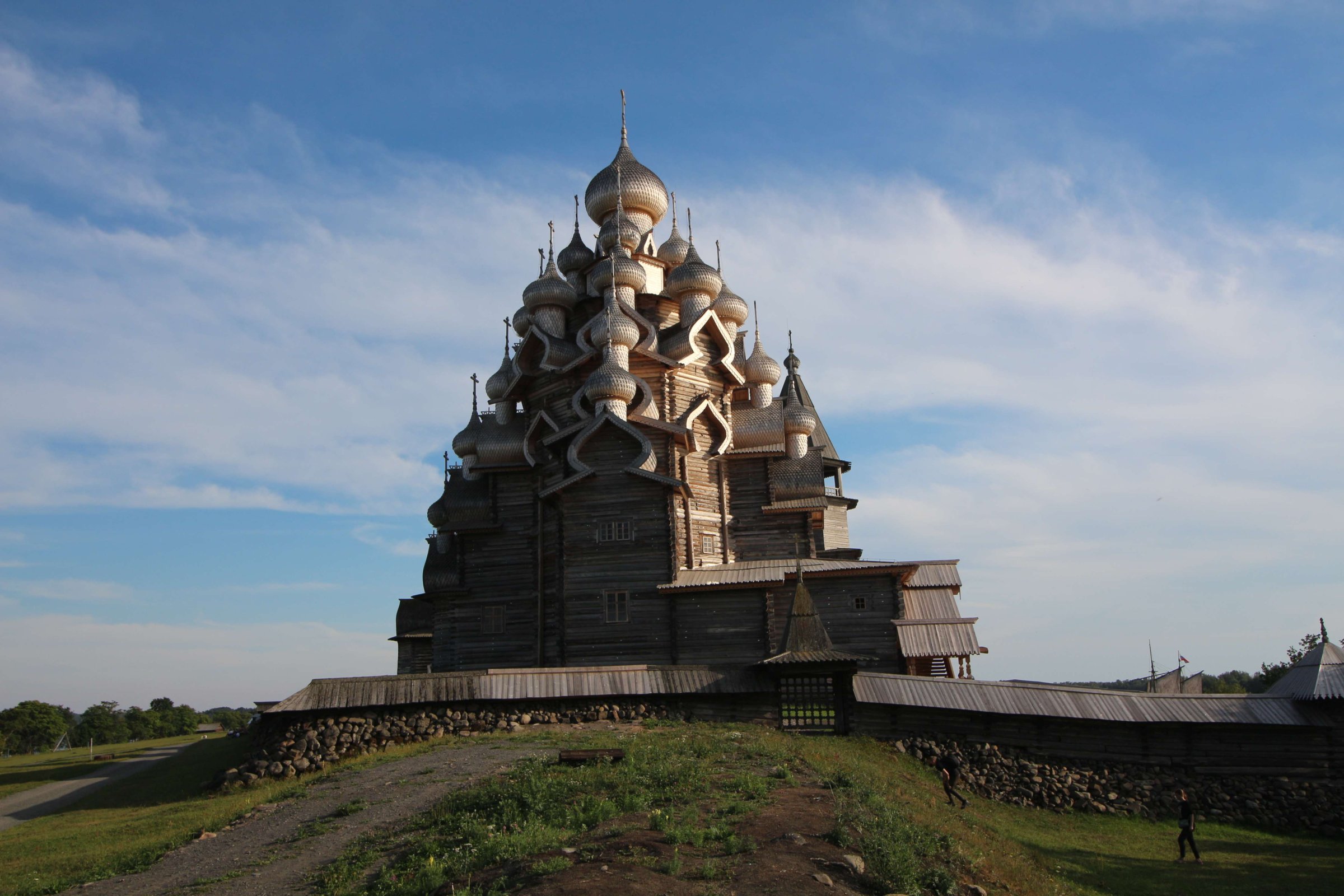
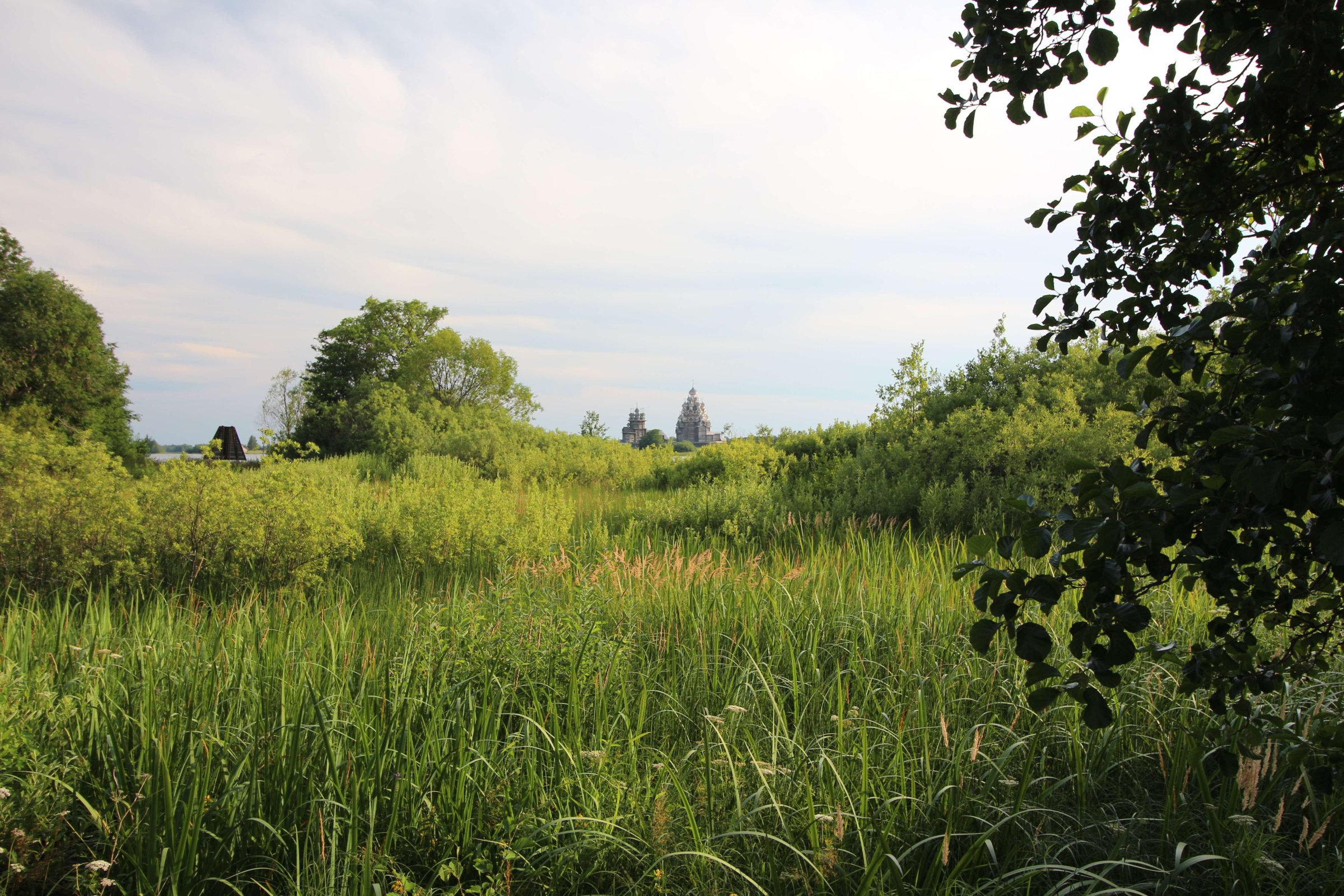
We arrived at Kizhi. The island turned out not to be as large as I had imagined. While we were walking along the pier, I heard our escort tell someone to hurry to the ticket office because the entire hydrofoil would have to line up there, at that single booth. Sveta and I ran and were first in line. As it turned out, renting bicycles was not possible, but a guide was included in the ticket price. We ignored the guide and went off to walk around the island by ourselves. The first thing we did was head to the main church. You could not go inside, but we found out that it was possible to climb the tower next to it for a fee. We learned where to buy the ticket, rushed there, waited about 5 more minutes, and then went up the stairs. Because of coronavirus, no more than 4 people were allowed upstairs at the same time. They added two more people to our group, and up we went. Here are a few photos from above:
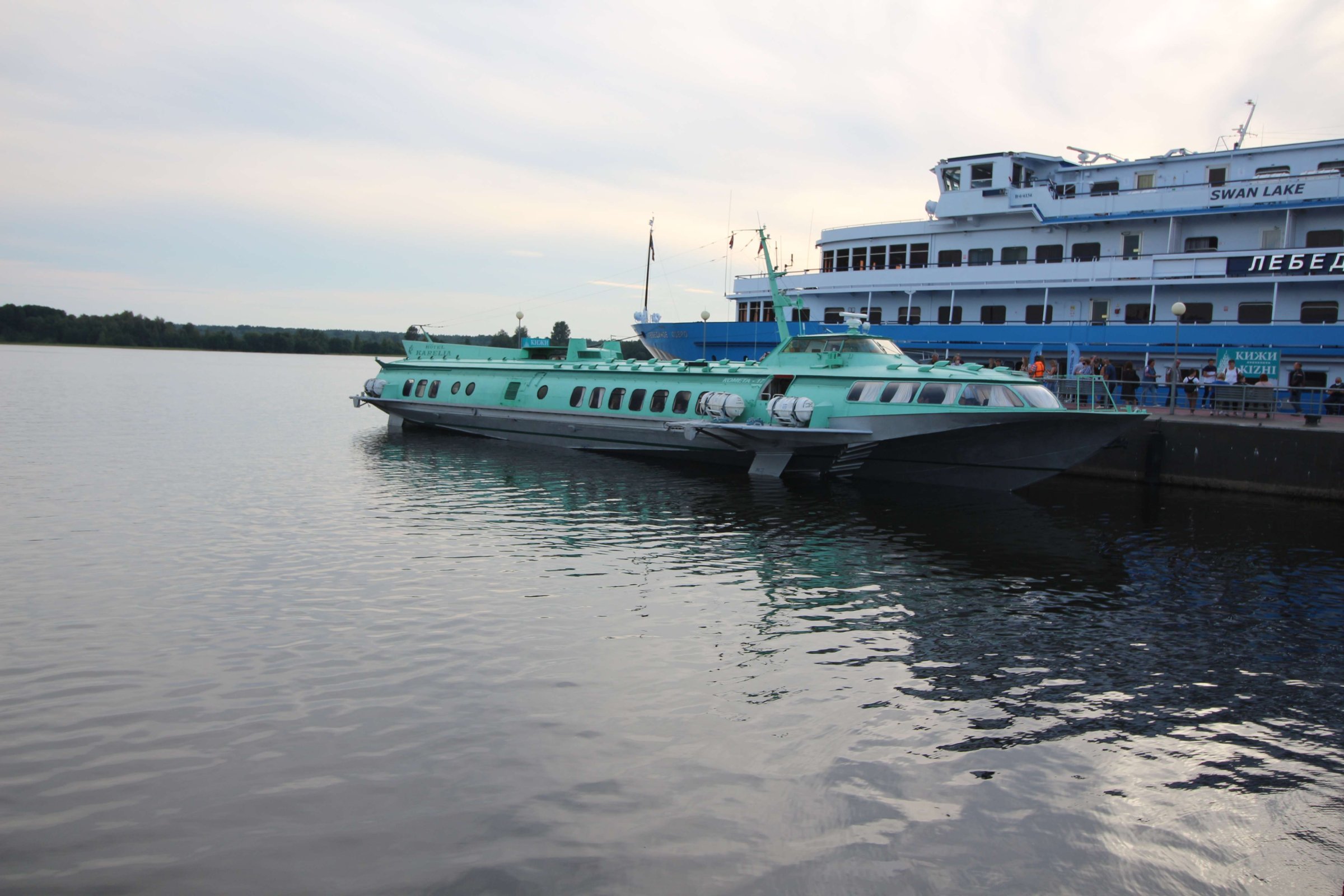
When we came back down, the queue was already long, so we had gotten there just in time. After that we continued walking around the island and had a small snack somewhere behind a house. Here I captured the same kind of Cometa, or maybe Meteor, I do not remember, that we had arrived on:
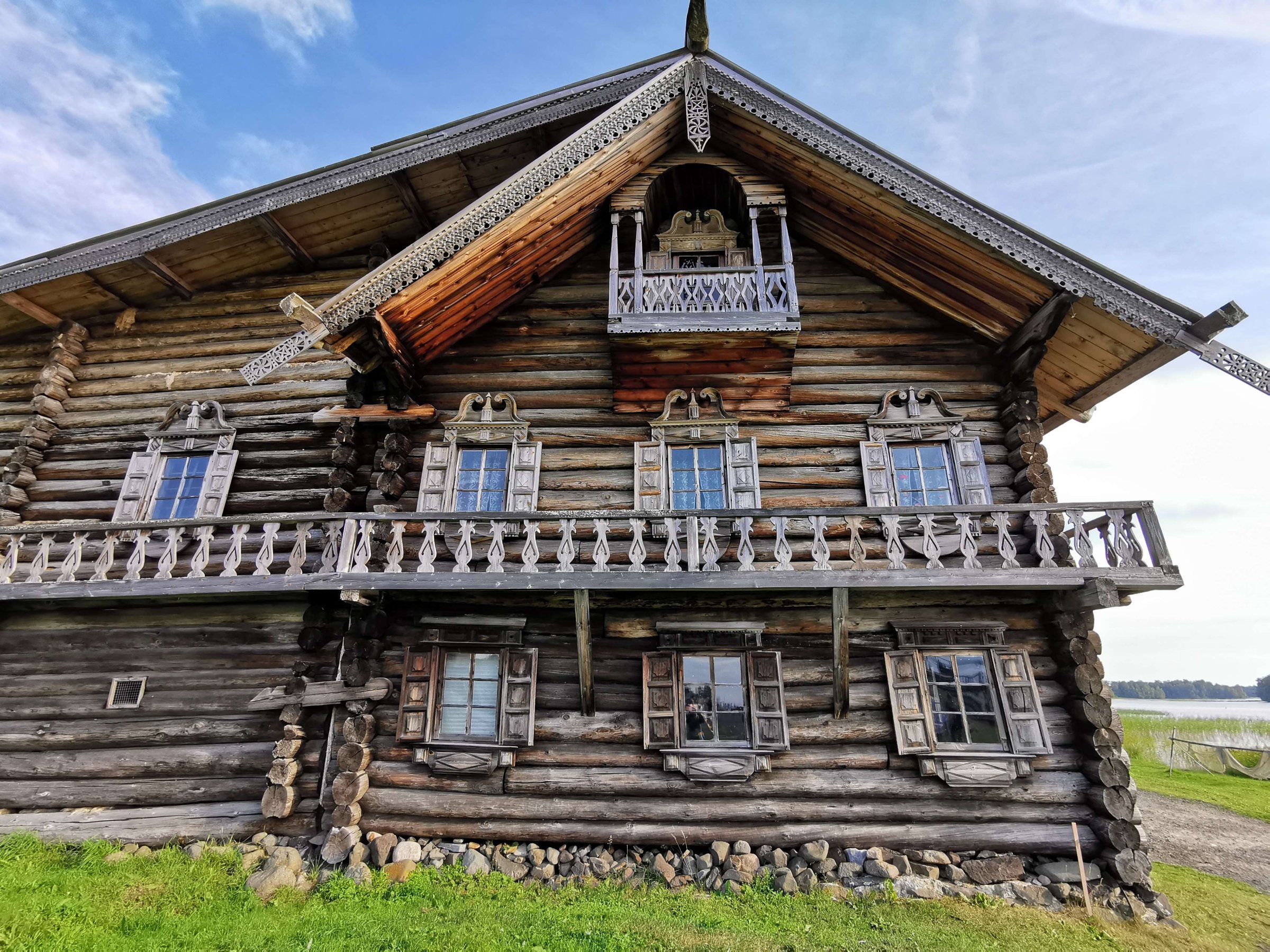
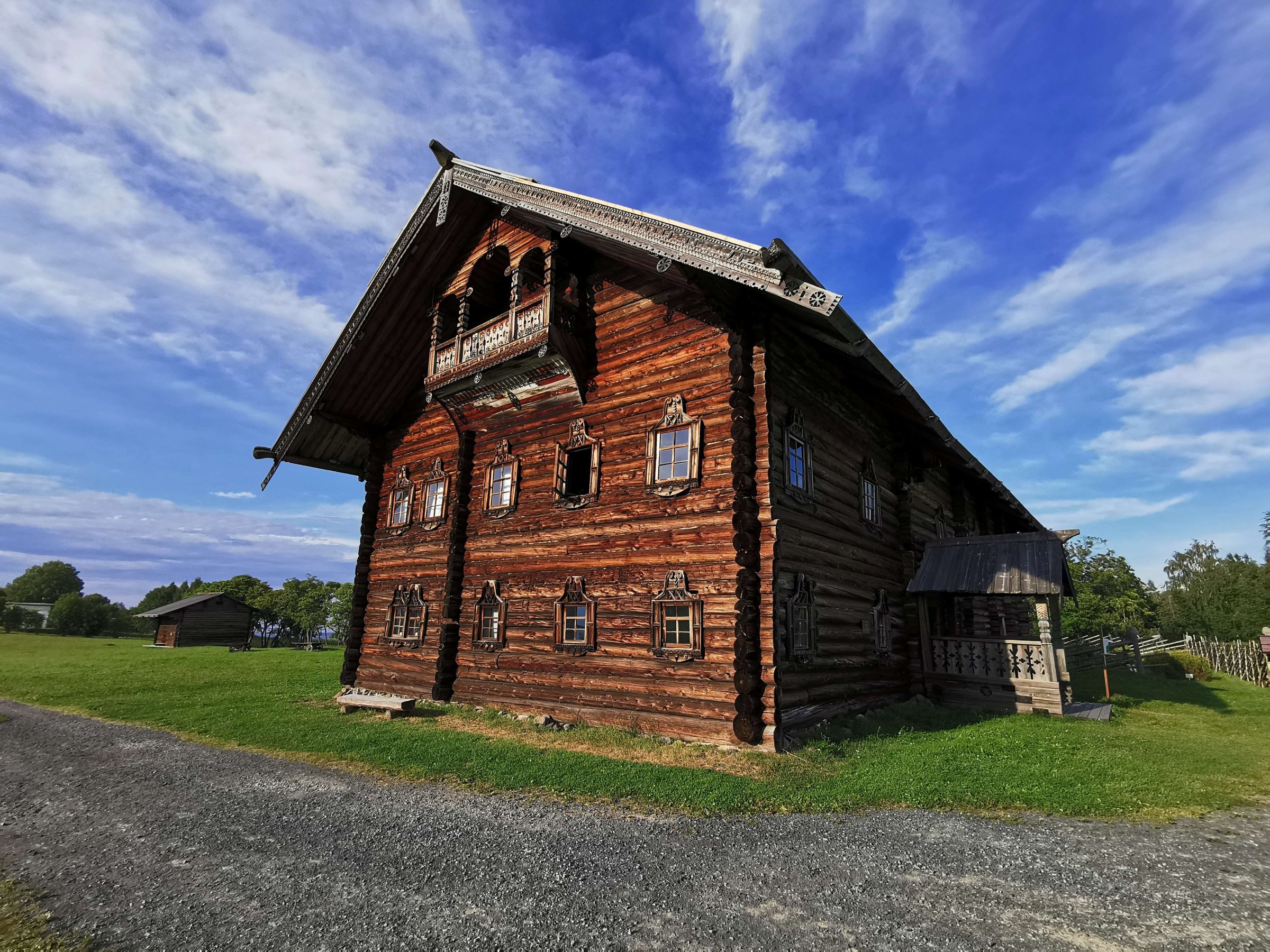
These are the kinds of houses you see on Kizhi. Nobody lives in them anymore, they have all turned into a kind of scenery:
There was still time, so we walked to the other side of the island. There was, generally speaking, nothing interesting there. The most interesting things were really the bell tower and the church. There was also some sort of gondola standing next to the church.
We returned to the pier and began waiting for our hydrofoil. Here it is:
We sailed back to Petrozavodsk already tired. The weather seemed to have worsened. It was good that we had enjoyed great weather on Kizhi itself: sunshine and warmth. You could walk around there in T-shirts. Let me remind you that the day before we had been walking along the embankment in Petrozavodsk in sweaters and freezing. Perhaps it is always like that on Kizhi, since there is no open water all around, only forested islands everywhere. Maybe the wind simply has nowhere to gather strength there.
We docked in Petrozavodsk, found our car and drove home, stopping at Pyaterochka on the way. People in the store were wearing masks, and it felt a bit unsettling to be there. In Dubna, the period when you had to wear masks in stores had long since passed.
At home I booked a hotel for tomorrow, but I had to book it for only one night. Whenever I searched for two nights, there were zero options. And the price felt quite high too: 4,000 rubles for one night, for a room with a shower and toilet but no kitchen. In Petrozavodsk we had been staying in a full apartment for about 3,000 rubles per night.