Male and Fulhadhoo. A 10-day trip
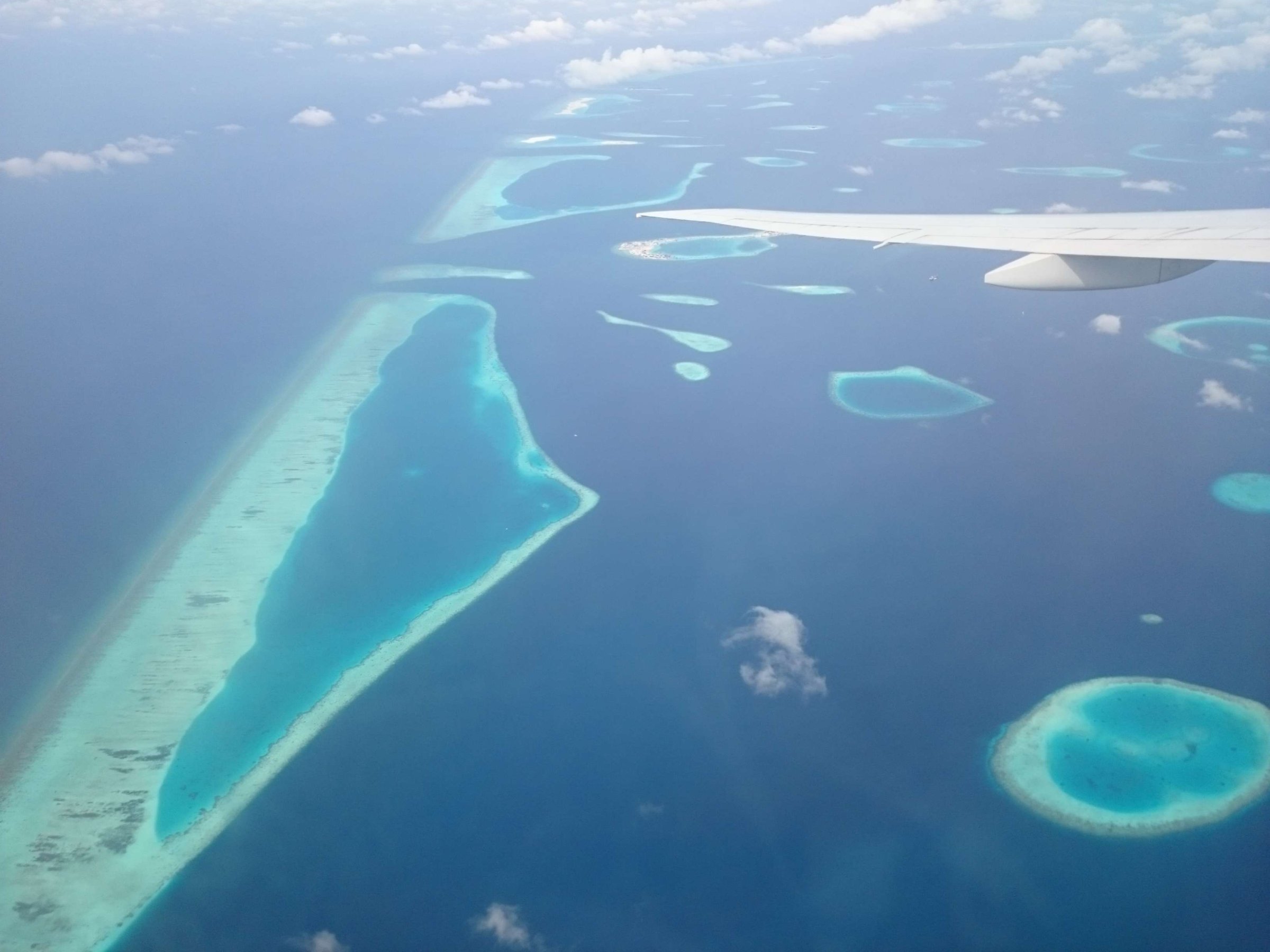
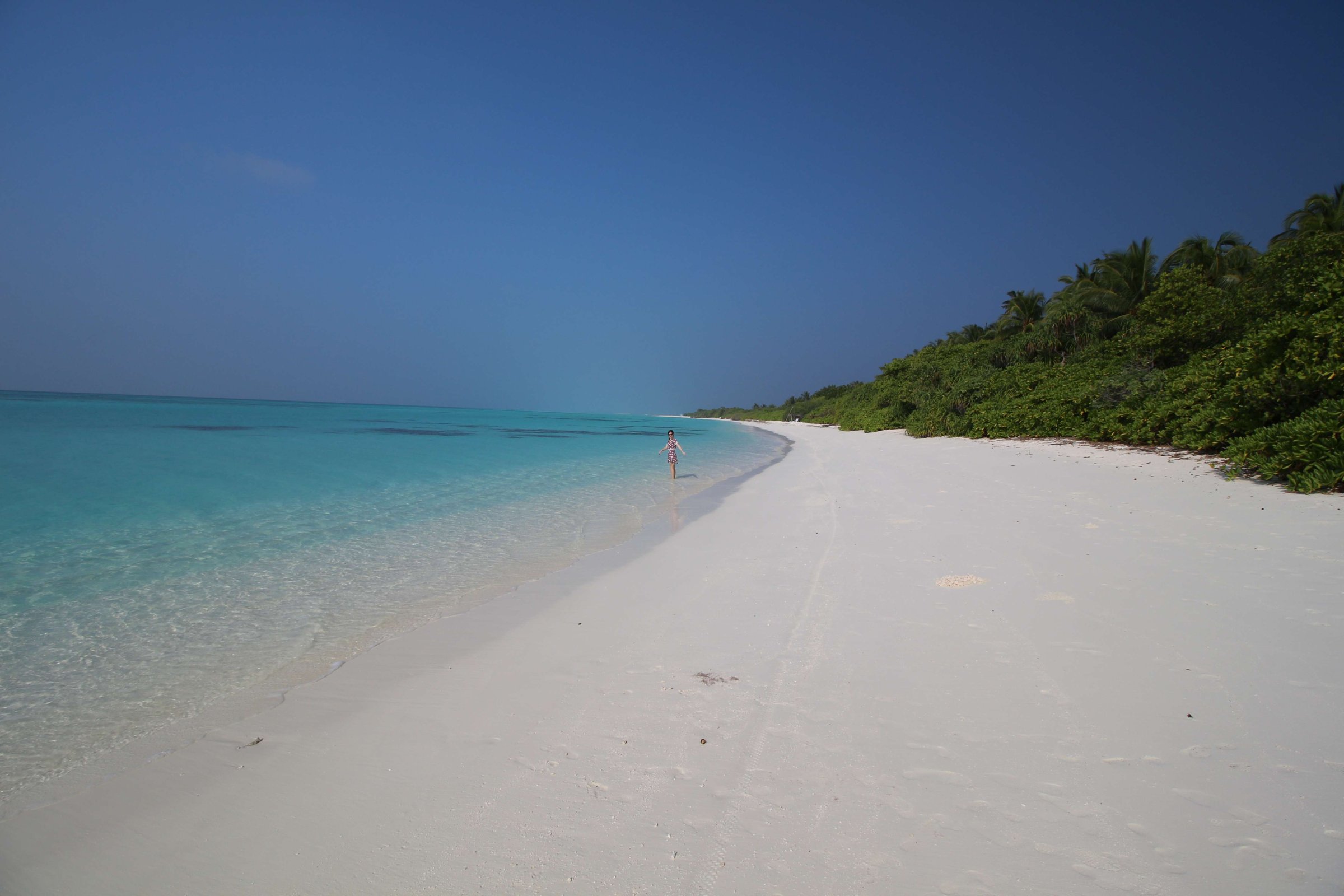
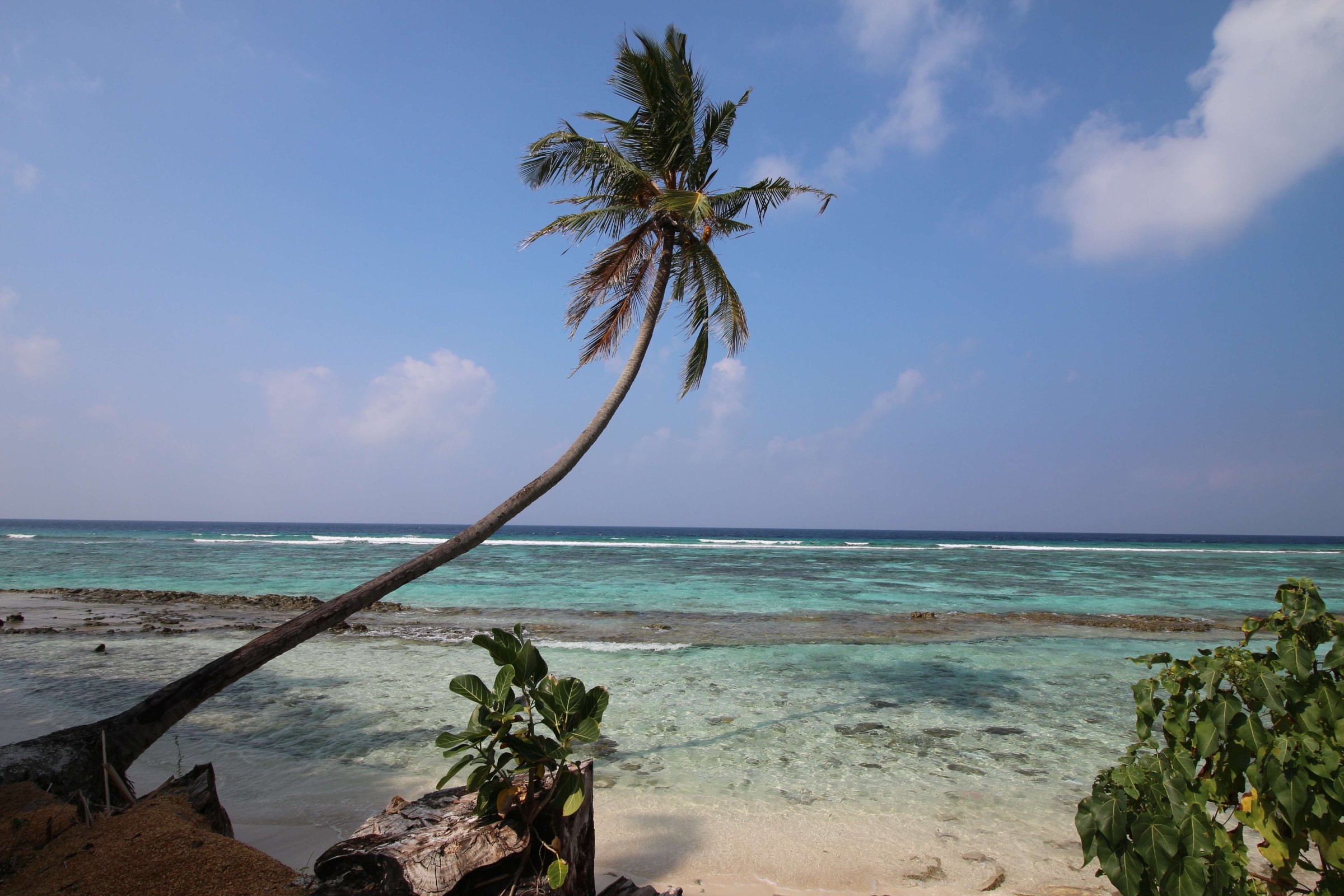
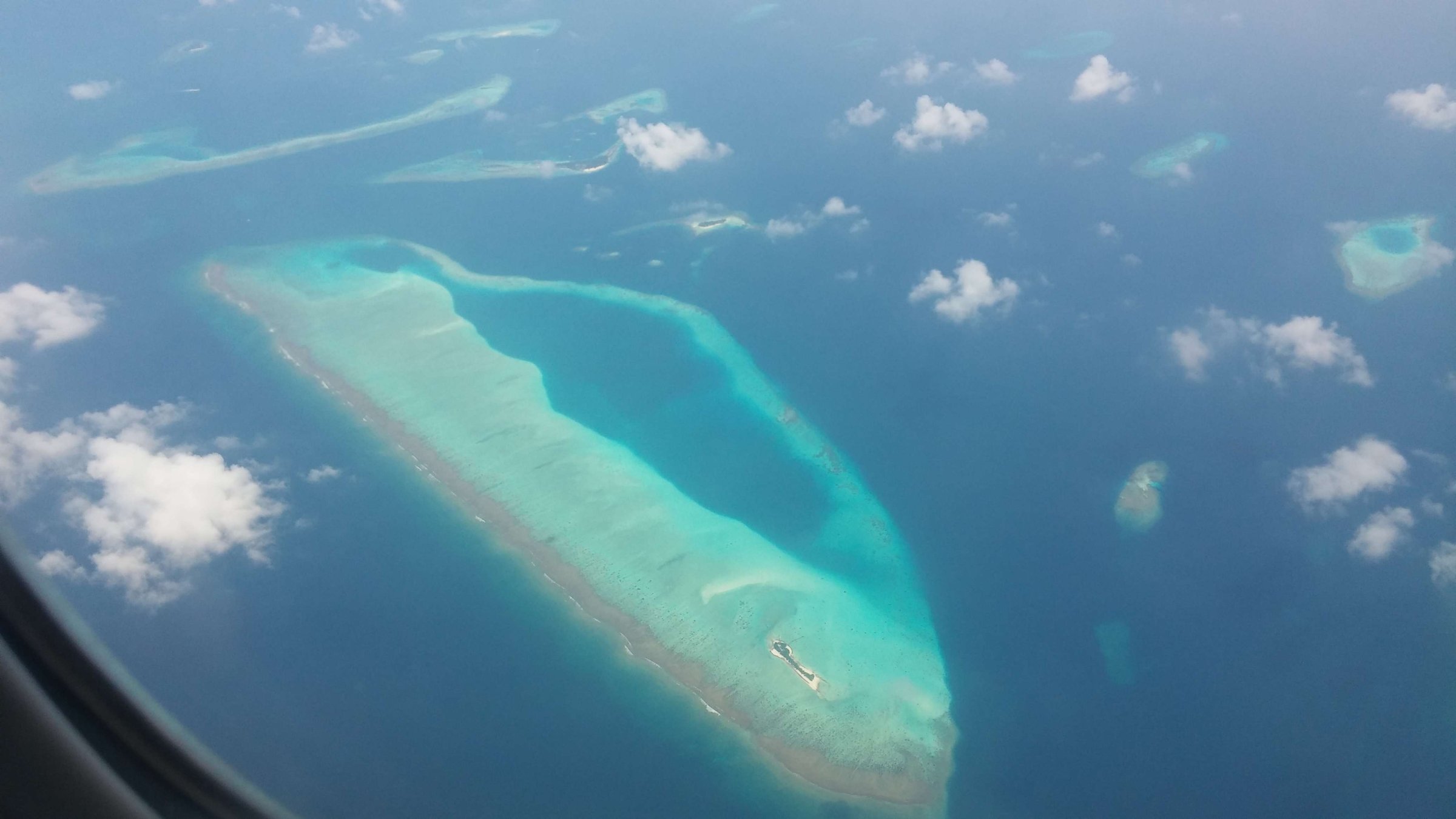
So, on Tuesday, January 30, we worked half a day, took the suitcases we had packed the night before, complete with bottles of water inside, dressed warmly and headed by taxi to Domodedovo. Our Emirates flight to the Maldives departed at 11:50 p.m. with a connection in Dubai. It was 6 hours to Dubai, then a 3-hour layover there, and another 5 hours to Male. The time difference between Moscow and the Maldives is only 2 hours. When we changed planes in Dubai, it was not very warm there, only about +18 C. It was morning, so we did not overheat too badly, and the airport air conditioning worked fine. Then came the flight to the Maldives. There was nothing particularly interesting until we started flying over the islands themselves. I photographed them through the airplane window:
When we arrived and stepped off the plane, my first thought was: how are we going to breathe here? The humidity was terrible, and we were dressed for the wrong weather. It had been fine on the flight because planes are usually cool, but here it was +32 C, and it felt even hotter, probably because of the humidity. On top of that, passport control was in a horribly stuffy room without air conditioning, and as always there was a huge line. It feels as if no airport in the world can process passengers from one flight quickly enough to avoid making them queue. I have always had the impression that the arrival of so many people comes as a surprise to them every single time.
At passport control the officer asked us to show our booking. He studied it for a while and eventually let us into the country. After that we went to change clothes right away, and I also bought a SIM card from a local operator, I think for 30 dollars with 15 or 30 GB. Almost immediately we already had internet through the mobile modem.
We had plenty of time, so we started figuring out how to get to the neighboring island. We found a ticket office, paid a small amount, waited for the boat, and boarded it. Locals helped us load the suitcases. It felt unusual to be on a boat where there were only five or six tourists and everyone else was local. For us it was the first time in our lives.
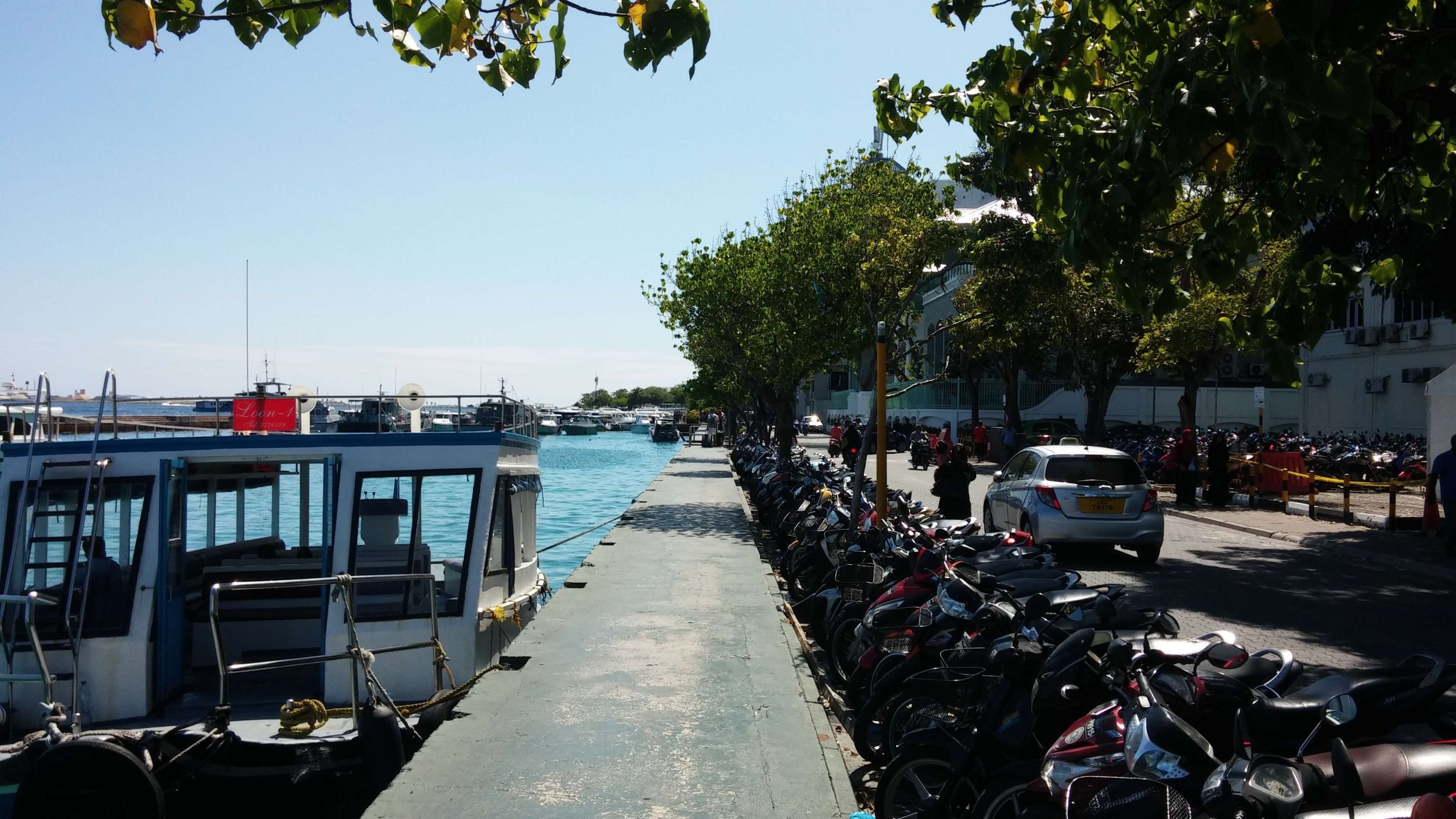
We reached Male, and then hell began: lots of motorcycles and scooters darting back and forth, cars moving around, everyone honking. I started looking at the map on my phone to see where we had to go, but before I could even do that some local guy ran up to us and asked where we were heading. He offered to find us a taxi, but we said we would walk, and he happily guided us there for free.
Male is a very small island, but moving through its narrow streets was difficult, especially with suitcases that had to be lifted over uneven pavement.
We arrived at the hotel and there was air conditioning at reception. It immediately felt cool enough to worry that we might catch a cold. The tiny room we had rented was very expensive, around 64 dollars per night, and that was for a room with its own bathroom and toilet but no windows. The only little opening looked into the inside of the building, into a space of about one square meter, and someone was constantly drilling there. We unpacked and lay on the bed staring at a TV we understood nothing from. There was some Indian channel talking about the full moon. We had absolutely no desire to go back out into that chaos, so we spent the whole evening lying on the bed.
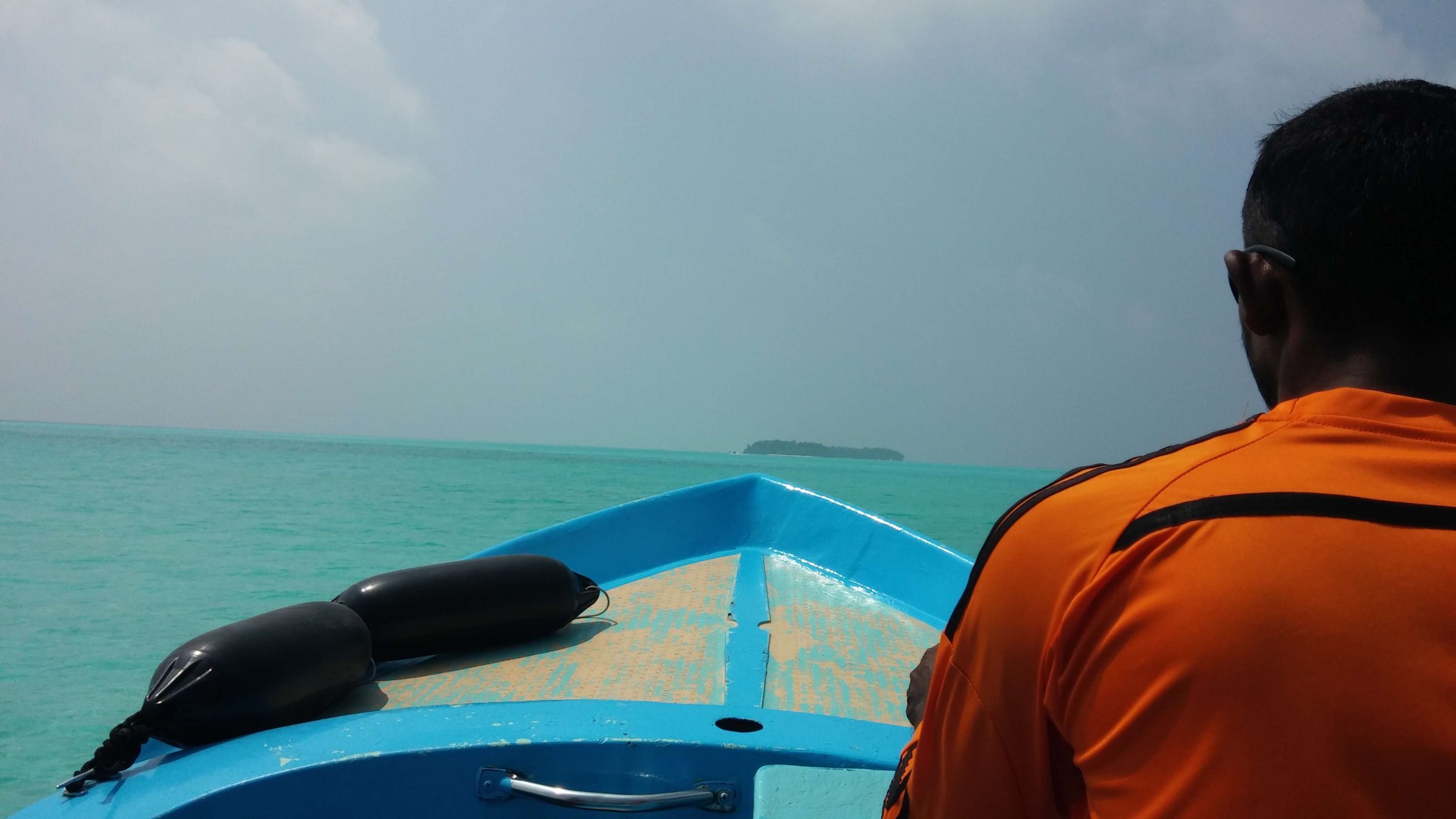
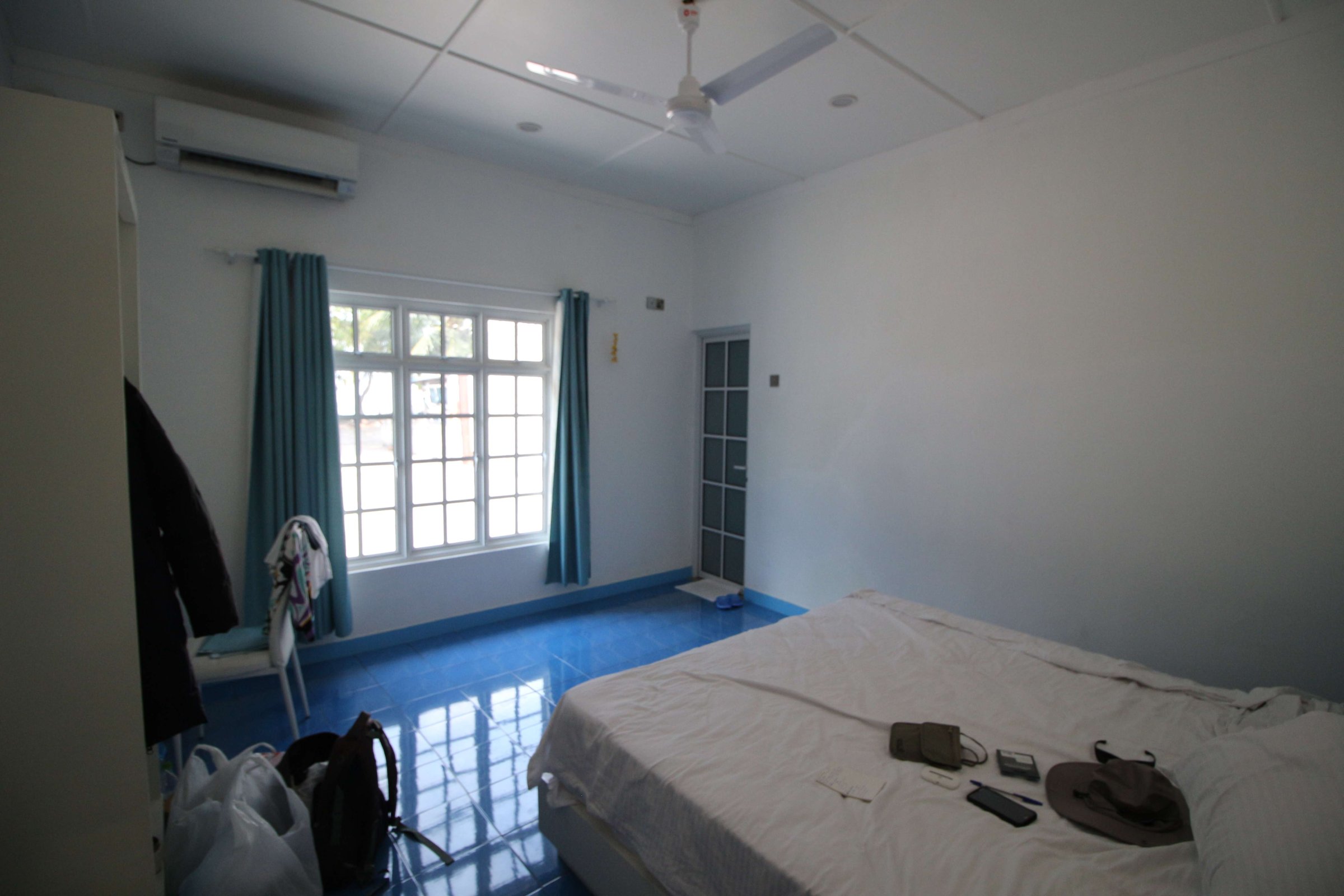
Morning of February 1. We woke up and I saw a message from the hotel manager saying that the boat departure had been moved from 9 a.m. to 10:45, so we could get ready slowly and walk to the pier without rushing. We were very afraid of the sun there, so I dressed in a way that made no sense for the weather: a long-sleeved shirt and a hat with a wide brim. We reached the pier, I ran around looking for the boat and could not find it. Then a man came up to us, introduced himself, and we realized he was there for us. He handed us the boat tickets, showed us where it would come in, and after a while it arrived. He put us on board and we sailed away. Again, there were hardly any tourists on it. We had been worried that we would get very tired from bouncing over the waves and bruise ourselves all over, and if the boat had no roof we could also get sunburned and then catch a cold. We had around two hours of sailing ahead of us to Goidhoo, and then another 15 minutes to the neighboring island. In the end it all went fine. The boat had a canopy and did not bounce too much. Once Male disappeared in the distance, you could really feel that we were somewhere in the middle of the ocean on a tiny boat. And if we suddenly sank, nobody would even know where we were. My router sometimes picked up internet, but mostly only when we were passing some island. We reached Goidhoo, got off the boat, and were immediately met by other people from Vilu Beach. They simply asked, "Vilu Beach?" We said, "Yes." They put us in their own boat, which had no canopy, and we sailed farther on. On the island a girl met us and walked us to the guesthouse. It was only about 100 meters away. They immediately sat us at a table and gave each of us a coconut with a straw. We drank it slowly because it was cold and had to warm up in our mouths first. While we were sitting there, they asked what we wanted to do on the island and how we wanted to eat. As for activities, we said we would decide later. As for food, they showed us a menu. The prices were not very high. We chose what we would eat for dinner and decided to skip lunch to save money. After that they showed us our room, and there was a surprise. On Booking we had chosen a cheaper room with a courtyard view, but in the end they put us in a sea-view room. There were three rooms in total: one facing the yard and two facing the sea. Another couple was staying next door, though we met them only later. This is what the room looked like. Its size and cleanliness surprised us, especially after the night in Male:
We unpacked, gathered our swimming things, and went to walk along the beach while waiting for the sun to become less intense so we could swim without such brutal heat.
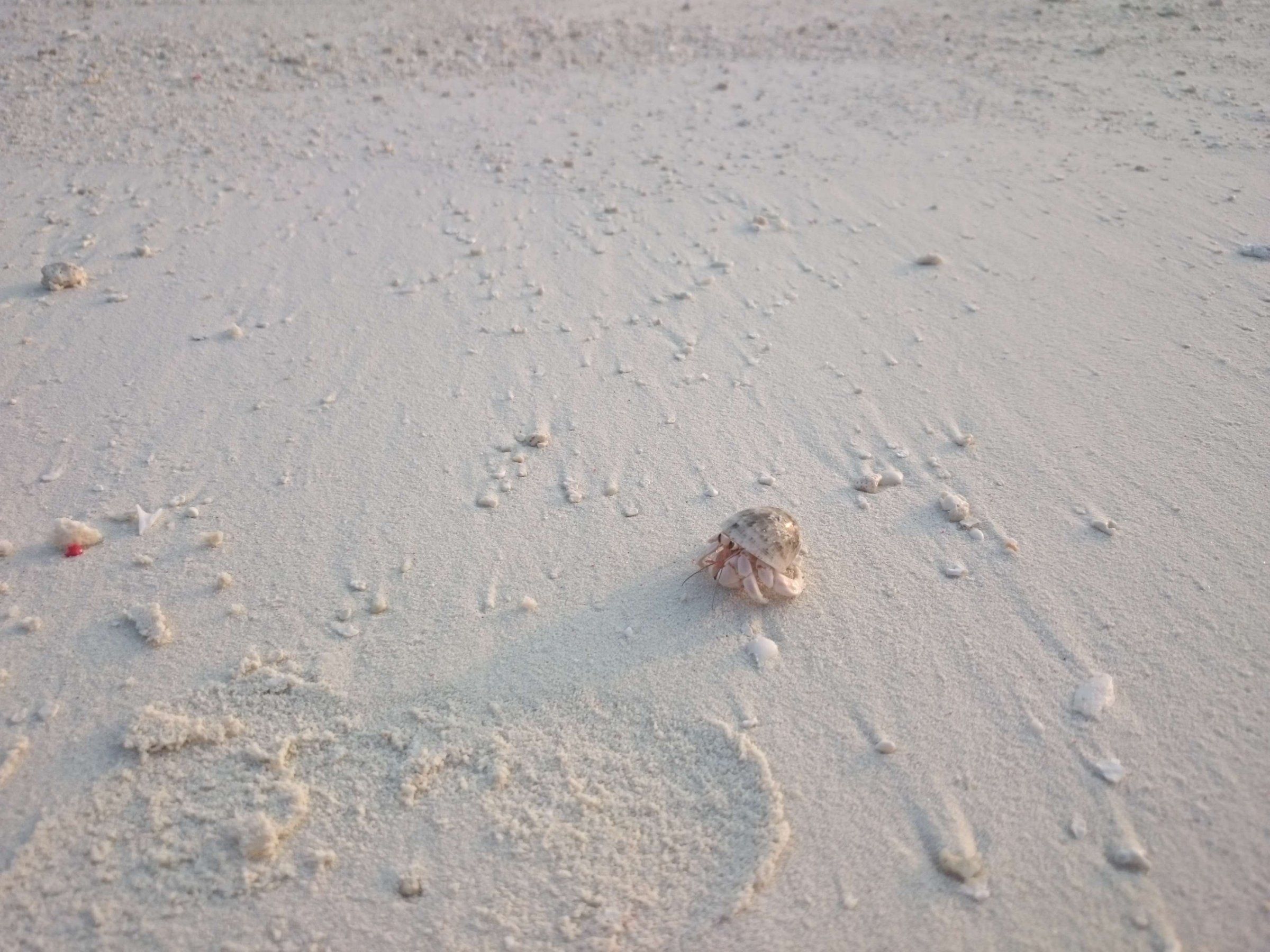
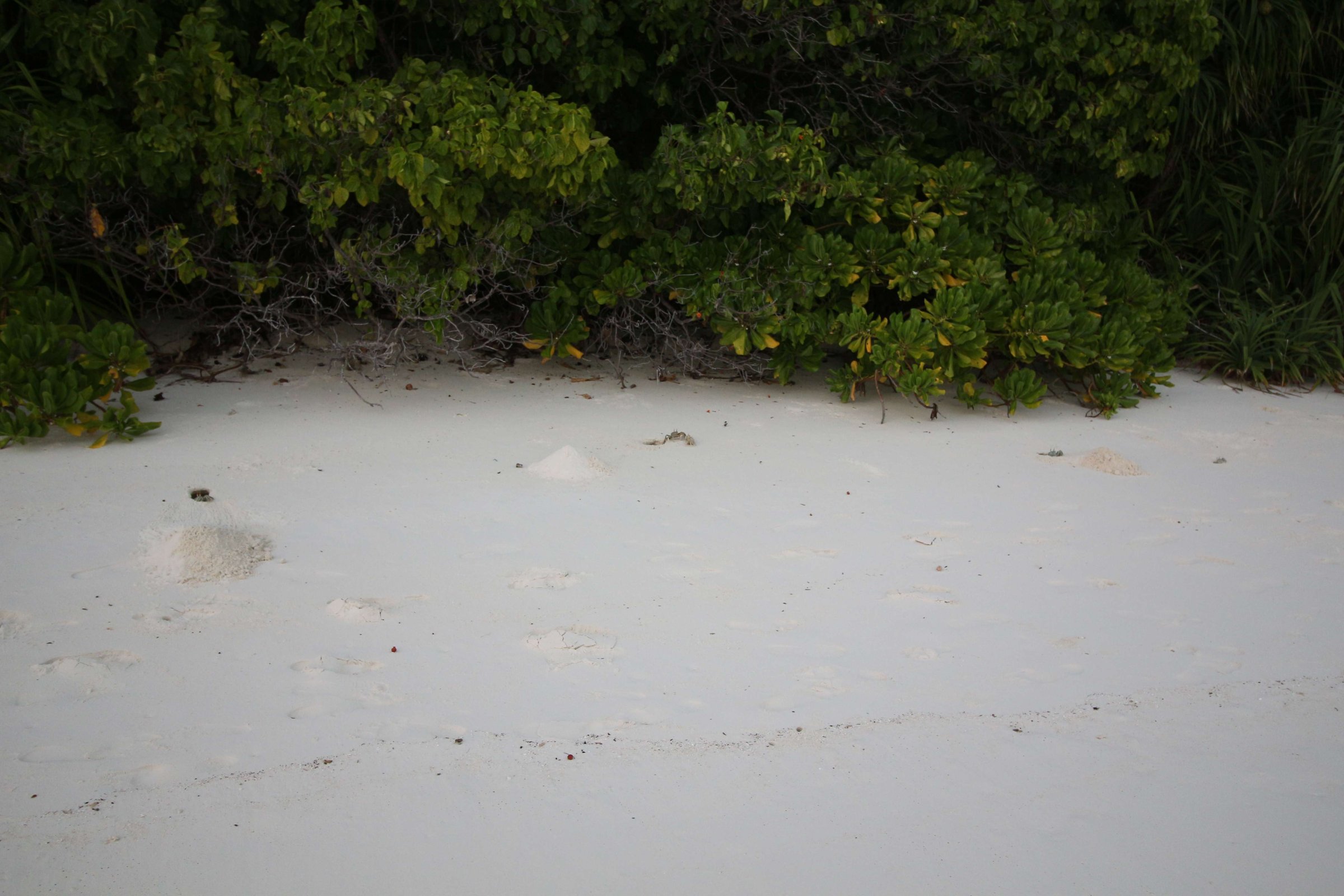
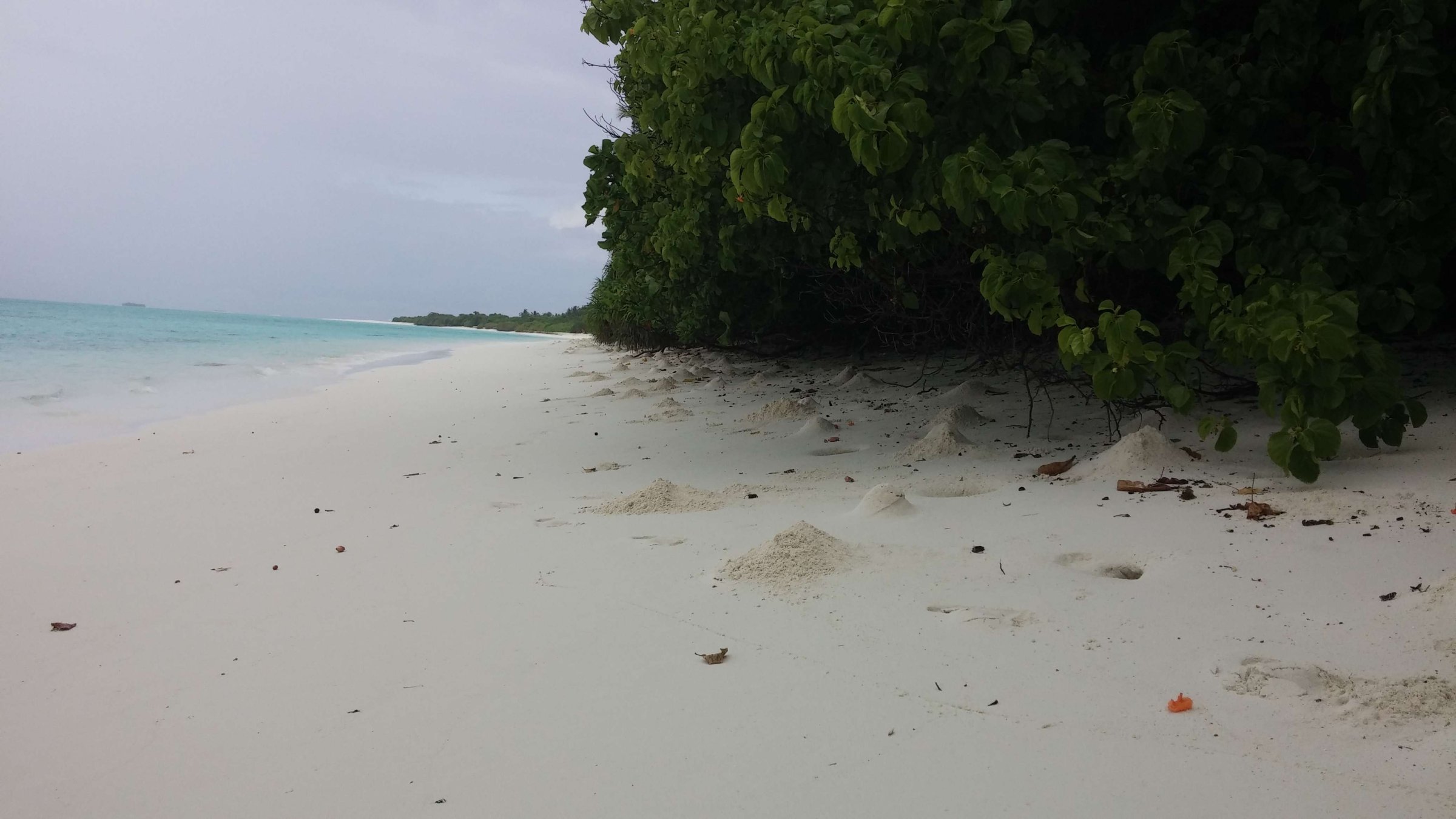
On the beach we immediately saw lots of crustaceans:
They were everywhere, tiny ones and bigger ones alike. They dug holes for themselves and hid in them whenever we came close. They were very timid.
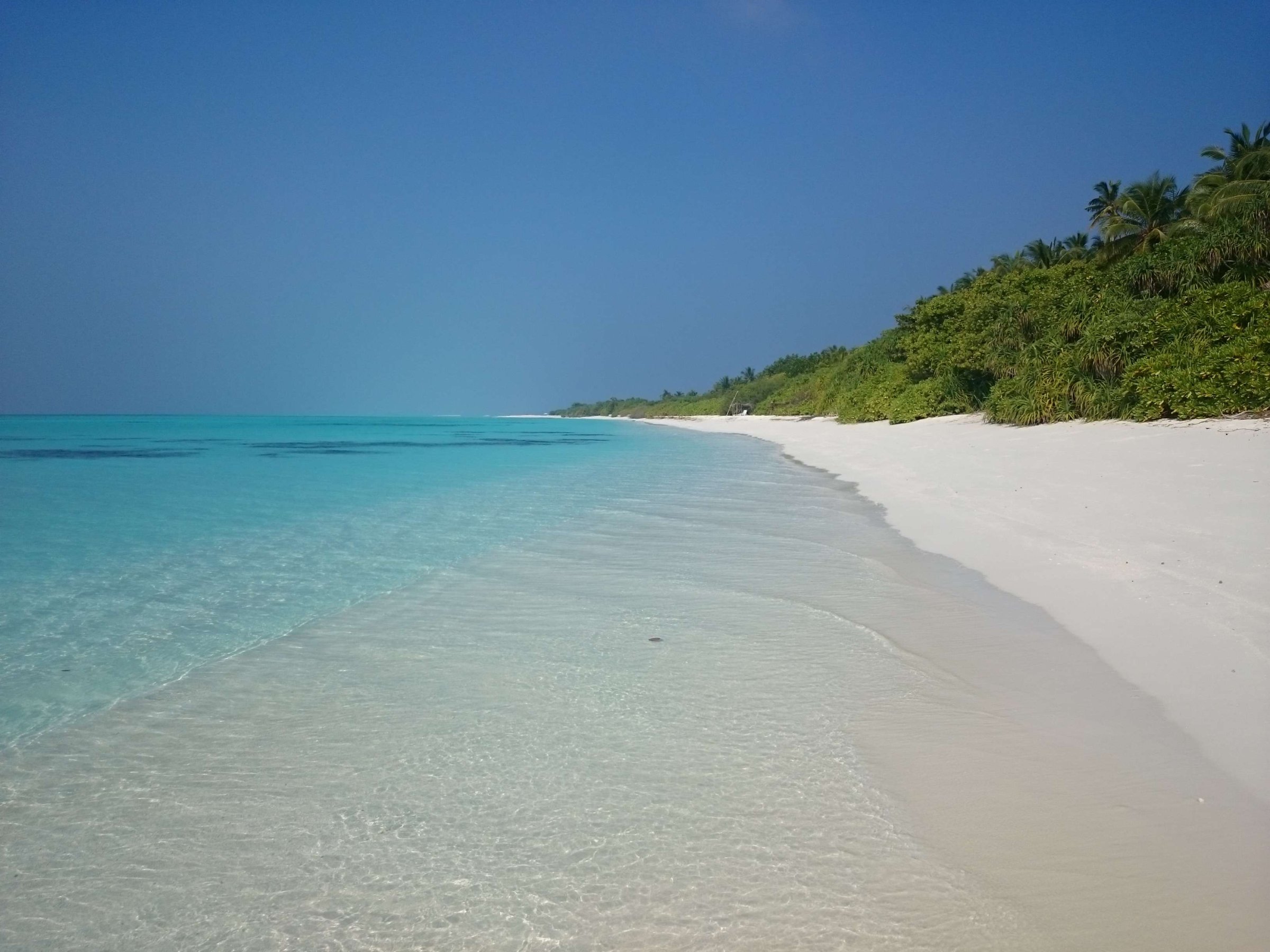
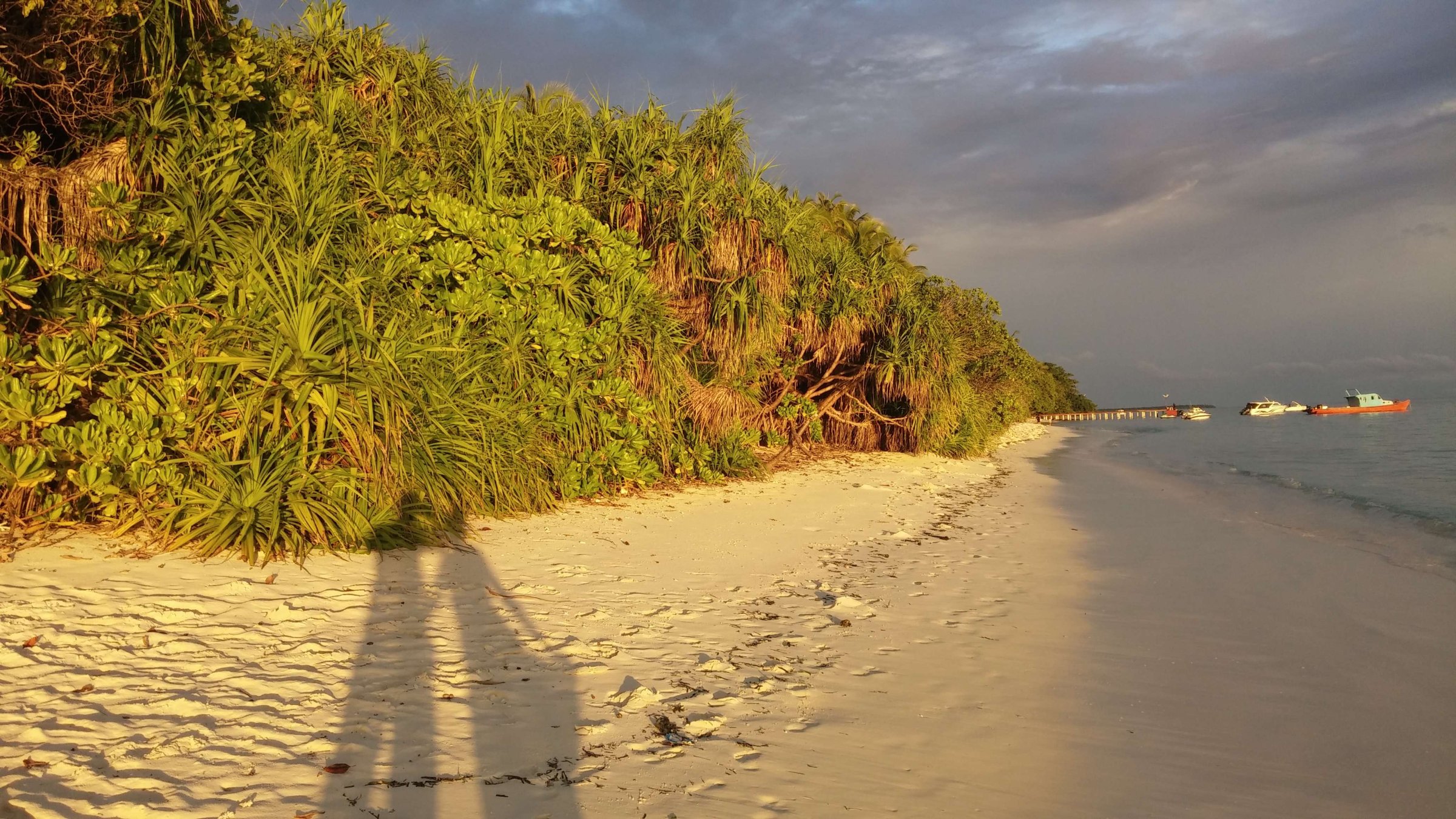
There were almost no people on that one- to two-kilometer beach, and there was a lot of space. That was exactly why we had chosen to go there. A beach packed with tourists from Russia and China does not impress us. While we were walking, most of the people passing by were Russian-speaking. During the whole stay we did not see a single guest on the island who did not speak Russian. As the guesthouse managers told us, 80% of their guests are Russians because staying on that island is cheap, while everyone else goes to big hotels on other islands.
As the sun started to set, we decided to go for a swim. We unpacked the masks we had bought right before the trip. By the way, we later regretted buying regular masks instead of panoramic ones.
In the evening we sat down for dinner and nothing seemed wrong at first. They seated us on the terrace and brought the food. There was a lot of it, but as soon as we started eating we realized that it was too spicy, even for Sveta. That was when we understood our mistake in English. At lunch we had said that we wanted the food "not hot", but what we should have said was "not spicy". They told us they would make something milder the next day. Everyone started rushing around and looked unhappy that we had barely eaten. They probably thought it was their fault, even though it was definitely ours. We pecked at the food a little and went to sleep.
Morning of February 2. We got up early while it was still dark outside. As we were getting ready, it slowly started getting light. We came to the beach, and there was nobody there. The whole beach was ours.
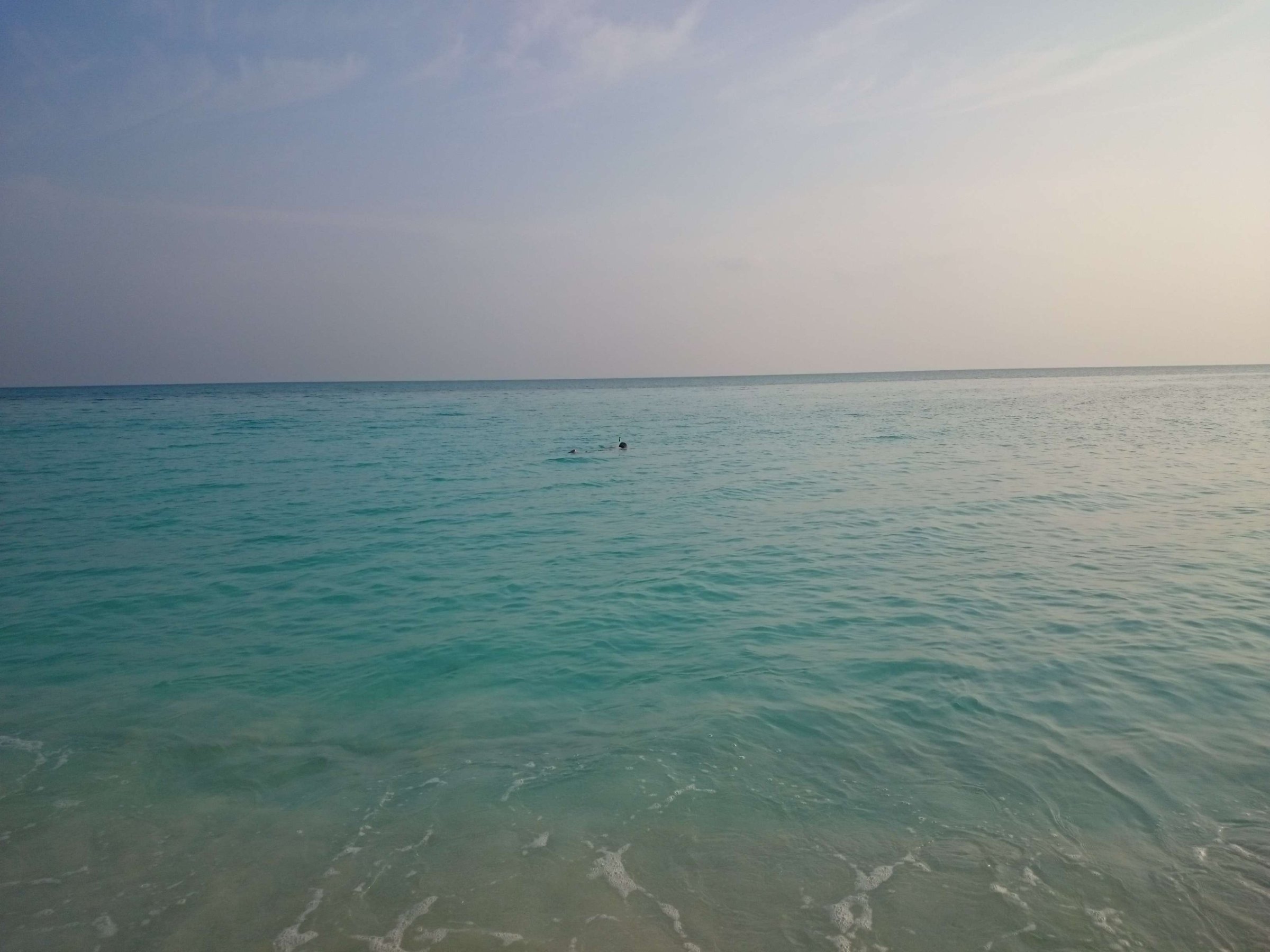
We swam a lot with our masks and looked at the small corals, though there were not many of them on that beach. Sveta was actually afraid to go into the water after reading various things about sea creatures. I did not care much. I just tried not to crash into coral. We also wore reef shoes so as not to step on anything nasty. There were some sausage-like things lying on the seabed. I do not know what they were or whether they were alive, but stepping on them felt like a bad idea. Other than that, the ocean was amazing: warm water, hot air, and no waves inside the atoll. The only real problem was the sun, which is better avoided, but I will get to that later. In those first days we somehow managed to avoid its worst effects.
After swimming we went to breakfast, which was quite large. They gave us sausages, juice, fried eggs, and plenty of other things. Later we learned to smuggle the sausages back to our room and keep them in the fridge so we could eat them for lunch, which we did not officially have because we had neither ordered nor paid for it. With those sausages we could easily get through the day until evening. In the heat you do not really want to eat much anyway, so breakfast and dinner felt just right. Looking back now, it seems to me that maybe it would have been better to order lunch and skip dinner instead. Otherwise we had to go to bed early with full stomachs just so we could get up early. Around lunchtime we usually sat in the room and rested because we were trying to avoid the sun. Sveta worked on the pebble picture she had brought from home, and I looked for things on the computer. We also watched movies on the laptop, though in the end even those ran out and we had to switch to YouTube videos.
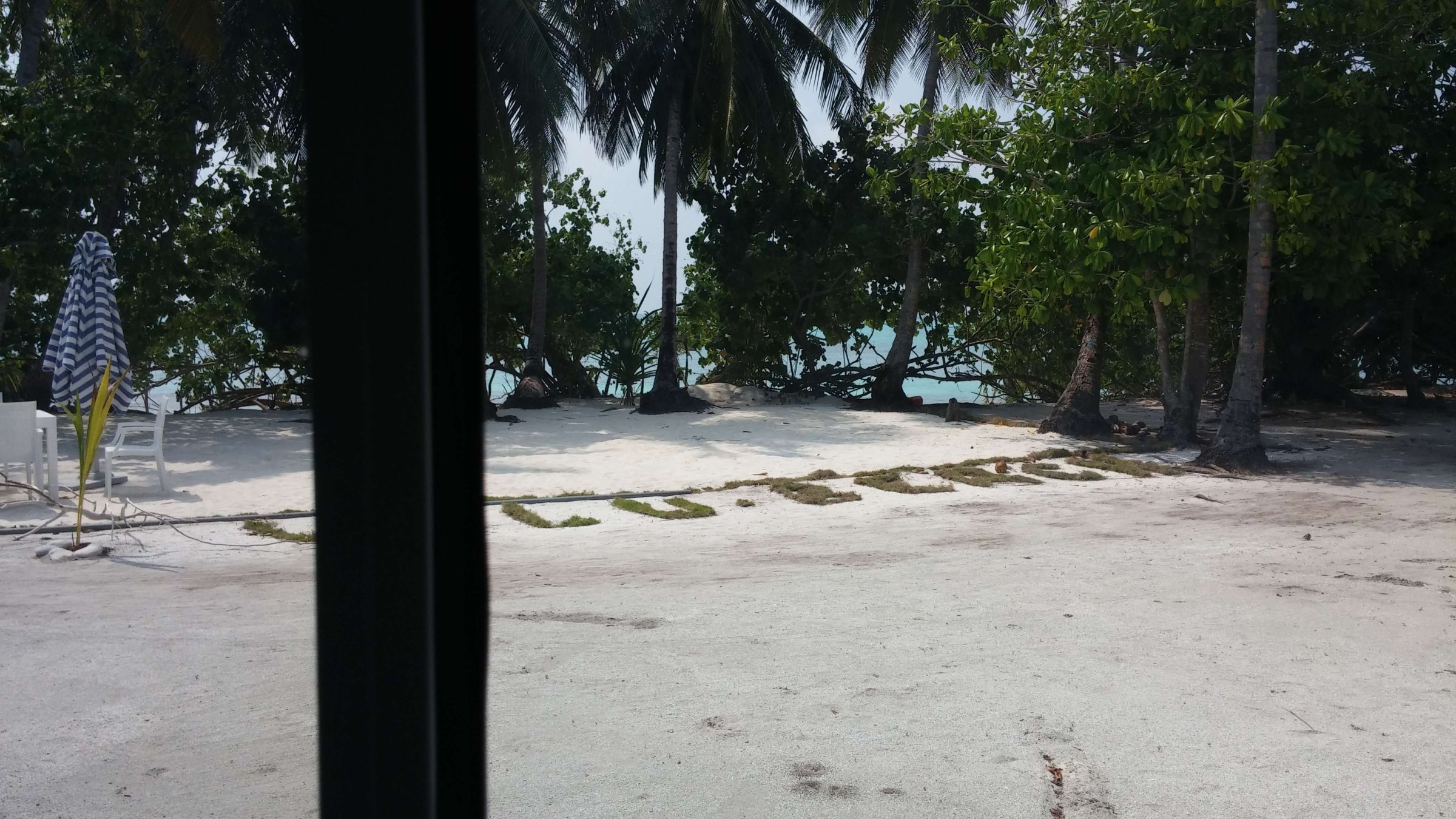
This was our view from the window for all eight days on the island:
Even though the guesthouse had only three rooms, it somehow had a lot of staff. There was a manager, a girl who came by from time to time to help them, a head cook supervising one or two girls in the kitchen whom we never even saw, and another man with a boat who took us and other guests to various activities. I have no idea what all those people did apart from keeping the hotel running. We talked most with the head cook, whose name was Saiful. Sometimes we walked with him to the pier. He told us that he had come from Bangladesh to work there. One interesting thing was that all of them had phones much better than ours, and they seemed to have no problem with gadgets. Apparently electronics cost much less there than they do for us. I doubt the salaries were very high. And even if they were, as I understood it, all of them had large families to support.
In the evening they served us something for dinner, and I remember that it was still rather spicy, so we once again asked them to give us something less spicy the next day. Apparently that is just how they like food there. Non-spicy food is considered bland and tasteless. Someone once told me that the habit of eating spicy food helps people avoid bad diseases because spicy food kills off all the nasty stuff.
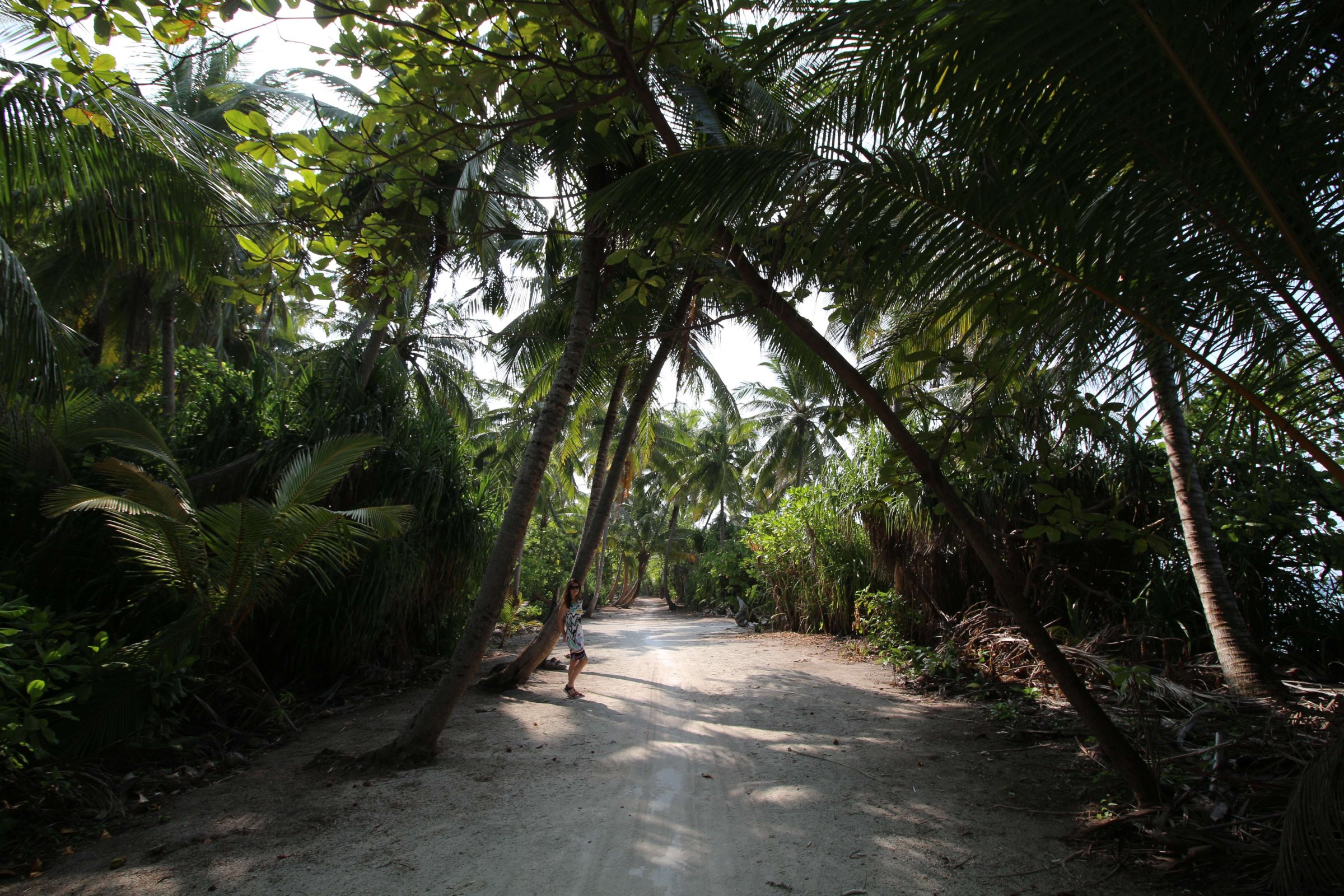
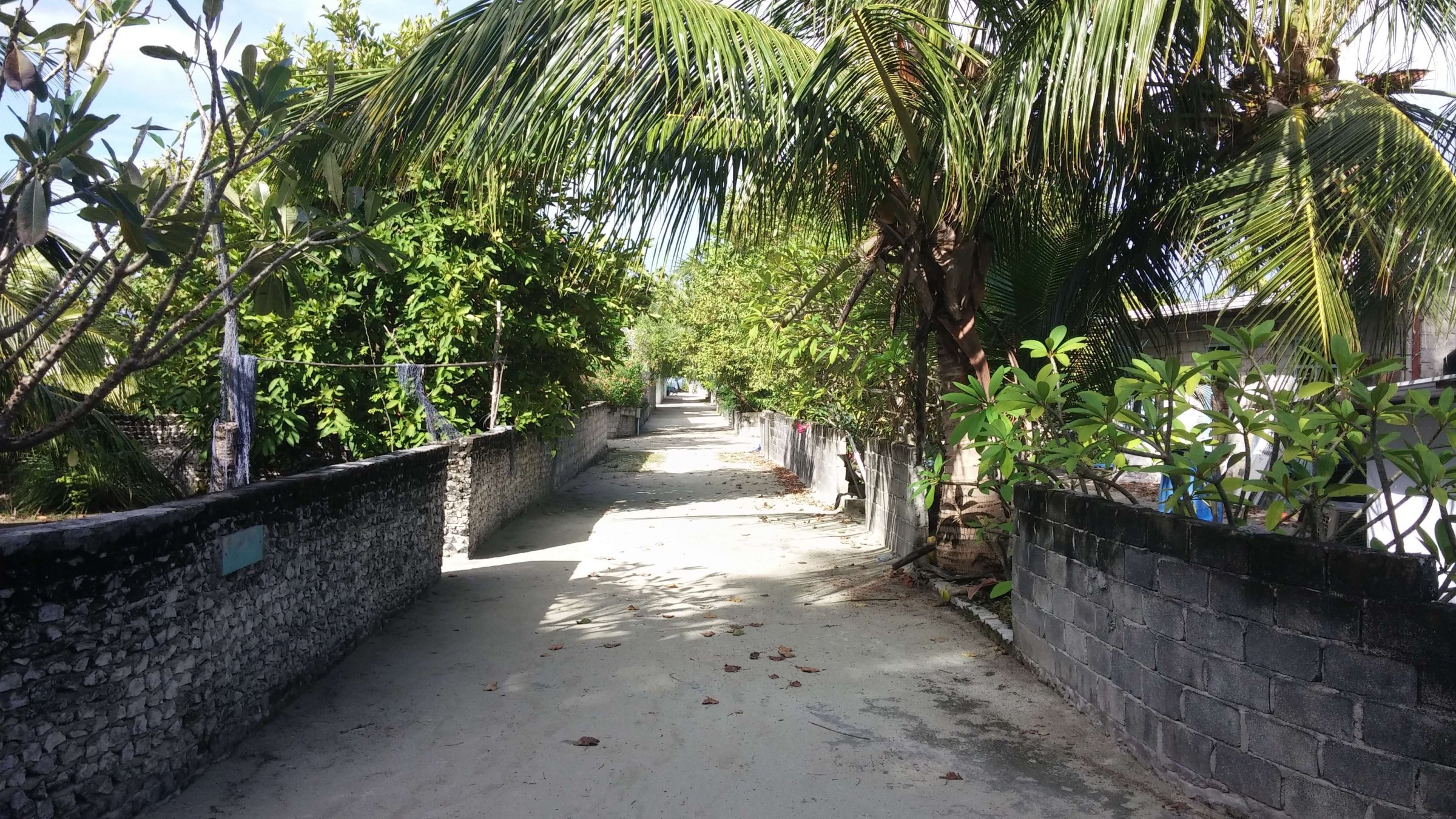
Morning of February 3. As usual we got up and went swimming, but later, around lunchtime, we dressed to cover ourselves from the sun and went for a walk around the island. We walked through the local streets and went into the jungle:
There were many coconuts hanging in the palm trees, and we had read that death from a coconut falling on your head is the most common cause of death in the Maldives, so walking there felt a bit scary.
Then we went to the other side of the island. It faces away from the atoll, and there you can already see rocks and deep black water:
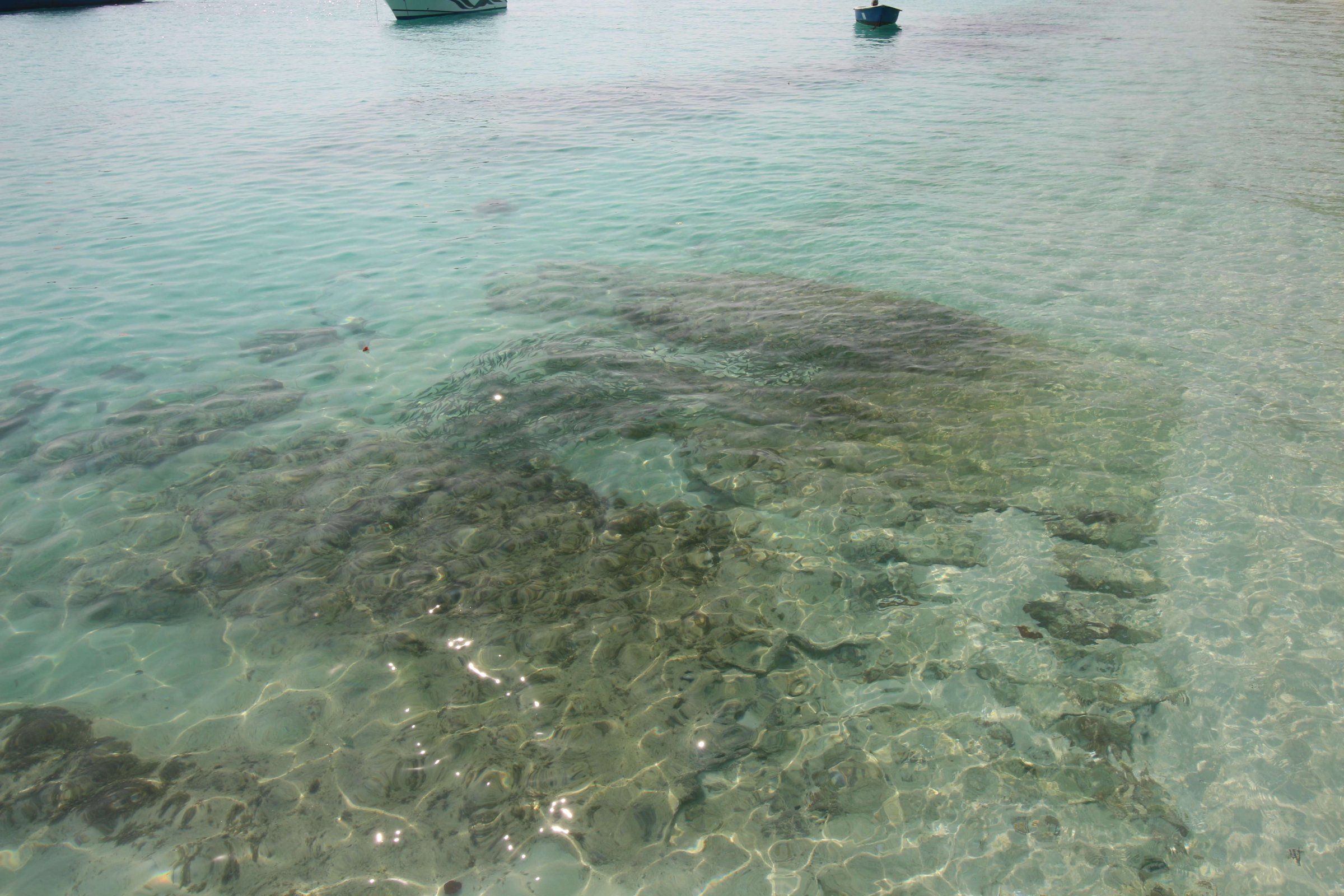
We walked out to the pier and, after looking more closely, realized that all of it was actually a school of tiny fish:
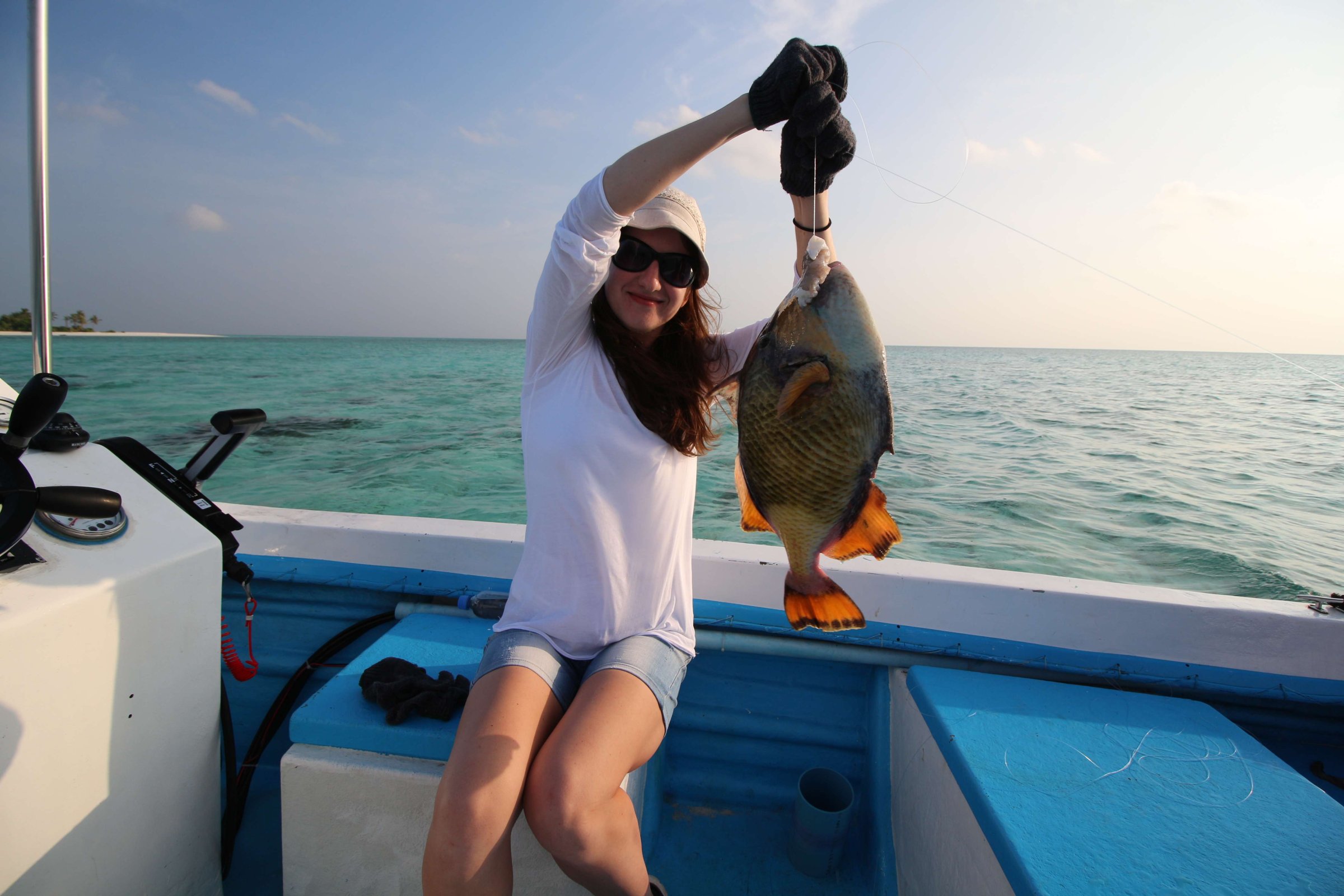
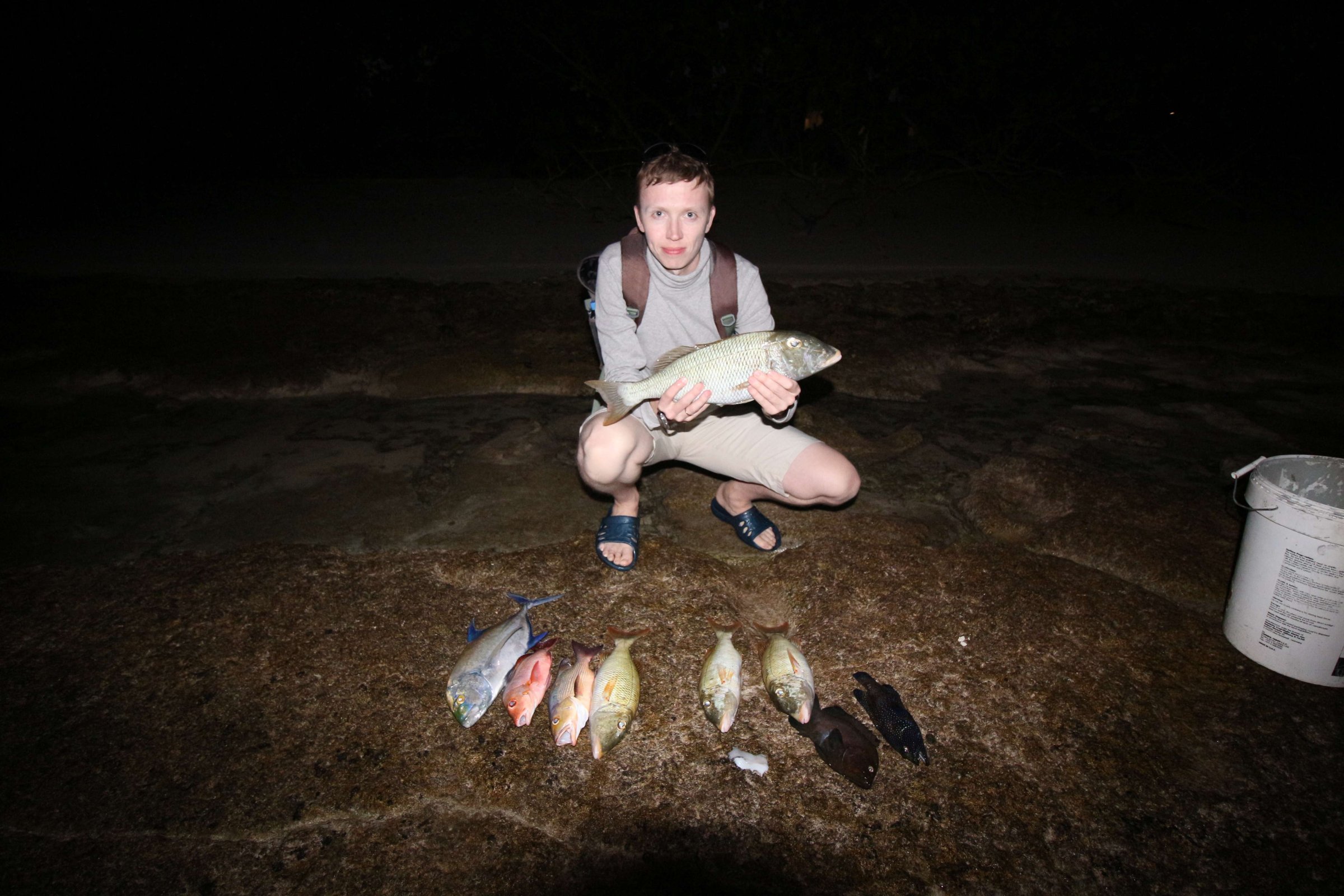
For the evening we had booked a fishing trip. We chose the time so there would be little chance of getting badly sunburned on the boat, and dressed accordingly. Here Sveta caught a fish:
And here was the full catch:
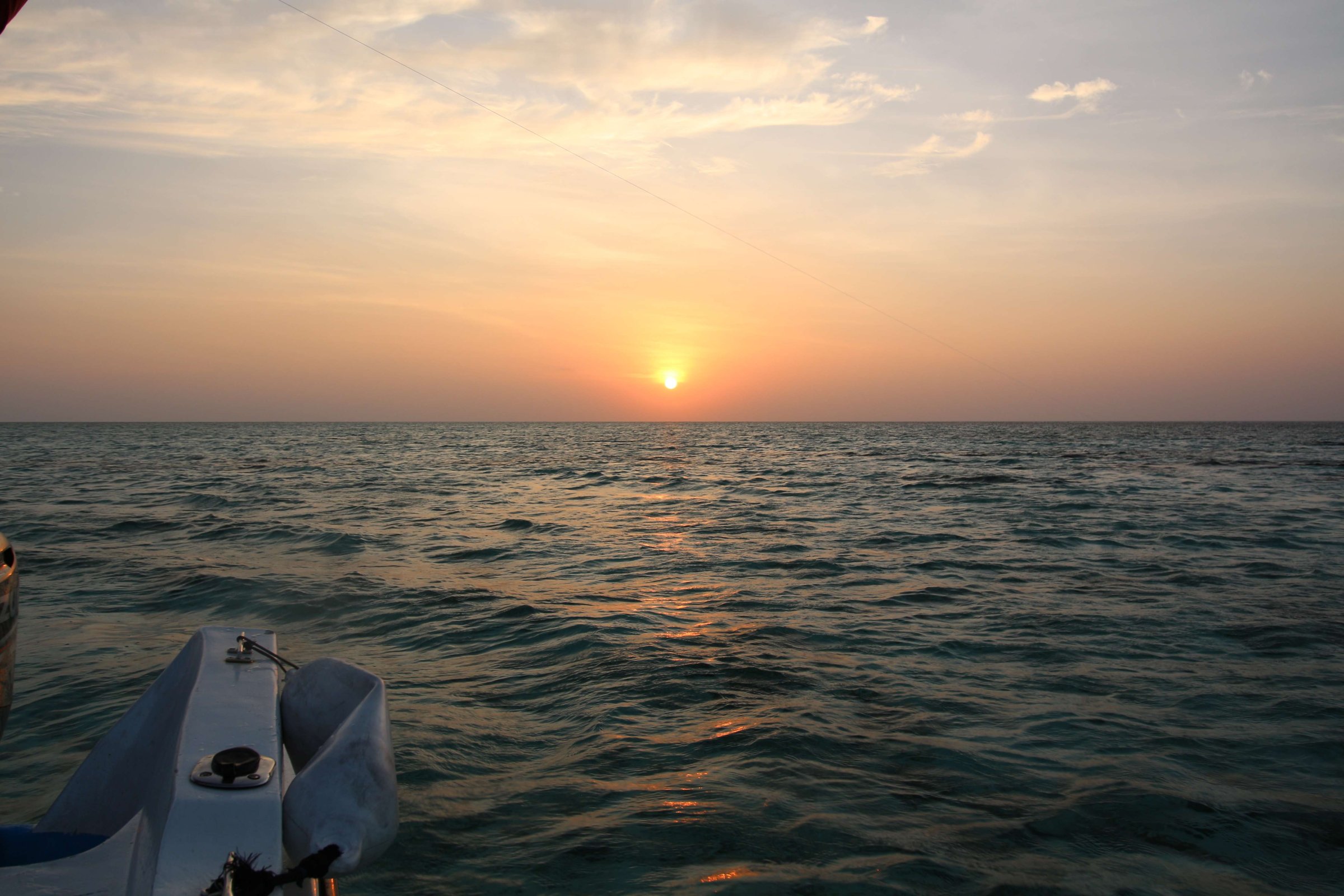
We sailed quite far away from our island, though I do not really know why. At first we had no luck. The fishing worked like this: the fishermen took a line with a hook, put a small piece of octopus on it, cast it, and we had to wait until a fish started tugging at the line. After about 30 minutes our luck changed and the fish started coming. I could literally feel them fighting and trying to free themselves from the line. We pulled them up wearing gloves so we would not cut our hands.
On the way back we saw a big turtle right under the boat, but since we were moving fast, we could no longer turn back and look at it more closely.
In the evening they fried two fish from our catch and set a table by the sea. I would not say the fish was especially delicious. I am not much of a fish lover; to me most fish tastes the same, except maybe salmon. They also treated the second couple who were staying in the neighboring room to our fish. We started talking to them and found out that they were Belarusians who had come to relax for some wedding anniversary.
Morning of February 4. We will remember this day forever. It was basically our, or rather my, last carefree day in the Maldives. It all began with them taking us to a tiny island where there was nobody but us.
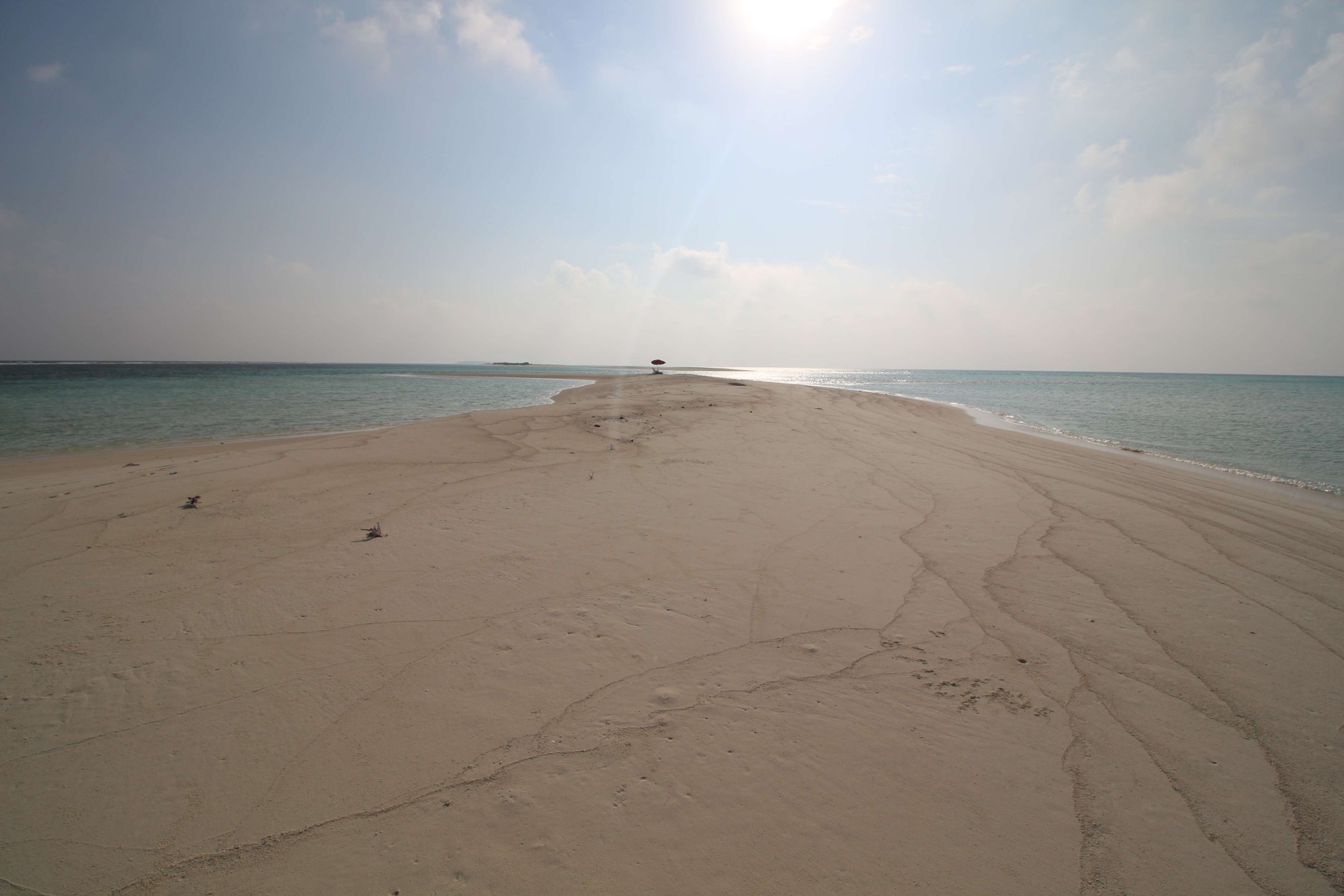
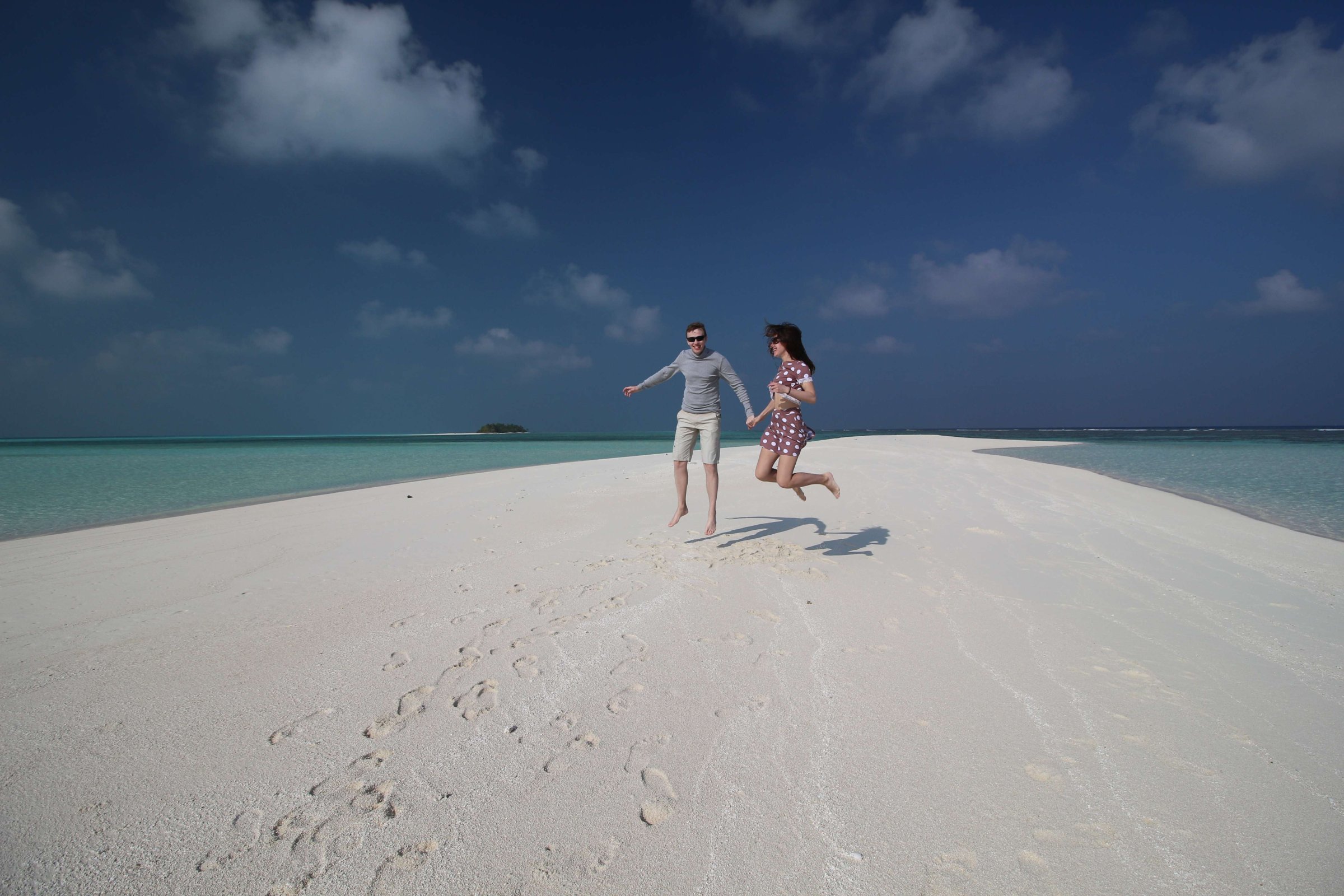
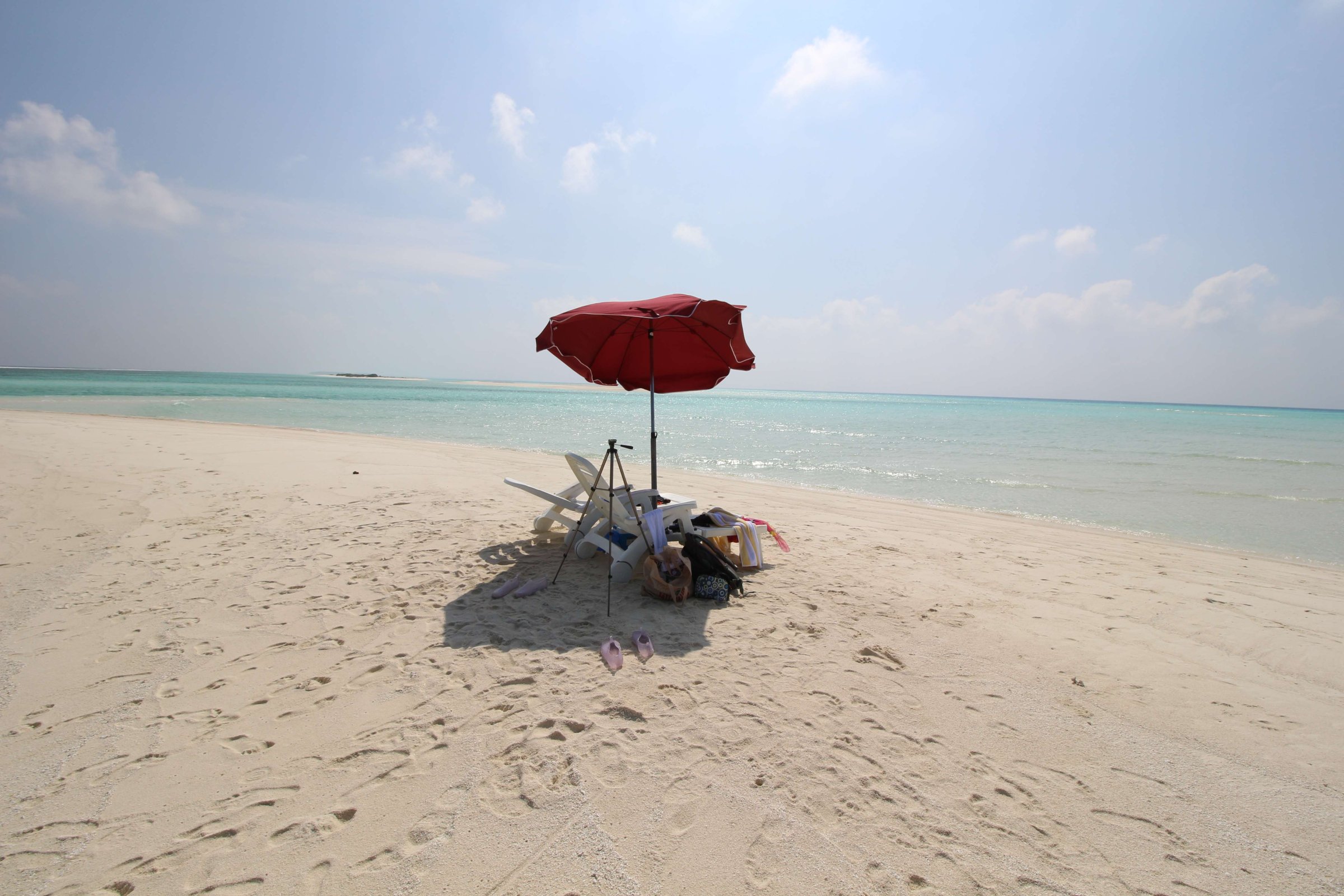
They put sun loungers and an umbrella there for us, gave us a container of food, and left us alone for about two hours. To avoid getting sunburned, we had come there early in the morning. By the way, on the way to the island we saw two small reef sharks playing in the water. In general, we took lots of photos there, had a snack, and swam a little.
After that they came back for us and took us snorkeling farther away from the island, to a place with more reefs. The depth there was about 1.8 meters, so you could stand up, but doing so still felt scary, even though we were wearing reef shoes. There were lots of creatures and corals there. We swam in different directions and saw many kinds of fish, and that was the moment when I realized that I had made my biggest mistake: I had been swimming wearing only trunks and nothing else. After that we headed back, and while we were still on the way I started to feel my skin burning a little. We got back to the hotel and immediately washed off the salt water. In general, I felt worse and worse as the evening went on. Late at night I could no longer move properly, and sleeping was difficult because every movement hurt.
By the way, our neighbors checked out that same day, and we were left completely alone in the guesthouse. Before leaving, the man told us how he had gone parasailing behind a boat for 100 dollars after bargaining the price down from 300. He flew a little over the island. He said it was cool.
In the evening we sat on the veranda, and the manager told us that if he swam in the sea without clothing, his skin would sting afterward. Mine, on the other hand, hurt badly. I think hotels should warn all guests that daytime swimming should only be done in clothing. That was when I learned that water, especially salt water, greatly increases the effects of sunburn.
Morning of February 5. I could barely wake up. I was shivering with chills. I do not know whether I had a fever or whether my skin was simply so hot that it warmed the rest of my body. Somehow I made it to breakfast. We spent the whole day in the room. And the good thing was that this happened to be the first rainy day of our trip. Thunder rolled and rain hammered on the roof.
That day two couples checked into our guesthouse, one younger and one middle-aged. And of course all of them spoke Russian. As usual at first everyone kept their distance, so I did not yet know that the girl from the younger couple turned out to be connected to my hometown region. I will get to that in a moment.
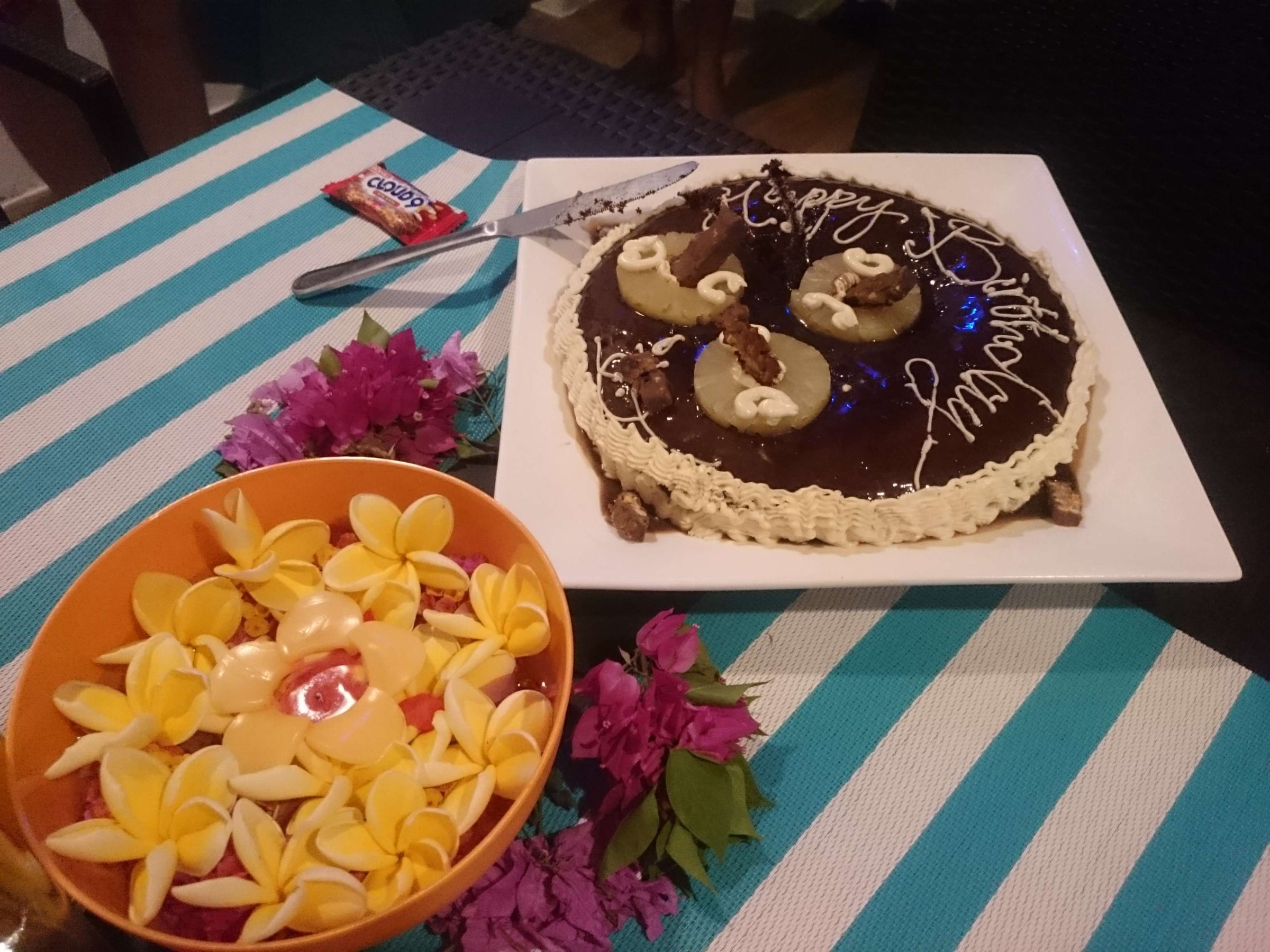
In the evening, when we came out for dinner, they unexpectedly surprised me with a birthday cake. By the way, we had more or less casually mentioned my upcoming birthday right at the beginning of our stay.
We did not eat the cake all by ourselves and decided to share it with the other guests and the guesthouse staff. It was fun. The planned seaside dinner for my birthday, however, was canceled because of heavy rain. We moved it to the next day. They had specially brought in two crabs for it.
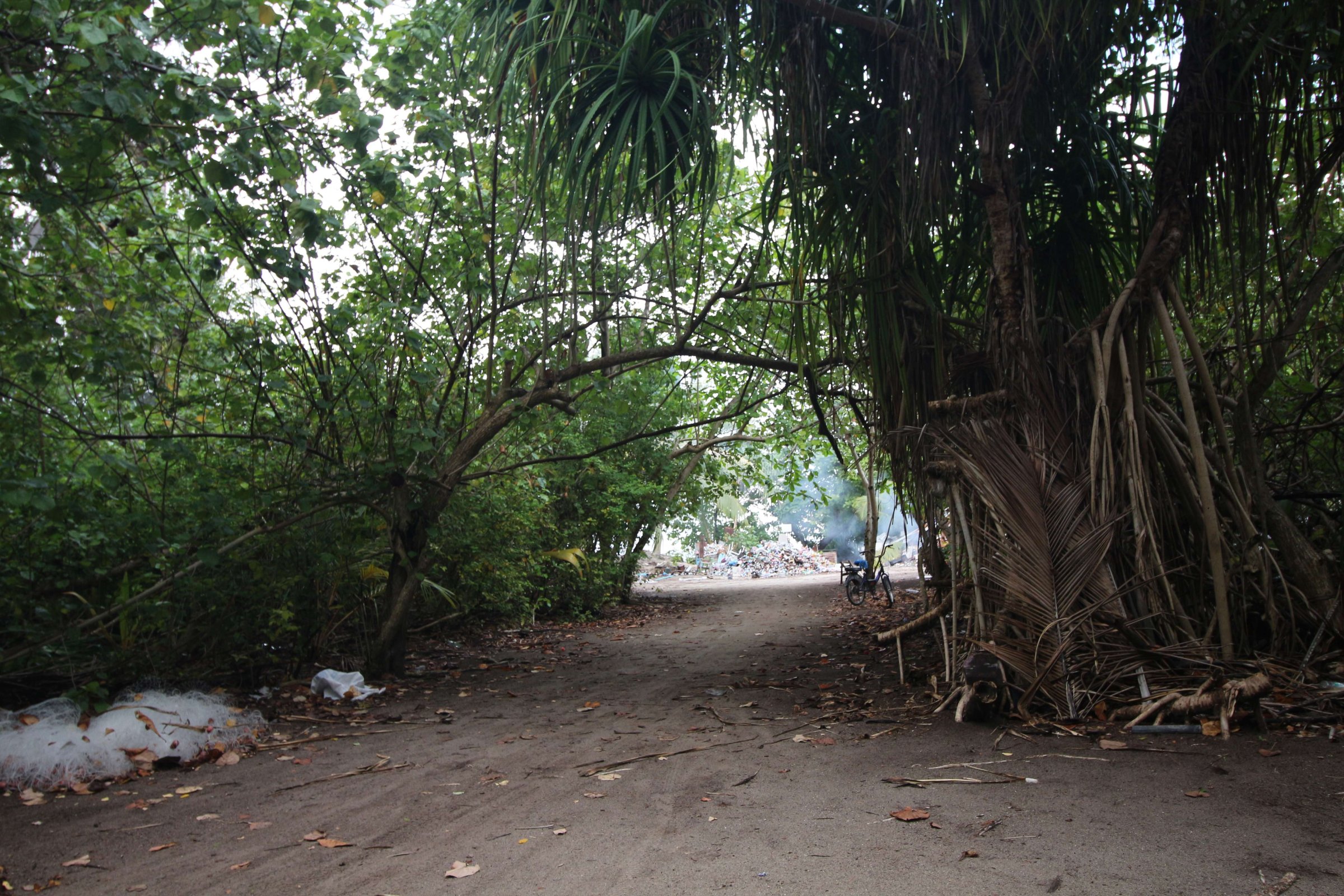
Morning of February 6. The pain had not gone away, so swimming was out of the question. But that day we at least walked around the island and even reached the place where our evening dinner was supposed to happen. On the way there we passed the place where they take their waste:
They seemed to pile up the trash there and probably burn it, so in the Maldives you do not see paradise everywhere after all. While we were walking, we also saw a house with a gasoline generator. It must have been running all the time, because we could hear its distant rattling from our room.
Places like that show the real problems of the modern world. People need electricity and plastic, and there is no way around that. But if you live on an island, you have to burn something for energy, while plastic has to be brought in and taken out again somehow. I had read that the Maldives has a garbage island where all the waste is shipped, but I assume that transporting it there is too difficult, so they burn some of it on the spot. I had not yet mentioned that every day we were each given two or three plastic bottles of water. They are imported to the Maldives from India, where water scarcity is not such a problem. But what do you do with all that plastic once it has served its purpose?
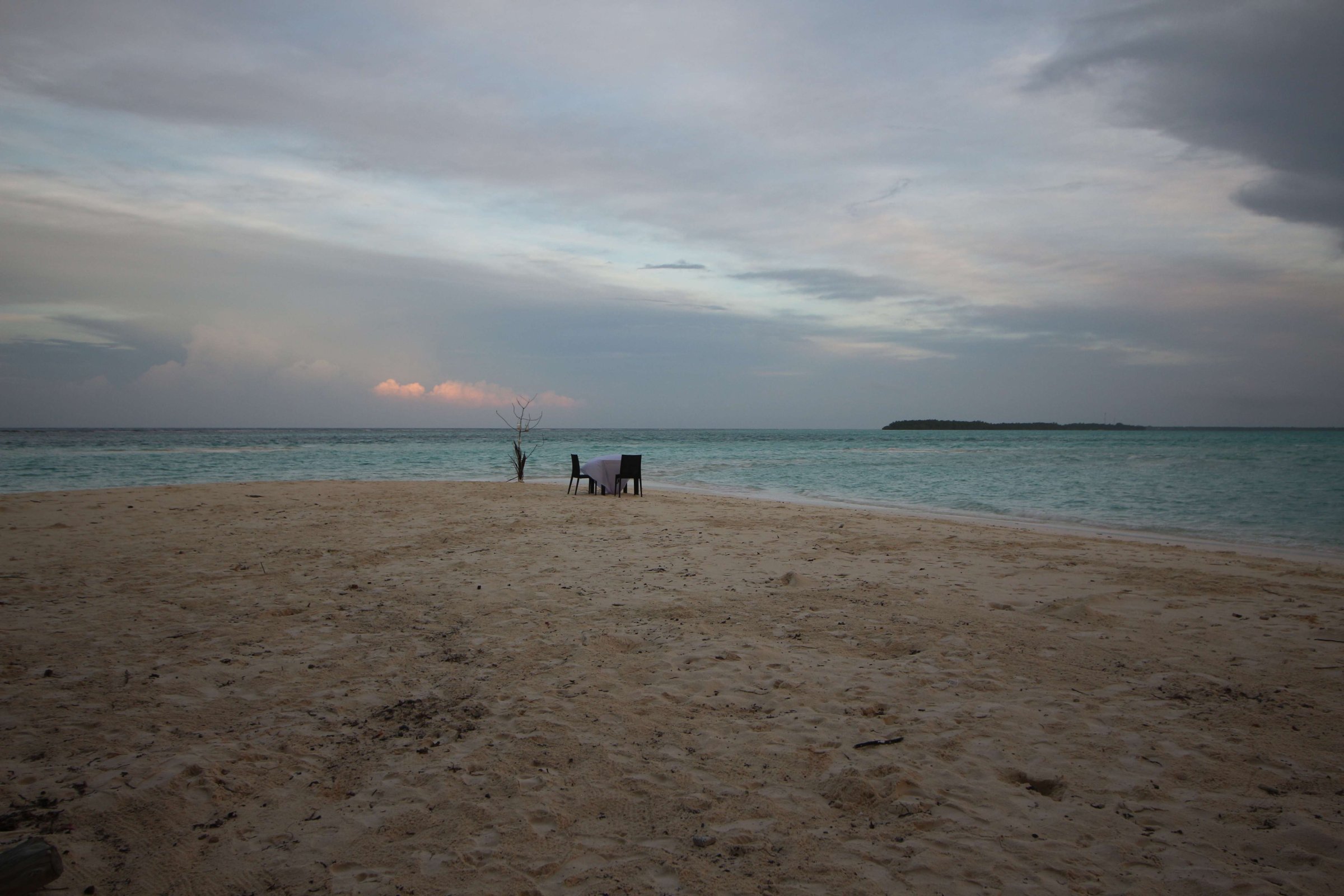
Then it was time for dinner. We walked from the guesthouse to the ocean shore on the other end of the island. But when we arrived, we realized that they had not finished preparing everything yet, so we stood there and watched them cooking and arranging it all. They made a fiery path out of torches, really bottles filled with gasoline, and set the table. While all this was going on, we could see clouds gathering in the distance. By the time everything was ready it was already dark. They led us along the lit path to the dinner table. Some music was playing from a portable speaker. We started eating our crabs. In reality there was almost no meat in them. We had barely managed to eat anything when a strong wind came up and we ran for the trees. Then the rain started pouring. Our guide was standing there and told us that we could shelter somewhere else. We ran with him, and that place turned out to be the very same dump area with a small covered shed on it. We stood there for a while until the rain stopped. Then we trudged back to our room. In fact, it was really cool. The dinner did not go as planned, but that is exactly why we remembered it for a long time.
Morning of February 7. I got up and my skin had started to recover. It did not hurt as much anymore. We had already watched all the movies I had brought on the computer, so by then we needed to get outside and at least walk around. Which is what we did. Here we were walking through the local streets:
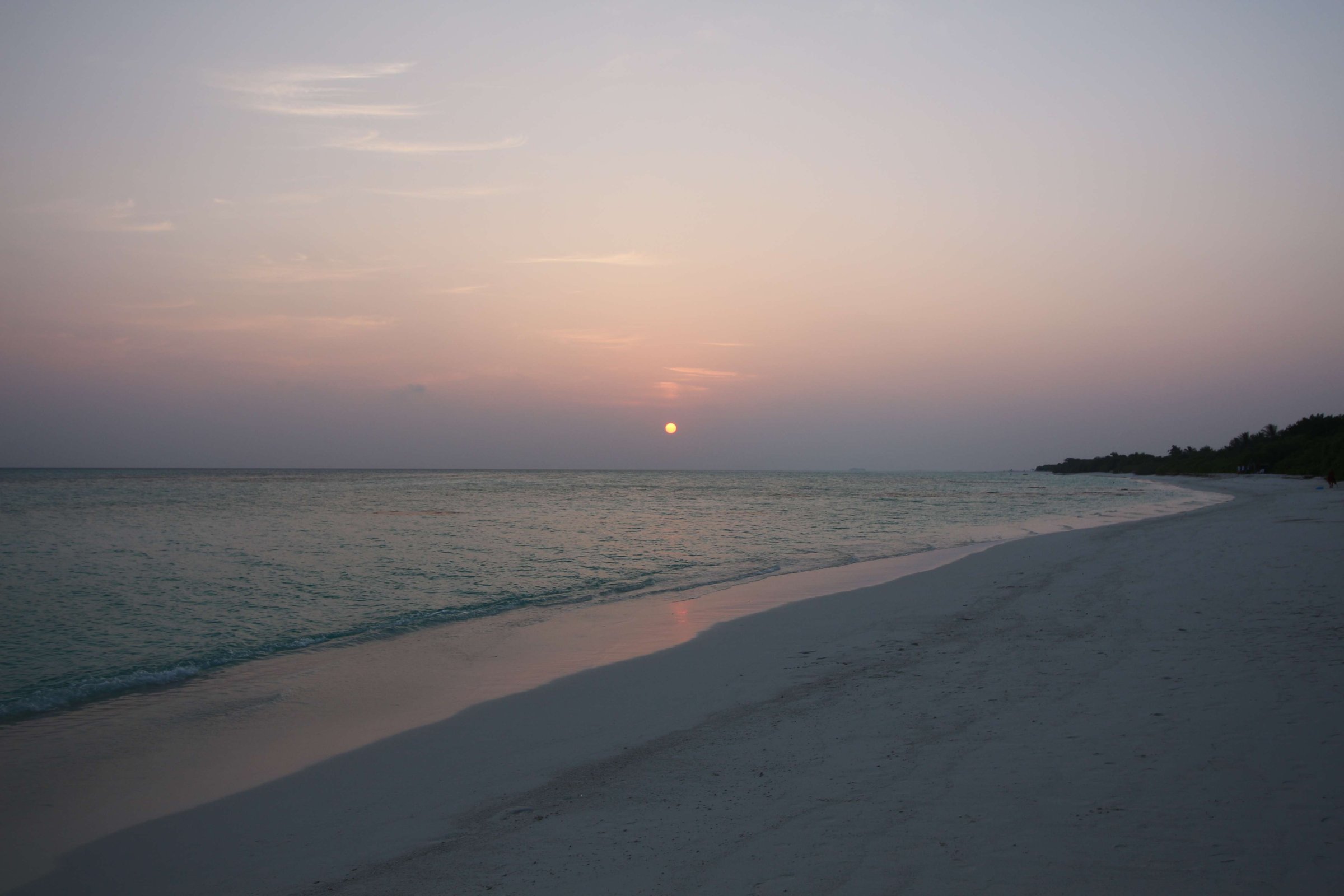
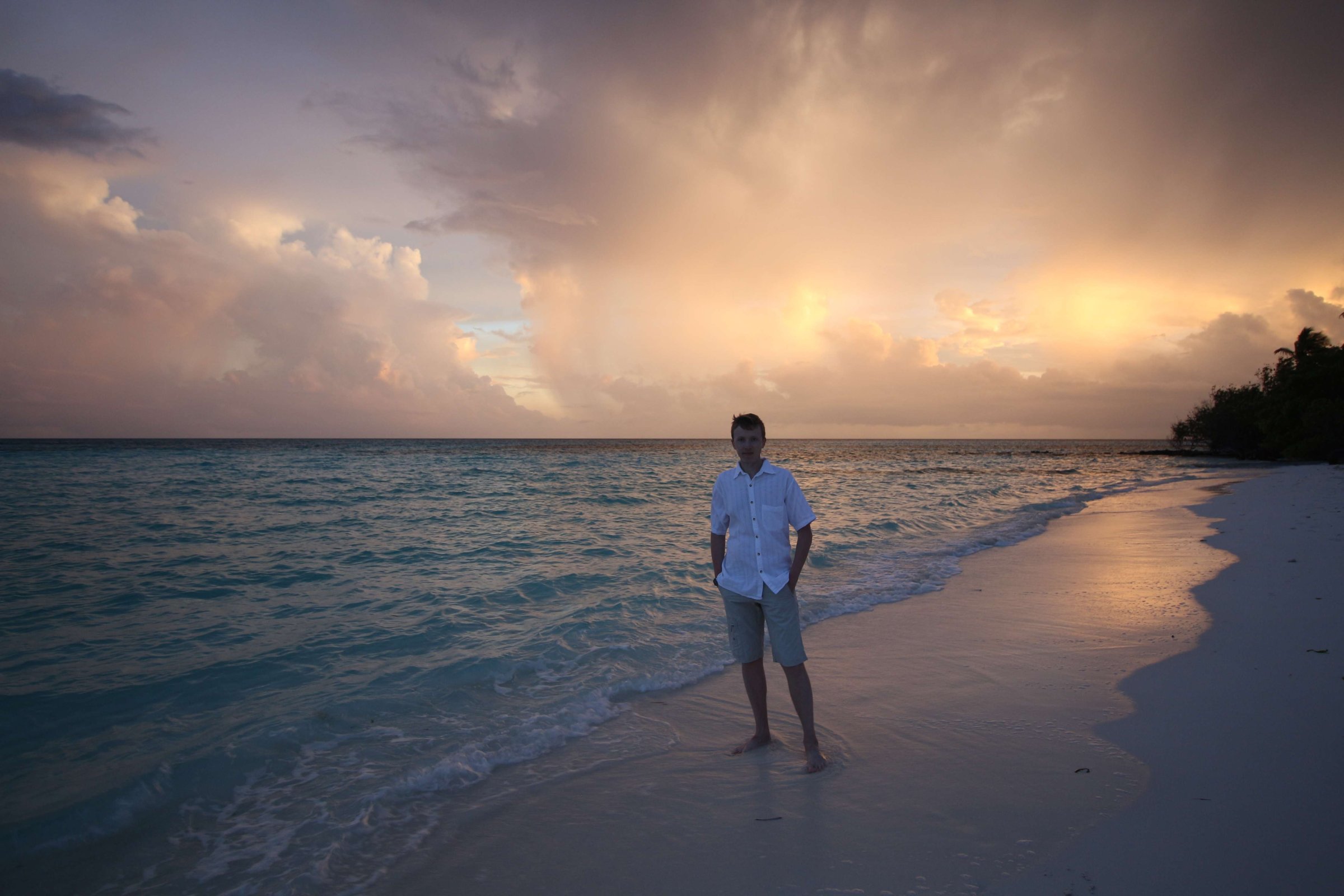
We went to the beach, Sveta swam there, and we watched the sunset there as well. Dinner was served not on the veranda that evening but behind the fence, closer to the ocean. At the next table sat the younger couple, our neighbors. After dinner we started talking, and the first thing we asked each other was where everyone was from. When I said that we were from Dubna, the girl was stunned: her grandfather lives in Dubna, while she herself lives with her parents in China. The world is really small. We exchanged contacts, and later she even passed along a small parcel for her grandfather.
In the evening we went to the beach with Saiful. There he showed us rays that come close to shore at night, apparently thinking that the lanterns are the sun. We told Saiful about palm oil, something he had never heard of. He told us where he was from and how he had ended up on this island. We exchanged Facebook contacts. He wanted us to come again, but we did not encourage him and said that we probably would not because we had other plans. Going to the same place every time is like owning a vegetable garden and spending every weekend there.
Before going to bed, they warned us that the boat we would take the next day would depart earlier than expected, so we needed to get up early. And that evening we still had to pack our suitcases.
Another thing happened that night: the island generator shut down, and we were left without electricity for about an hour. Of course, everyone came out of their rooms and started talking.
Morning of February 8. We got up early, got ready, and found that the boat was already waiting for us. We waved to Saiful, who was seeing us off at the pier, and set out on our long way home.
We sailed to Goidhoo as usual on a boat without a roof. The day before, I had asked the manager, "What if it rains in the morning? We will get soaked while sailing." He answered that if it rained, they would provide another boat with a canopy. We reached Goidhoo. There a boat to Male was already waiting for us, but it was different from the one we had taken to get there. It looked more like a speedboat and had comfortable seats. By then I could sit more or less normally with my back against the seat. We reached Male so quickly that I hardly noticed the trip. We got off the boat and continued on foot. We had plenty of time, so we slowly walked to the pier from which boats leave for Hulhumale. That was where our hotel for the night was located. After seeing enough of Male, we had decided that we should spend the night in Hulhumale instead, and the hotel itself looked more trustworthy in the photos. It was also convenient that our flight back to Russia the next day was leaving from that island.
At the pier some guy approached us and offered to be our guide around Male. We told him that we were going to our hotel in Hulhumale, but he still kept insisting. He said that we could return after checking in and he would show us around Male. He left us his phone number and went away. Of course, we had no intention of returning to that noisy hell of engines and horns.
Hulhumale was better. Everything there felt more European. There were no narrow spaces, the houses stood far apart, and there was a large park. Perhaps tourists use this island when they want to crash and rest immediately after arrival, but I do not think that is the best approach. The island is such that later you cannot really say that you have seen the Maldives. It does not look like that here. It feels as if you are relaxing by some ordinary seaside.
We walked for a long time because there was still a lot of time left before check-in. On the way we stopped at some cafe by the ocean and drank watermelon juice, which was not cheap. On our island it would have cost less. After that we went to check in. We checked in and, as usual, ended up living on some third floor. The suitcases had to be carried upstairs. Again we had no windows. Apparently these hotels are designed so that some rooms have windows and some do not. I still do not understand why they cannot just make sure that all rooms have windows.
After checking in, we went for a walk on the beach, though it no longer impressed us after the beach on our island. Then we walked to the bus stop and checked the schedule for the next day. After that we sat for a while on the shared balcony near our room and went to sleep.
Morning of February 9. We got ready and walked to the bus stop. The bus arrived quickly, but it was packed. For a moment I thought that we might miss our flight. But right after that crowded bus, another one came, and it was not crowded. Apparently they somehow track the flow of passengers and send several buses to pick everyone up. The fare was almost nothing. I do not remember exactly, but it was something like 10 to 20 rubles per person. We got to the airport quickly, passed passport control, visited duty free, bought a few souvenirs, and went to board the plane. This time the airport was fully civilized: air conditioning and lots of space.
Our flight departed at 11:10. It was 3 hours to Dubai, then a 2-hour layover, and then a 4.5-hour flight to Moscow. Here we were flying over an island:
At 8:40 p.m. we were already back at Domodedovo, and it was hard to believe that only nine hours earlier we had been surrounded by heat and beauty. We rode through the dirty city in a taxi while grime splashed from the wheels of neighboring cars, and the whole thing felt depressing.